Quick Summary
To remove matted dog hair without cutting, apply an oil-based detangling spray or coconut oil to lubricate the fur. Firmly hold the hair at the base of the mat (against the skin) to prevent painful pulling, and gently tease the clump apart from the outer edges inward using your fingers.
For the complete grooming foundation that applies across every breed, the complete home dog grooming guide covers tools, technique, and troubleshooting in one place.
A mat the size of a grape doesn’t look like an emergency—but give it two weeks and it tightens against your dog’s skin, shrinking your options fast. The difference between a five-minute fix and a groomer trip comes down to early intervention.
This guide on how to remove matted dog hair without cutting shares what actually works and answers the biggest question: whether you should bathe a matted dog at all. Catch mats early, and five minutes of work beats a trip to the groomer every time.
What’s Actually Happening Inside a Mat
A mat isn’t just messy hair sitting on the surface. It’s loose fur, shed undercoat, and live hair all twisting together into a clump that gets tighter the longer it’s left alone. As it tightens, it pulls toward the skin — not away from it — which is why an old mat that looked harmless a week ago can suddenly be sitting right against the body.
When matting becomes so dense that you genuinely can’t see or reach the skin underneath at all, groomers call this pelting. It’s the matting equivalent of a “do not attempt at home” sign. At that stage, the coat has essentially become a solid layer separate from the skin, and the only safe removal method is a professional clipper shave-down — more on exactly why below.
The Bath Confusion, Resolved
Search around and you’ll find contradictory advice: “never bathe a matted dog” versus “bathing or swimming without drying causes matting.” Both are true — the contradiction disappears once you separate the order of operations.
If your dog already has mats and needs a bath, deal with the mats first, even partially, then bathe.
The Actual Rule
Brush and detangle before water touches the coat. Water tightens an existing mat into something close to felt. The danger isn’t bathing itself — it’s bathing before addressing existing mats, or letting a wet coat air-dry without brushing while damp.
What You’ll Need
- Slicker brush — general surface detangling
- Wide-tooth metal comb — verifies a section is genuinely mat-free
- Mat splitter or dematting tool — sections a mat into smaller pieces using small embedded blades, without cutting to the skin
- Detangling spray or leave-in conditioner — softens hair so it separates instead of tearing
- Blunt-tipped scissors — only as a last resort for a small, contained knot, never near skin
- High-value treats — this takes patience from your dog too
How to Remove Matted Dog Hair Without Cutting?
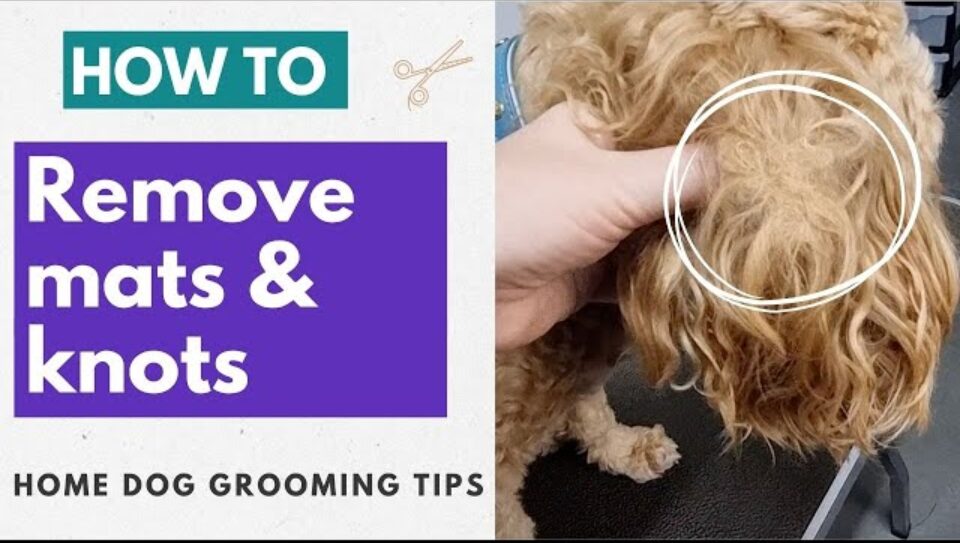
- Spray, don’t force. Apply detangling spray into the mat and let it sit a minute or two. Dry mats resist; softened ones separate.
- Anchor the base. Hold the mat firmly where it meets the skin. This stops the pulling sensation from reaching your dog, and if your fingers slip, the friction lands on your hand instead.
- Work outside in. Tease apart the outer edge with your fingers first. Once loosened, switch to the wide-tooth comb, starting at the tip and working toward the skin in small increments — never the reverse.
- Bring in a mat splitter for anything stubborn. Draw it through in short, controlled strokes, letting the blades section the clump into pieces you can comb through normally.
- Finish with the comb. Wide teeth first, then narrow. If it glides clean, that section is done.
- Reward and move on. Treat after each mat and let your dog reset. Several short sessions beat one long, exhausting one.
Dog Ear cleaning: The Spot Everyone Misses.
This is consistently one of the most searched mat locations, and for good reason — it’s also one of the easiest to miss entirely. The ear flap rests directly against this area, trapping moisture and creating constant low-level friction every time your dog moves their head.
Lift the ear flap fully before you start, rather than brushing around it. Use a smaller wide-tooth comb section here, since the skin is thinner and more sensitive than on the body, and work in shorter strokes.
If a mat behind the ear feels tight against the skin rather than just tangled in the hair, this is one of the few spots where I’d skip the DIY approach entirely and let a professional handle it — the skin here is delicate enough that the risk-reward tips toward caution. you can read a complete Guide about Dog Ear Cleaning you can visit our blog How to Clean Dog Ears at Home.
Home Remedies for Matted Dog Hair
Both get searched constantly, and the honest answer is: partially, and situationally.
Cornstarch works by adding dry friction-reducing grip to the mat, which can help your fingers and a comb gain traction on a slippery or oily mat. Rub a small amount directly into the tangle before working it apart. It’s a reasonable assist for small to medium mats, not a standalone fix for anything dense or close to the skin.
Coconut oil works the opposite way — it’s meant to soften and lubricate rather than add grip. In thin layers, worked into a mat and left for a few minutes, it can help loosen dirt and debris that’s binding the hair together. The tradeoff: oil makes the coat greasy afterward and needs a proper wash out, so it’s not a great choice right before you’d planned to skip a bath.
Neither replaces a detangling spray formulated for coat work, and neither is safe to rely on for a mat that’s pelted against the skin. Think of them as situational helpers, not solutions.
When a Mat Is Too Severe to Remove Yourself
Some signs mean it’s genuinely time to stop and call a professional rather than keep working at it:
- You can’t see or feel skin anywhere underneath the mat (pelting)
- The dog flinches, yelps, or pulls away sharply when the area is touched
- The mat is near the ears, eyes, or genitals
- The skin underneath looks red, raw, or has an odor
- You’ve spent more than 15–20 minutes on one mat with no progress
In these cases, a professional groomer will typically use a clipper with the shortest safe blade to shave the area out rather than risk skin injury with scissors. This isn’t a failure on your part — it’s the correct call, and the coat grows back.
Preventing Mats Before They Start
The fastest mat to deal with is the one that never forms. A few specific habits matter more than general “brush more”:
- Remove collars and harnesses during rest periods — constant contact in one spot is a major, underrated mat trigger
- Brush before any bath, always — never after
- Brush again after swimming or play in wet grass, once the coat is dry, not while still soaked
- Check the puppy coat transition window — when soft puppy fur starts mixing with incoming adult hair, matting accelerates fast regardless of how diligent you’ve been
Frequently Asked Questions
The Real Takeaway
Most mats are fixable without ever reaching for scissors — patience, the right tools, and working from the outside of the tangle inward get you through the vast majority of them. The cases that genuinely need a professional are rarer than the internet makes them sound: pelted coats, mats right against the ears or eyes, or anything that’s clearly causing pain.
Catch them small, and removing a mat becomes a two-minute interruption instead of a project.