
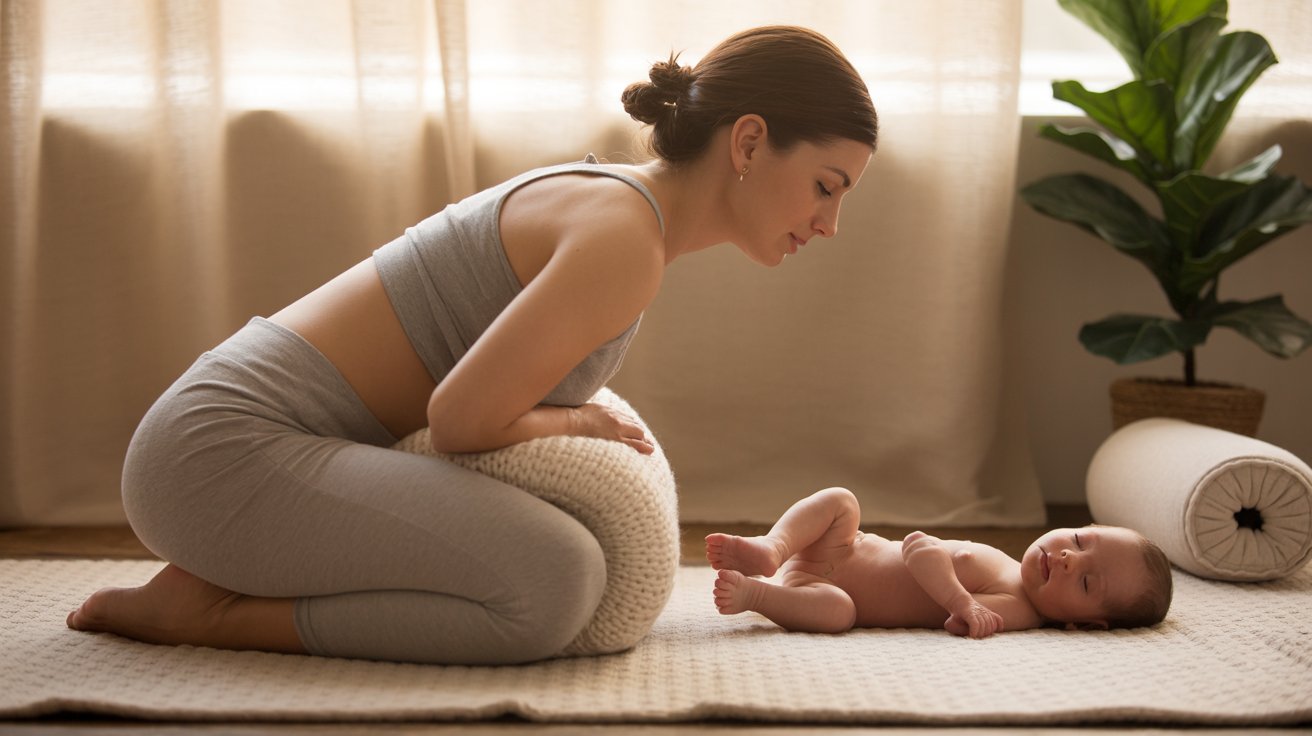
Hey mama. Take a deep breath. Inhale… and exhale.
You’ve just done something incredible. Whether you gave birth hours, days, or weeks ago, your body and mind have been through a monumental transformation. Now, in the whirlwind of round-the-clock feedings and endless diaper changes, finding a moment for yourself can feel impossible.
This is where postpartum yoga comes in.
“Did you know 1 in 3 women experience pelvic floor issues after birth? Postpartum yoga is one of the safest ways to heal gently—without pushing your body too soon. Doctors at the American College of Obstetricians and Gynecologists (ACOG) recommend waiting until your 6-week checkup (or 8–10 weeks after a C-section) before starting structured movement. But once you have the green light, postpartum yoga becomes one of the safest, most holistic ways to begin moving again.”
Forget everything you think you know about intense workouts or “bouncing back.” This isn’t about that. This is a gentle path back to yourself. It’s a form of trauma-informed movement designed to help you heal, restore your strength, and reconnect with your core, one slow breath at a time. Think of it as a collection of gentle postpartum stretches that honor exactly where you are right now.
What Is Postpartum Yoga, Really? And Why Should You Try It?
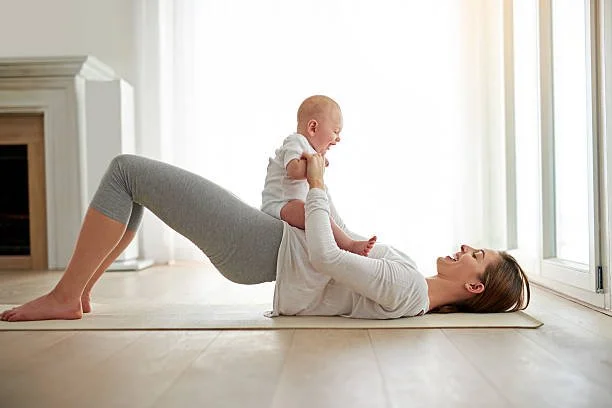
Postpartum yoga, often called postnatal yoga, is a modified practice specifically designed for the healing body after childbirth. It focuses on rebuilding core stability, promoting pelvic floor awareness, and releasing the tension that comes from holding, feeding, and loving on a new baby.
So, why try it? The yoga postpartum benefits go way beyond the physical. It’s a dedicated space to:
- Heal Your Body: Gently re-engage deep core muscles, improve circulation to aid tissue repair, and support your back and pelvis.
- Calm Your Mind: Use your breath to regulate stress hormones (like cortisol), which can be a game-changer for managing overwhelm. It’s an amazing tool for postpartum yoga for anxiety and depression.
- Reconnect with Yourself: In a time when your identity can feel completely wrapped up in being “mom,” postnatal yoga helps you check in with your own body and feel at home in it again.
When Is It Safe to Start Postpartum Yoga? (What to Avoid)
Before you unroll your mat, the most important rule is to get clearance from your doctor or midwife. Every body and every birth is different. Knowing when to start yoga postpartum is key to a safe yoga after birth recovery.
According to ACOG (American College of Obstetricians and Gynecologists) guidelines, gentle movement is encouraged, but it’s crucial to listen to your body and your provider.
- For a Vaginal Delivery: Most providers recommend waiting until your 6-week postpartum checkup for clearance, especially if you had tearing or stitches.
- For a C-Section or Assisted Birth: The timeline is typically longer, around 8-12 weeks, to allow your incision to heal properly. The focus will be different, making a specialized yoga for C-section recovery plan essential.
- Listen for These Red Flags (And Pause if You Feel Them): Your body will give you signals when it’s not ready. Stop and consult your doctor if you experience:
- An increase in postpartum bleeding (lochia).
- Feelings of pelvic heaviness, dragging, or bulging (signs of prolapse).
- Pain in your incision, pelvis, or back.
- Dizziness or shortness of breath.
- Coning or doming in your abdomen (a sign of diastasis recti that needs specific care).
For concerns about your core and pelvic floor, a Pelvic Floor Physical Therapist is your best friend. They can give you a personalized assessment and guidance.
How Postpartum Yoga Supports Your Healing Journey?
The benefits of a safe yoga after pregnancy routine are incredible. It’s not just about stretching; it’s a holistic approach to recovery. Here’s a breakdown of how it works:
🩸 1. Improves Circulation → Reduces Swelling & Aids Tissue Repair
After pregnancy and delivery, many moms experience swelling in the legs, ankles, and feet. Gentle postpartum yoga poses like Legs-Up-the-Wall or Cat-Cow help improve blood flow and lymphatic drainage. Better circulation means:
- Faster tissue repair (especially around the perineum or C-section scar)
- Reduced swelling and heaviness in the pelvis and legs
- More daily energy to handle newborn life
💪 2. Builds Core Stability → Protects Pelvic Floor & Supports Spine
Pregnancy stretches and weakens the abdominal wall and pelvic floor. Postpartum yoga safely reintroduces deep core activation without straining. Poses like Bridge Pose or Modified Plank gently retrain the core to support your spine.
- Protection against pelvic organ prolapse
- Reduced back pain from baby-carrying and feeding posture
- Stronger posture that prevents long-term imbalances
🌬 3. Restores Breath → Nervous System & Hormone Balance
During pregnancy, the diaphragm gets pushed up — and many moms continue shallow chest-breathing postpartum. Diaphragmatic breathing, a core part of postpartum yoga, re-teaches your body how to breathe deeply.
- Activates the parasympathetic (“rest and digest”) nervous system
- Lowers cortisol (stress hormone) levels
- Promotes calm, focus, and better sleep
🧘♀️ 4. Reconnects Mind & Body → Confidence & Emotional Healing
Postpartum can feel like you’ve “lost” your body to motherhood. Yoga helps you gently reclaim it. Through mindful movement and meditation, you begin to:
- Rebuild body confidence without pressure to “bounce back”
- Cultivate awareness of your new strengths
- Ease postpartum anxiety and baby blues with calming breathwork
This powerful breath-to-body connection is what makes postpartum yoga so effective. Certified postpartum yoga instructors and pelvic floor specialists design programs that focus on this synergy for a safe and effective yoga after birth recovery.
The Best Postpartum Yoga Poses, Organized by Your Healing Goal
Feeling overwhelmed and just need to breathe? Or are you ready to gently re-engage your core? Pick a goal below. These are some of the best postpartum yoga poses you can do.
Relaxation & Nervous System Reset: Poses for Pure Calm
When you feel touched-out, exhausted, or overwhelmed.
1. Legs-Up-The-Wall Pose (Viparita Karani)
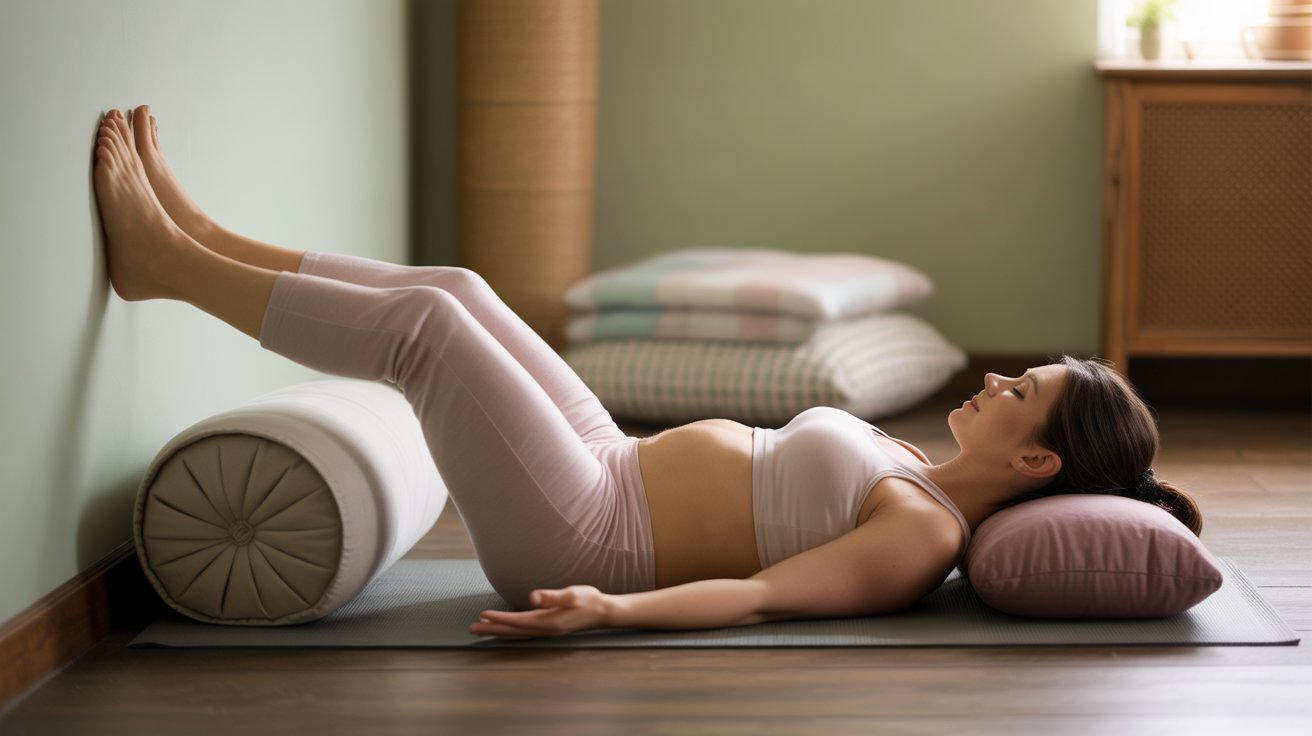
This pose is pure magic for tired legs and can help reduce swelling in your ankles and feet.
How to do it: Sit on the floor with one hip against a wall. Gently swing your legs up the wall as you lie back. Your bottom should be as close to the wall as is comfortable. Place a pillow under your hips for extra support. Rest your hands on your belly or out to your sides. Close your eyes and breathe here for 3-5 minutes.
2. Reclined Bound Angle Pose (Supta Baddha Konasana)
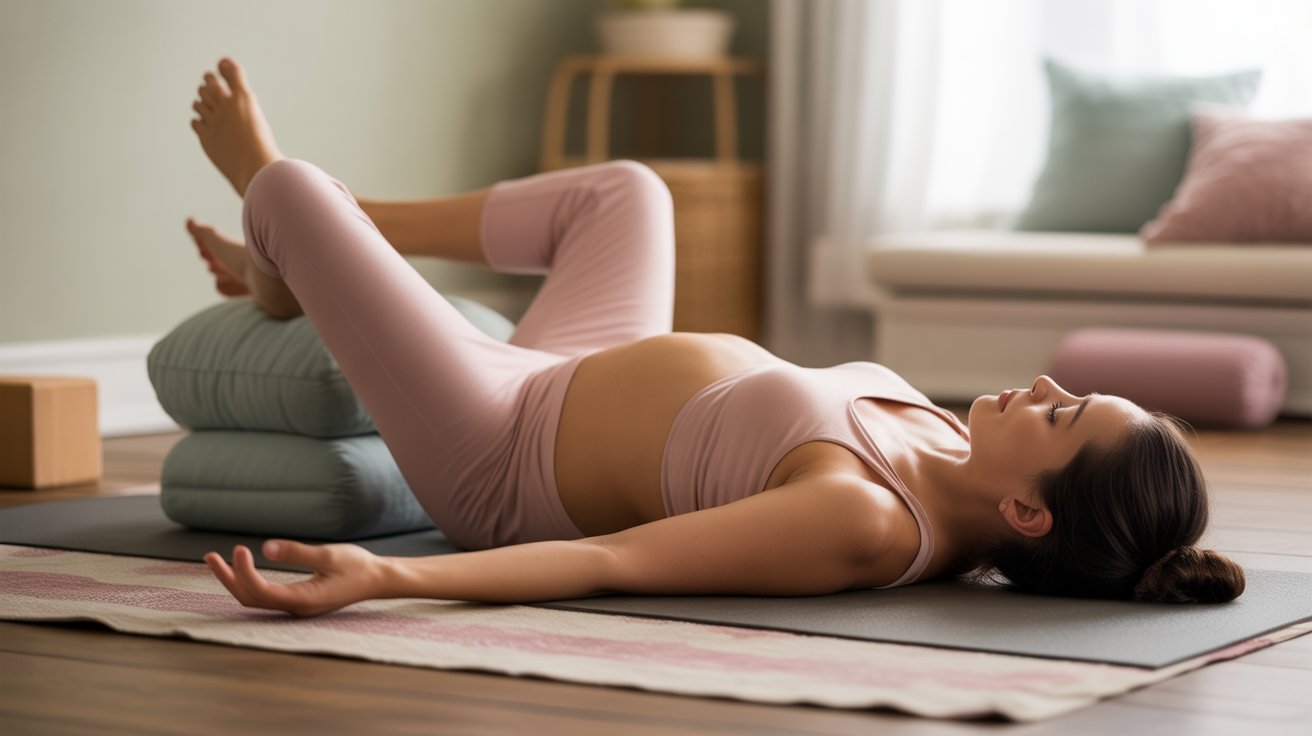
This is one of the most restorative gentle postpartum stretches for opening your hips and chest without any strain.
How to do it: Lie on your back. Bring the soles of your feet together and let your knees fall out to the sides. You can place pillows or yoga blocks under each knee for support so your hips aren’t over-stretched. Rest and breathe for 2-3 minutes.
Core & Pelvic Floor Recovery: Gentle Strength Without Strain
When you feel ready to gently reconnect with your core and pelvic floor.
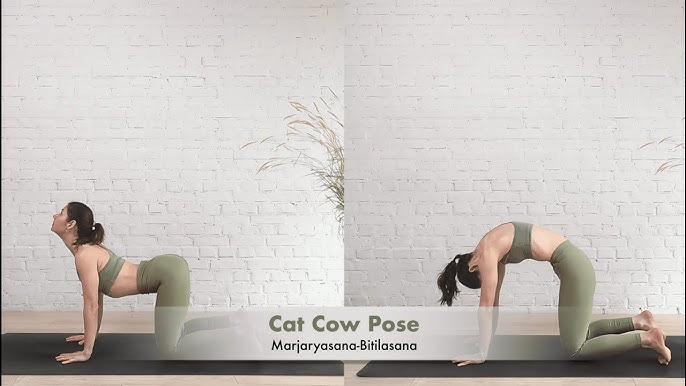
3. Cat-Cow Pose (Marjaryasana-Bitilasana)
This movement brings gentle mobility to your spine and helps you start connecting your breath to your core.
How to do it: Start on your hands and knees in a tabletop position. Place a blanket under your knees if they’re sensitive. As you inhale, drop your belly, lift your chest and gaze forward (Cow). As you exhale, round your spine, tuck your chin, and gently draw your belly button in (Cat). Flow between these two for 8-10 breaths.
Make it asier: Make the movements smaller and slower. The goal is gentle movement, not a huge backbend.
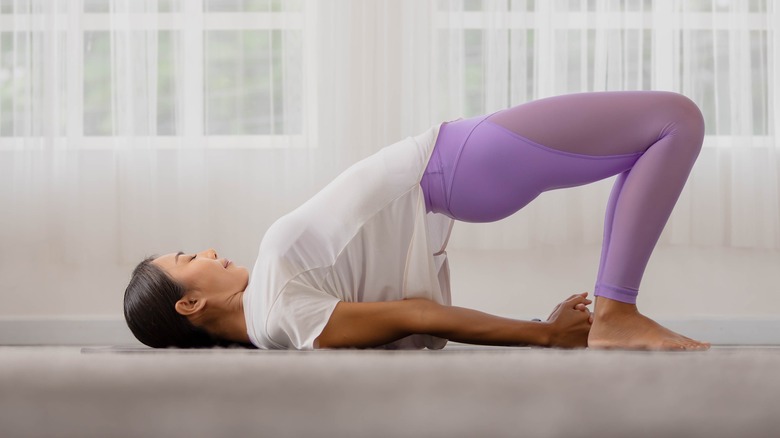
4. Modified Bridge Pose (Setu Bandhasana)
This pose helps wake up your glutes and hamstrings, which are key supporters of your pelvic floor, without putting pressure on your abdomen.
How to do it: Lie on your back with your knees bent, feet flat on the floor hip-width apart. On an exhale, press through your feet to lift your hips just a few inches off the floor. Keep your core gently engaged. Inhale as you lower back down. Repeat 5-8 times.
Make it easier: Only lift your hips an inch or two. You can also place a yoga block between your thighs to help engage your inner thighs. This is a great yoga for pelvic floor exercise.
Stress & Emotional Healing: Poses to Lift the Baby Blues
For the days you feel anxious, weepy, or just plain tired.
Postpartum Yoga After a C-Section: What You Must Know Before Starting
Healing from major abdominal surgery requires extra patience and care. A gentle yoga for C-section recovery practice can be incredibly beneficial for reconnecting to your core and improving scar mobility, but you have to take it slow.
- Timeline: Wait for full clearance from your doctor, usually 8-12 weeks post-surgery. Your incision must be fully healed.
- Focus On:
- Posture: Sitting and standing tall helps prevent your scar tissue from healing in a shortened, tight position.
- Breath: Diaphragmatic breathing is your #1 tool. It gently mobilizes the tissues around your scar from the inside out.
- Gentle Mobility: Focus on shoulder rolls, gentle pelvic tilts, and walking.
- What to Avoid: Skip any poses that put direct pressure or strain on your abdomen. This includes deep twists, strong backbends, and anything resembling a crunch or traditional plank until you are much further along in your healing.
Building a Realistic Home Yoga Routine (Even with Zero Free Time)
Let’s be real: you’re not going to have an hour to practice every day. And that’s okay!
- Start with “Yoga Snacks”: A 5-minute routine is better than no routine. Do a few Cat-Cows while the baby is on their playmat. Do some deep belly breaths while you’re feeding. It all adds up.
- Create Your Space: You don’t need a fancy studio. Find a quiet corner, unroll a mat (brands like Gaiam and Manduka make great ones), and maybe light a candle.
- Use Props: Pillows, blankets, and bolsters are your best friends. They provide support so your body can truly relax and heal.
- Find a Guide: There are amazing apps with postnatal yoga series, like Alo Moves or YogaDownload. Programs like Expecting and Empowered or MamaStrong also offer fantastic guidance for your yoga after pregnancy routine.
You can even practice postpartum yoga with baby lying next to you on a blanket. Seeing you calm and centered is good for them, too!
Mindset Shifts & Managing Postpartum Expectations
Your healing journey is not a race. It’s not linear. Some days you will feel strong, and other days getting out of bed will be a victory. That’s normal.
Focus on body neutrality—appreciating what your body can do rather than stressing about what it looks like. This practice of mindful motherhood is about giving yourself grace. The goal of your yoga after birth recovery is to feel good in your body, not to fit back into your old jeans. Paired with journaling, it can be a powerful tool for your emotional well-being.
How Cultures Worldwide Support Postpartum Healing
The focus on a slow, restorative postpartum period isn’t new. Many cultures have honored this sacred window for centuries.
- In Ayurveda, the first 42 days are for rest, warm foods, belly wrapping, and gentle breathing to re-balance the body.
- In traditional Chinese culture, “zuo yuezi” or “sitting the month,” emphasizes rest and nourishment to restore a mother’s energy.
- Modern Western physical therapy now integrates many of these same principles—rest, breathwork, and gentle movement—as the foundation for recovery.
Conclusion
Postpartum yoga is more than exercise—it’s a safe path to healing, strength, and emotional balance after birth. By focusing on gentle poses, mindful breathing, and gradual recovery, you give your body the care it truly deserves. Every stretch rebuilds your core, restores calm, and nurtures confidence. Remember, postpartum yoga isn’t about bouncing back—it’s about moving forward with grace, one breath at a time.
Frequently Asked Questions (FAQs)
How soon after birth can I do yoga?
What yoga poses should I avoid postpartum?
Is yoga safe after a C-section?
Can yoga help diastasis recti?
Is yoga or Pilates better after pregnancy?
Can yoga reduce postpartum belly fat?
Is postpartum yoga safe with prolapse?
What type of yoga is best for new moms?
How can yoga help with postpartum anxiety?
What is the 5-5-5 rule for postpartum recovery?
• 5 days IN the bed: Focusing only on rest and bonding with the baby.
• 5 days ON the bed: Still resting, but you can sit up more.
• 5 days AROUND the bed: Very light movement around your room. This rule emphasizes just how important radical rest is in those first couple of weeks before you even think about formal exercise like postnatal yoga.

[…] If you’re looking for more gentle ways to get moving, check out our list of the best postpartum yoga poses to heal! […]