Got a dog? A cat? Or both? Then you already know the struggle that comes with responsible pet ownership. No matter how much you love them, they leave hair everywhere. On the couch. On your clothes. And yep… all over the carpet. If you’ve ever searched for how to remove pet hair from carpet, you already know there’s no single magic trick — but there are plenty of ways that work.
Here’s the kicker: carpet fibers grip hair like Velcro. Static electricity, the way the fibers twist, and that constant shedding turn your floors into a fur magnet. That’s why pet hair removal from carpet can feel like a never-ending chore. Sometimes you vacuum, and five minutes later, it’s back again.
Good news — it doesn’t have to be this way. I’ve pulled together real-world tips and tools that get results. These aren’t quick fads that flop in real life. They’re tested methods that help you get pet hair out of carpet fibers without losing your weekend.
We’ll go over manual tools you can grab right now, simple household fixes, smart cleaning products, and a few pro moves to keep hair from building up in the first place. Think of it as your all-in-one guide to a cleaner, fresher carpet — and less hair sticking to your socks.
Key Takeaways
TOP 5
Key Takeaways
Quick, proven tips to keep carpets cleaner and cut your cleaning time. Save this block or share it with family and friends.
How to Remove Pet Hair from Carpet
Start by loosening fur with a carpet rake, rubber broom, or gloves, then follow up with a strong vacuum.
Pet hair removal from carpet
The best results come when you combine manual tools with cleaning helpers like baking soda or a light fabric softener spray.
Pet hair removal made simple
Groom your pet often, use de-shedding tools or shampoos in peak seasons, and cover pet-favorite spots with washable blankets.
Remove hair in small sections
Work in small areas and use good lighting. That helps you catch stubborn strands that hide in the fibers.
Buy quality pet hair removers
Good tools—manual or vacuum-based—save time and keep carpets cleaner and fresher over the long run.
Groom & Clean
Mixing regular grooming habits with quick spot-cleaning can make pet hair removal from carpet a fast, stress-free part of your weekly cleaning routine.
Understanding Why Pet Hair Sticks to Carpets
If you’ve ever fought with embedded pet hair in carpet, you know it’s not just sitting there on the surface. It works its way in and hangs on for dear life.
Carpet type plays a big role in this. Cut pile carpets have individual strands that act like little fingers, gripping each strand of hair. Loop pile carpets wrap the fibers in tight loops, which can trap worn-in pet hair deep inside. Then there’s polypropylene — a popular, pet-friendly choice — which resists stains but still holds onto hair if you skip regular cleaning.
It’s not only the fibers. Static electricity builds up in carpets, especially in dry weather. That static works like a magnet, making carpet fibers hold hair tighter. Add in the natural oils from your pet’s coat, and those hairs almost glue themselves in place.
Pile height matters too. High-pile carpets feel plush, but they swallow hair and make stubborn pet hair removal much harder. Low-pile carpets are easier to clean, but hair can still cling in the tight weave.
Once you know why it sticks, the cleaning methods we cover next will make a whole lot more sense — and a whole lot more effective.
Quick Tips Before How to Remove Pet Hair from Carpet
Before you dive into the main work, a few smart moves can save you time and effort.
First, vacuum slowly for pet hair removal. A quick once-over won’t cut it. Move the vacuum head slow and steady so the bristles can dig into the fibers and pull out more hair.
Second, prepare carpet for cleaning by getting rid of loose dirt and dust. Hair sticks to grime, so the cleaner your starting point, the easier the rest will be.
Third, always test any spray, cleaner, or solution on a hidden spot. These pre-clean tips make sure you don’t fade colors or damage the fibers.
For tricky spots, work in small sections. This keeps you focused and helps you see progress faster. And don’t forget the lighting — a bright lamp or sunlight makes it easier to spot stray hairs that love to hide in shadow.
Manual Tools for Removing Dog Hair from Carpets
When hair is buried deep, a regular vacuum can’t always cut it. That’s where manual tools like a carpet rake or rug rake come in. These aren’t just for show — they’re built to dig into fibers and pull out the stuff your vacuum leaves behind.
Carpet Rake
This tool looks like a wide brush with long bristles, often made of rubber or stiff nylon. It works by dragging through the carpet pile and lifting trapped fur to the surface.
How to Remove Pet Hair with a Carpet Rake – Step by Step
1. Clear the Area
Pick up any toys, shoes, or loose items so the rake can move freely.
If the clutter feels overwhelming, tackling it first is key to an effective clean;
you can find tips on how to declutter your home to make the process easier.
2. Adjust the Handle
If your carpet rake has a telescopic handle, set it to a comfortable height so you can work while standing.
3. Start in One Corner
Begin in a far corner of the room so you can work your way out without stepping on cleaned areas.
4. Rake in Short Strokes
Hold the rake at a slight angle and pull it toward you in short, firm strokes.
This motion helps lift embedded pet hair to the surface.
5. Work in Sections
Break the room into small areas. This keeps you focused and ensures you don’t miss spots.
6. Collect the Hair
After a few passes, gather the loosened clumps of hair by hand or with a dustpan.
7. Vacuum Immediately After
Run the vacuum over the raked section. The loosened hair will be easier for the vacuum to pick up,
making this method far more effective.
8. Repeat for Stubborn Spots
For high-traffic or high-pile areas, give them an extra rake to get every last strand.
Rug Rake
Similar to a carpet rake but made for area rugs. The bristles or comb edge are shaped to get through rug fibers without pulling them loose. If you’ve got a rug rake for carpet or a rug rake for pet hair, you’ll notice it glides better over smaller, portable rugs compared to big wall-to-wall setups.
How to Remove Pet Hair from Carpet with a Rug Rake – Step by Step
1. Lay the Rug Flat
Lay the Rug Flat: Place your rug on a hard, flat surface so it doesn’t bunch up while raking.
2. Secure the Edges
Secure the Edges: If the rug tends to slide, use rug grippers or have someone hold the corners while you work.
3. Start at the Top Edge
Start at the Top Edge: Begin at one end of the rug and work your way down in straight lines. This keeps the pile looking even.
4. Pull in Smooth Strokes
Pull in Smooth Strokes: Hold the rug rake for carpet at a slight angle and pull toward you with steady, smooth strokes. The bristles will loosen and lift trapped fur without damaging fibers.
5. Focus on High-Shed Areas
Focus on High-Shed Areas: Pay extra attention to spots where your pet likes to nap — these areas often hold embedded pet hair the longest.
6. Gather the Hair
Gather the Hair: Collect loosened clumps by hand or with a small dustpan. Removing them now keeps them from falling back into the rug.
7. Vacuum After Raking
Vacuum After Raking: Just like with a carpet rake, vacuuming right after raking will grab any hair the rake lifted but didn’t pull away completely.
8. Inspect the Rug
Inspect the Rug: Check for missed spots in good lighting. If needed, repeat in different directions to lift hair from all sides of the fibers.
Ergonomic & Stand-Up Options
Bending over for long periods can wreck your back. Look for pet hair carpet rake tools with long handles so you can work while standing. This is especially helpful if you’ve got larger areas to cover. Some brands market these as the best pet hair remover for homes with multiple shedding pets because you can work fast without crouching.
Other Manual Pet Hair Removers
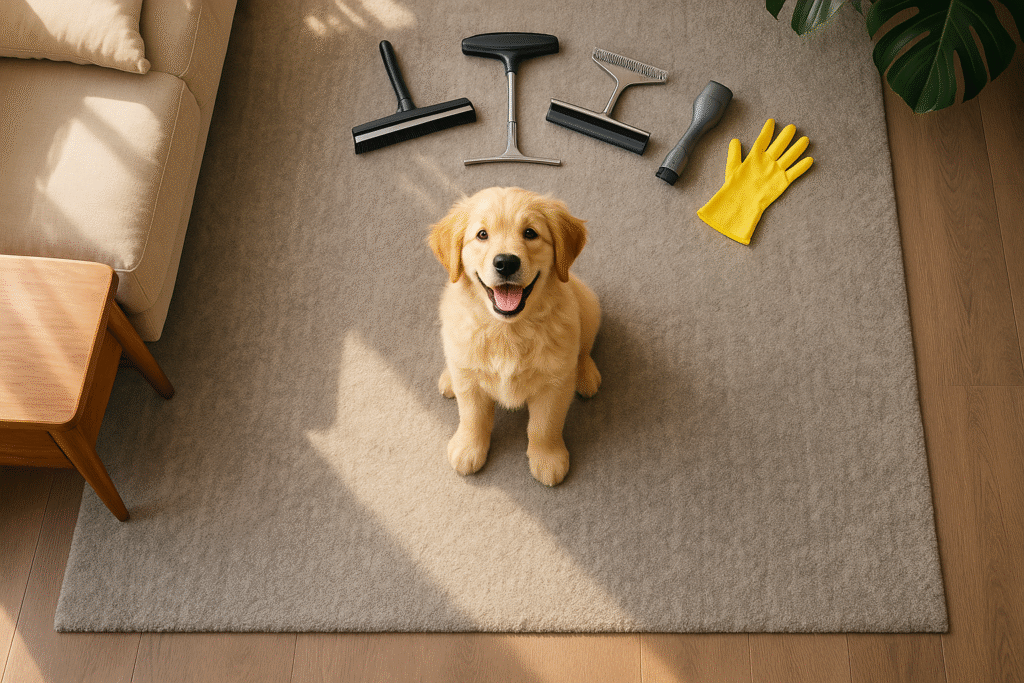
Not all tools are rakes. You can find dog hair remover, cat hair remover, carpet hair remover, rug hair remover, or even rubber squeegee-style hair carpet remover tools. Each has its own feel — rubber edges grab hair through static, while bristle combs dig it out mechanically.
Pros & Cons of Manual Tools vs. Vacuums
✅ Pros of Manual Tools
Pull up hair vacuums often miss, especially deep or embedded hair
Quiet operation — no noise like vacuums
No electricity needed — work anytime, anywhere
Won’t clog or lose suction
Great for targeted cleaning of stubborn spots
❌ Cons of Manual Tools
Require more physical effort and time
Less efficient for cleaning large areas
May not remove all fine dust and dander
Best results come when combined with a vacuum
Not as fast as using a powered tool
Rubber-Based Tools for Pet Hair Removing That Work Like Magic
When it comes to pulling out stubborn fur, rubber has a special edge. It creates static electricity that lifts hair from deep in the carpet pile and clumps it together for easy pick-up.
Rubber Broom
A rubber broom for pet hair has flexible rubber bristles that grip onto fur and pull it to the surface. It’s perfect for large carpeted areas, especially in homes with heavy shedders. The bristles generate static, which helps loosen embedded pet hair in carpet without damaging the fibers.
How to Remove Hair with a Rubber Broom – Step by Step
1. Clear the Floor
Clear the Floor – Remove clutter so the broom can sweep without interruptions.
2. Adjust the Handle
Adjust the Handle – Set the handle to your height for better posture.
3. Sweep in One Direction
Sweep in One Direction – Push or pull the broom in long, steady strokes to build static and lift the fur.
4. Work in Overlapping Passes
Work in Overlapping Passes – This ensures you don’t miss any sections.
5. Gather the Clumps
Gather the Clumps – Pick up fur by hand or with a dustpan.
6. Vacuum After
Vacuum After – A quick vacuum run will grab leftover dust and hair.
Rubber Squeegee
An ergonomic squeegee for pet hair has a flat rubber edge that scrapes over carpet fibers, dragging fur into neat piles. It works best on low-pile or tightly woven carpets. A quick tip from me: I personally found the rubber squeegee trick to be a total game-changer on my low-pile living room rug. It pulls up fur clumps the vacuum always seems to miss.
How to Remove Hair with a Rubber Squeegee – Step by Step
Choose the Right Squeegee –A long-handled one saves your back, while a handheld works for stairs and small rugs.
Hold at an Angle –Tilt the squeegee slightly so the edge catches the fibers.
Pull Toward You –Use firm strokes to drag hair into clumps.
Collect the Hair –Gather piles before moving to the next section.
Repeat in a Cross Pattern –Go over the same area in a different direction to catch missed strands.
Rubber Glove Method
Simple and cheap, rubber glove method is a lifesaver for quick clean-ups on stubborn spots. The gloves can be used dry for static lift or damp for more grip.
How to Remove Hair with Rubber Gloves – Step by Step
1. Put On Gloves
Put On Gloves – Choose gloves with a textured surface for extra grip.
2. Decide on Dry or Damp
Decide on Dry or Damp – Dry for static, damp for grip on stubborn clumps.
3. Rub in Short Strokes
Rub in Short Strokes – Move your hand in small circles or short pulls over the carpet.
4. Ball Up the Hair
Ball Up the Hair – The hair will clump together for easy removal.
5. Rinse Gloves if Needed
Rinse Gloves if Needed – Wash off collected hair before continuing.
Pros & Cons of Rubber-Based Tools
Pros
Generate static to lift deeply embedded hair
Quiet, no electricity needed
Gentle on most carpet fibers
Great for spot cleaning and stairs
Affordable and low-maintenance
Cons
Can be slower for very large rooms
May require bending or manual effort
Not ideal for super high-pile shag carpets
Works best when combined with a vacuum
Limited reach compared to long vacuum hoses
Household Items That Double as Pet Hair Removers
Some of the best tricks for pet hair removal from carpet are hiding right in your home. You don’t always need fancy gadgets — a balloon, baking soda for carpet cleaning, or a little fabric softener for pet hair removal can do wonders. These methods are cheap, quick to try, and work great for light touch-ups or stubborn spots.
Balloon Static Method
Yes, the same party trick you did as a kid works for embedded pet hair in carpet — especially in corners and along baseboards. The rubber surface builds static electricity that attracts hair and lifts it from fibers.
How to Remove Hair with a Balloon – Step by Step
Blow Up a Balloon – Any size works, but larger ones cover more area.
Rub on Fabric First – This charges the balloon with static.
Roll Over the Carpet – Gently pass it over hairy spots, especially edges.
Collect the Hair – Pull off clumps by hand or with tape.
Recharge as Needed – Rub the balloon again if it loses static.
Baking Soda
Using baking soda for carpet cleaning is a two-in-one move: it loosens fur and deodorizes. Great for homes where pets leave both hair and smell behind.
How to Remove Hair with Baking Soda – Step by Step
Sprinkle Lightly – Dust a thin layer over the target area.
Let It Sit – Wait 5–10 minutes so it works into the fibers.
Vacuum Thoroughly – Use slow passes to lift both hair and powder.
Repeat for Heavy Odors – Baking soda to deodorize carpet can be done weekly without damage.
Fabric Softener Spray Method
Fabric softener for pet hair removal works because it loosens fibers and breaks static cling. The spray method is perfect for wall-to-wall carpets.
How to Remove Hair with Fabric Softener Spray – Step by Step
Mix Solution – Combine 1 part softener with 3 parts water in a spray bottle.
Test in a Hidden Spot – Make sure it won’t stain.
Lightly Mist Carpet – Avoid soaking; just a light spray.
Let It Dry – This relaxes the fibers.
Vacuum – Hair should lift much easier now.
Fabric Softener Sheet Method
If you don’t want to spray, a fabric softener sheet on carpet is great for small patches.
How to Remove Hair with a Fabric Softener Sheet – Step by Step
Dampen Sheet Slightly – This helps reduce static.
Wipe Carpet Surface – Move in short strokes over the fibers.
Collect Hair – Hair will stick directly to the sheet.
Anti-Static Spray
An anti-static spray for carpet stops hair from clinging in the first place. It’s a prevention trick that works best after deep cleaning.
How to Use Anti-Static Spray – Step by Step
Choose a Pet-Safe Spray – Check labels for safety.
Vacuum First – The cleaner the carpet, the better the spray works.
Lightly Spray Over Carpet – Focus on high-traffic or pet hangout spots.
Some are better for light cleaning, not deep hair removal
May require frequent reapplication
Less effective on heavy shedding without follow-up vacuuming
Anti-static sprays may need reapplication every few days
Some methods are slower for large areas
Using a Hair Vacuum Cleaner Effectively
If you’ve got a serious shedding problem, the right vacuum for pet hair on carpet can change the game. Not every vacuum is built for fur — that’s why choosing the best vacuum cleaner for pet hair is key. The right tool pulls up clumps hiding deep in the pile, catches tiny dander particles, and keeps the air cleaner for you and your pets.
What to Look For in the Best Pet Hair Vacuum
Feature
Why It Matters
Rotating Brush / Beater Bar
Lifts hair that’s wrapped around carpet fibers so suction can grab it
High Suction Power
Essential for pulling fur out of thick or high-pile carpets
HEPA Filter Vacuum for Pet Hair
Traps dander and allergens so they don’t blow back into the air
Large Capacity Bin
Prevents clogging and saves time on emptying
Special Attachments
Narrow tools for edges, stairs, and between cushions
Wet and Dry Vacuum for Pet Hair
Handles accidents and deep cleans in one go
Vacuuming Like a Pro – Step by Step
Start with a Clean Filter – A clogged filter means weaker suction. Always check it before you begin.
Vacuum Slowly – Don’t rush. Moving at half your normal speed pulls up far more hair.
Overlap Your Passes – Go over each section twice, first north-south, then east-west.
Use the Right Attachment – The crevice tool for edges, small brush for stairs, and upholstery tool for pet beds.
Empty the Bin Often – A full bin reduces suction and leaves fur behind.
Finish with a Second Pass – Especially in your pet’s favorite hangouts.
Reusable Pet Hair Removers & Handhelds – Good for quick spot cleaning between deep vacuums.
Pro Tip: Combine your pet hair vacuum for carpet with a manual tool like a carpet rake before vacuuming. This loosens embedded pet hair in carpet fibers, so the vacuum picks up more in fewer passes.
Professional & Deep Cleaning Options
Sometimes, no matter how hard you work, your carpet just won’t give up all that pet hair. That’s when it’s time to bring in the big guns — either by calling a professional carpet cleaning service for pet owners or by using professional carpet cleaning machines yourself.
When to Hire Professionals
If your carpet is old, high-pile, or has years of fur worked into the fibers, pros have the tools and know-how to pull it out. They can deep clean carpet for pet hair while also tackling odors and stains, which can sometimes be linked to common pet behavior problems like marking or anxiety. Even dander that’s sunk into the backing. Plus, they’re quick — what might take you all weekend can be done in a couple of hours.
Renting vs Owning Deep Cleaners
You don’t have to buy a $500 machine if you only need it twice a year. Many hardware stores rent out professional carpet cleaning machines for a day. Renting is perfect for seasonal refreshes, while owning works if you’re a heavy shedder household and want more frequent deep cleans.
Steam vs Dry Cleaning
Steam Cleaning – Uses hot water extraction to lift hair, dirt, and bacteria. Great for a full refresh, but carpets need drying time.
Dry Cleaning – Uses low-moisture compounds to lift dirt and fur. Faster drying, safer for delicate rugs, but may not penetrate as deeply as steam.
Long-Term Carpet Care Benefits
Following a professional carpet cleaning guide for pet owners keeps fibers from matting, extends your carpet’s life, and makes daily cleaning easier. Once deep hair is removed, it’s less likely to get packed in again.
Pro Tip: If you’re getting a pro clean, schedule it right after heavy shedding season. That way, you start fresh and can keep up with lighter weekly maintenance.
How to Prevent Pet Hair Buildup in Your Carpet
The best way to fight carpet fur is to stop it from piling up in the first place, which is a core part of preventative pet care. A few smart habits can prevent pet hair buildup in carpet and save you hours of cleaning down the road.
Groom Pets Regularly
Regular brushing is your first defense against fur bombs, and mastering pet grooming at home is easier than you think. Use the right brush for your pet’s coat type:
Slicker brushes for long-haired cats and dogs
De-shedding tools for thick, double coats
Soft bristle brushes for short-haired breeds
A few minutes a day, following a proper grooming routine, keeps loose hair off your floors and out of your carpet fibers
Use De-Shedding Shampoos Seasonally
During heavy shedding seasons, a de-shedding shampoo for dogs and cats can help remove loose fur before it ever hits your carpet. Work it into their coat, rinse well, and follow with a good brushing. It’s like spring cleaning — but for your pet.
Focus on Diet
A healthy coat starts from within. Excessive shedding can sometimes be linked to diet. Ensuring your furry friend has proper nutrition can lead to a stronger coat that sheds less. For more details, check out this pet nutrition guide.
Keep Humidity at Healthy Levels
Dry air builds static, and static makes fur stick like Velcro. Running a humidifier to reduce static hair cling keeps your home comfortable and makes vacuuming easier. Aim for 40–50% indoor humidity.
Protect High-Shed Zones
If your dog loves one corner of the couch or your cat has claimed a sunny patch on the rug, throw down a carpet protector or washable pet blanket. When it’s laundry day, just shake it out and toss it in the wash — way easier than pulling hair from the carpet pile.
Pro Tip: Make grooming and carpet care part of your regular routine. A few minutes each day beats spending your whole Saturday with a vacuum and lint roller.
Dealing with Pet Hair in Cars and on Stairs
Pet fur doesn’t just live on your living room carpet. It rides along in your car and piles up on the stairs too. Both spots need a little extra attention since they’re smaller, tighter, and harder to reach.
How to Remove Dog Hair from Car Carpets
Carpet in cars grabs hair even tighter than the stuff at home. The fibers are short but clingy, and fur gets pressed in by shoes and paws.
Best tools for the job:
Dog hair remover for car carpet – Rubber brooms, squeegees, or pet hair magnets work wonders here.
Compact pet hair remover for car interiors – Handheld vacuums with pet attachments or small detailing brushes.
Lint rollers – Quick for seats and mats.
Quick tip: For stubborn hair, mist the carpet lightly with water or fabric softener mix, then use a rubber squeegee to pull fur into clumps before vacuuming.
Removing Pet Hair from Stairs
Stairs are a magnet for fur because pets love to nap on them or pass through all day. Plus, the tight corners make cleaning tricky.
Compact solutions:
Mini carpet rakes for stairs
Small upholstery attachments for vacuums
Hand brushes or rubber gloves for embedded spots
Pro tip: Start at the top and work your way down. This keeps loosened hair from falling back onto cleaned steps.
Choosing the Right Carpet for Pet Owners
Sometimes the best defense is a good offense. If you’re in the market for new flooring, picking one of the best carpets for homes with pets can save you years of cleaning headaches. The right material and style won’t just hide hair better; they’ll actually make it easier to remove.
Pet-Friendly Carpet Materials: Polypropylene vs. Nylon
Polypropylene (Olefin): This is a champ for pet owners. Polypropylene fibers are solution-dyed, which means the color is part of the fiber itself. Translation: it’s incredibly resistant to stains (hello, muddy paws and accidents!) and doesn’t absorb moisture. It’s also less staticky, so hair sits on top instead of clinging for dear life.
Nylon: While nylon is super durable and great for high-traffic areas, it’s more absorbent than polypropylene. It needs a good stain-resistant treatment to stand up to pets. It can also build up more static, making it a bit of a fur magnet.
Carpet Types for Pet Owners: Cut Pile vs. Loop Pile
Cut Pile: This is your best bet. In a cut pile carpet, the fiber loops are cut at the top, creating individual strands. This means there are no loops for your dog’s or cat’s claws to snag on. It also makes it much easier for a vacuum or carpet rake to pull hair out from the base.
Loop Pile (like Berber): Avoid this if you can. The tight loops are a perfect trap for pet hair, forcing it deep into the carpet backing. Worse, pets’ claws can easily get snagged in the loops, which is a common hazard that can injure your pet. This is a key aspect of pet safety at home that goes beyond just the carpet.
Why Low-Pile is Your Best Friend
No matter the material, always lean toward a low-pile carpet. Plush, high-pile, or shag carpets look cozy, but they are a nightmare for pet hair. Fur sinks deep into the long fibers, making it almost impossible to remove completely. A low-pile carpet keeps the hair and dander sitting right on the surface, where your vacuum and other tools can actually reach it.
Final Thoughts on Pet Hair Removal from Carpets
Keeping floors fur-free isn’t a one-and-done job. The truth is, how to remove pet hair from carpet depends on your carpet type, your pet’s coat, and how often you clean. We’ve covered the big hitters — from rakes and rubber tools to vacuums, sprays, and even balloons — because no single method works for everyone.
The best way to remove pet hair from carpet is to mix and match. Use a carpet rake or rubber broom to loosen deep fur. Follow with a strong pet hair vacuum to pull up what’s left. For stubborn spots, a little baking soda or fabric softener can make all the difference.
And don’t forget prevention. Regular grooming, a good de-shedding shampoo, and a few protective covers go a long way toward pet hair removal from carpet before it becomes a weekly battle.
In short, clean smart, clean often, and try different tricks until you find your sweet spot. That’s how you keep your home looking fresh, your carpets lasting longer, and your furry friend’s hair right where it belongs — on them, not on your floor.
Sarah Lauren
Hi, I’m Sarah Lauren — proud mom to two beautiful angels and a lovable pet! I created Social Mom Blog as a go-to space for fellow moms and families. Here, I share heartfelt parenting tips, practical pet care advice, cozy home decor inspiration, and lifestyle wisdom to help you thrive in every season of life. Let’s navigate motherhood and homemaking together — with love, laughter, and a little bit of coffee!