Remember when bath time took ten minutes and your dog shook off, trotted to the kitchen, and forgot all about it? Now the same routine ends with stiff legs, a long lie-down, and a dog who eyes the bathroom door with suspicion.
That shift is what senior dog grooming is really about: not a new set of products, but a slower, kinder version of the routine you already know. By the end of this guide, you will know what to change, what to stop forcing, and which changes mean a vet call, not a grooming tweak.
Quick Answer
Senior dog grooming means shorter, supported, gentler sessions: groom on a non-slip surface (on the floor if standing is hard), split the work across days when needed, brush thin skin with light pressure, check nails more often because less-active dogs wear them down less, and use every session as a skin and lump check. Baths should be lukewarm, short and followed by thorough drying so an older dog never gets chilled.
A new lump, sudden grooming intolerance, pain, skin change, or a dog who suddenly cannot stand or walk normally needs veterinary attention. Stop grooming and call your vet rather than working through it.
How Aging Changes Grooming Needs
Aging does not change what grooming is for. It changes what it costs your dog. Some older dogs develop arthritis or other painful mobility problems, so standing still for a groom can hurt. They may also struggle to reach every part of their body, so mats can form where they never used to, such as behind the ears, under the legs and around the rear end. And because a less active dog walks less on hard ground, nails wear down less, which quietly changes how they stand and walk.
Skin and coat can change with age or illness too, but not every senior has fragile or dry skin, so look at your own dog rather than assuming.
The American Kennel Club (AKC) says that as dogs stiffen with age, they find it hard to reach every area of their body, so regular brushing and haircuts help prevent matting, and nails need trimming more often because less-active dogs do not wear them down the same way. It also calls grooming a good time to check for lumps and bumps, which become more common with age.
So grooming older dogs is part hygiene, part health check and part comfort care. Shorter, softer, supported and stopped early beats longer, faster and finished. For the ground rules that apply at every age, start with my complete guide to grooming your dog at home.
How Senior Dog Grooming Differs by Coat and Mobility Need
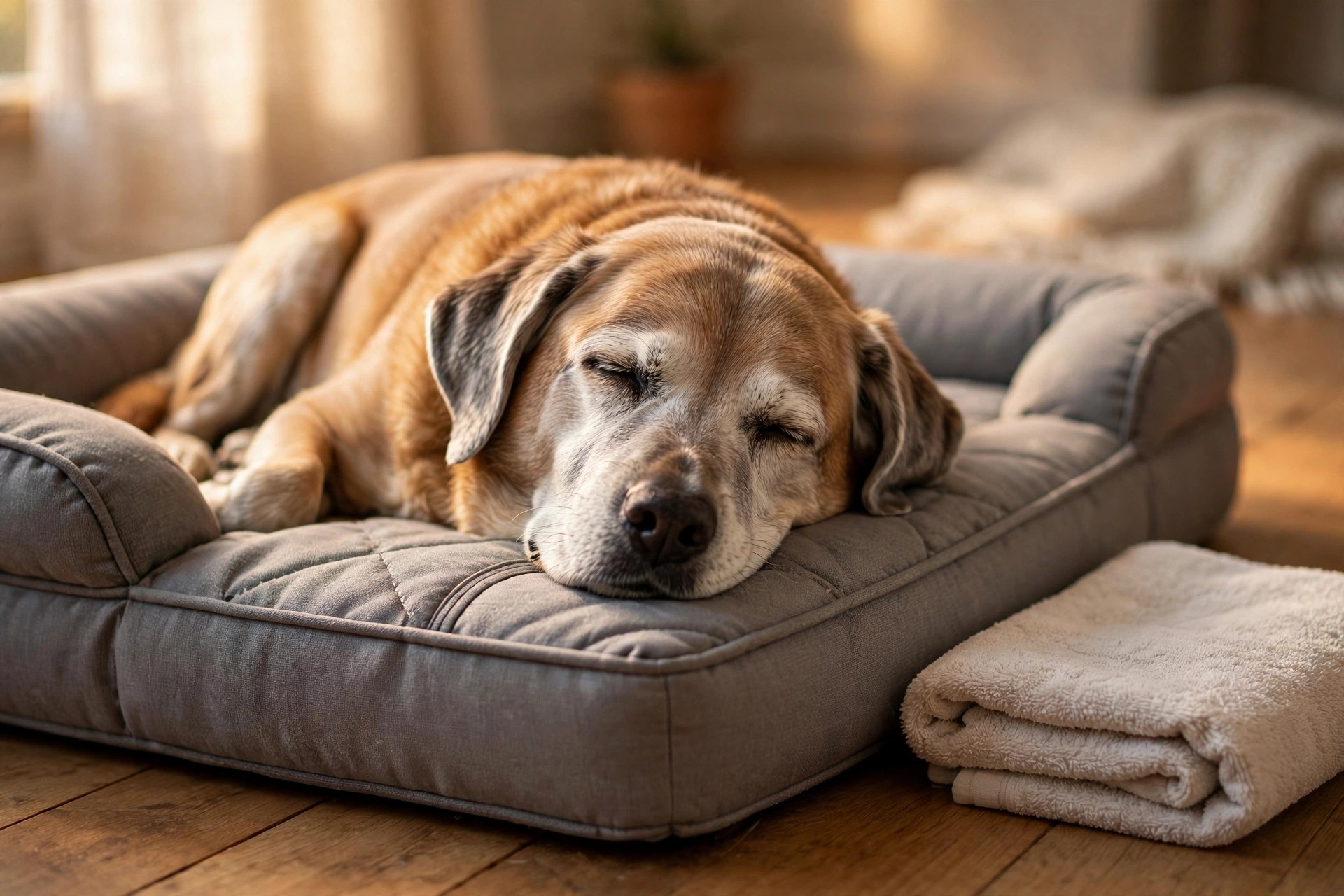
Coat type still decides the tools, but mobility now decides the position, the pace, and sometimes whether a task happens at home at all.
- Short, smooth coats. A gentle weekly brush, a wipe-down between baths and regular nail checks often cover it. The risk is not matting; it is missing things. Short coats show every lump, sore and dry patch, so the brush-through doubles as the skin check.
- Long coats. These mat first where a senior cannot twist to reach: belly, back legs and rear end. Little-and-often brushing beats a weekly marathon. Never drag a brush through a mat on thin skin, and never cut a tight mat with scissors yourself. A tight mat needs a professional, because skin can be pulled up into it.
- Double coats. Do not shave a double coat to the skin as routine grooming. A shorter comfort trim for an old, arthritic dog is a different thing, but that is a conversation with a groomer, not a home experiment.
- Curly or non-shedding coats. These mat fastest when brushing slips, and seniors are exactly the dogs whose brushing slips. If the coat is getting away from you, book a groomer sooner and ask for a lower-maintenance length instead of one long, painful dematting session at home.
- Low-mobility dogs (any coat). Groom on the floor or on the dog’s own bed and let your dog choose a position. Some arthritic dogs cannot stand for long, but lying on a hip or the spine can hurt too, so let them shift and move around. Groom one side now and the other side later.
How to Groom a Senior Dog Step by Step
Here is the order that works for most older dogs. Each step is explained in more detail below.
- Set up first. Put a non-slip mat down, lay out everything you need, and keep a towel and treats within reach so your dog never stands waiting.
- Check how your dog is today. Watch how they stand and move. If they seem sore, tired or unsettled, keep it to a quick wipe-down.
- Brush gently, one section at a time. Use light strokes and run your hands over the whole body as you go.
- Check paws and nails. Look at the pads, between the toes and the dewclaws, and trim a nail or two if needed.
- Tidy the face, ears and rear end. Wipe the eye corners, clean the visible outer ear and keep the rear end clean and dry.
- Bathe only when needed. Keep it lukewarm and short, then dry thoroughly.
- Stop while your dog is still calm. End with a treat, and note any new lump or sore spot with its location and the date.
Use a Non-Slip, Supported Setup
Good grooming for older dogs starts before a brush touches the coat. Most problems begin when the dog slips, braces or is lifted awkwardly, and everything after that is tense.
- Put grip under every paw. A non-slip mat in the bath and a non-slip rug or yoga-style mat on the floor is the cheapest senior upgrade there is. If your dog already slips on your kitchen floor, they will slip in the bath, so fix the surface first.
- Lower the height, or skip it. A grooming table is not mandatory, and for a stiff dog it can be the hardest part of the session: up, stand still, down again. The floor, a low platform or the dog’s own bed is a perfectly good senior setup. If you do use a table, lift the dog on and off. Never let an older dog jump off a table, and never leave a dog unattended on a table or in a bath.
- Support, do not hold still. A second person helps with a larger senior: one steadies while the other brushes or trims. Support the body without squeezing the belly or pressing on sore joints, and ask your vet or a rehabilitation professional how to support a dog with limited mobility safely. Move joints slowly, lift a leg only a little, and approach from the front with a word first if sight or hearing has faded. Have everything ready before you start.
Shorter Sessions and More Breaks
This is the change owners resist most, because it feels like giving up. It is not. It is the whole point. Old dog grooming works best in short, calm stages.
- Split the job across the week. Brush the back and sides on Monday, do paws and nails on Tuesday, and do the face and ears on Wednesday, or whatever split fits your dog. Several short sessions a week are kinder than one long one.
- Watch the dog, not the clock. Some dogs need seconds, others tolerate longer, so let your dog’s comfort and your vet’s advice set the length. Stop or pause if you see panting that does not settle, trembling, sitting down and refusing to stand, or a flinch when you touch a spot that never bothered them before. Yawning, lip-licking and turning away are also stress signals. An unfinished groom is a successful groom if the dog ends it calm. Before you start, decide the essentials (nails, hygiene tidy, worst tangle, skin check). Styling and a perfect finish can wait.
Before grooming an older dog, I watch how comfortably the dog stands and whether they want to shift, sit or lie down. I break the work into manageable parts and stop when trembling, stiffness or distress appears rather than completing a perfect-looking finish at any cost. I would ask the veterinarian about pain or mobility concerns instead of pushing the dog to continue.
Sarah Lauren
Brushing Thin or Sensitive Skin
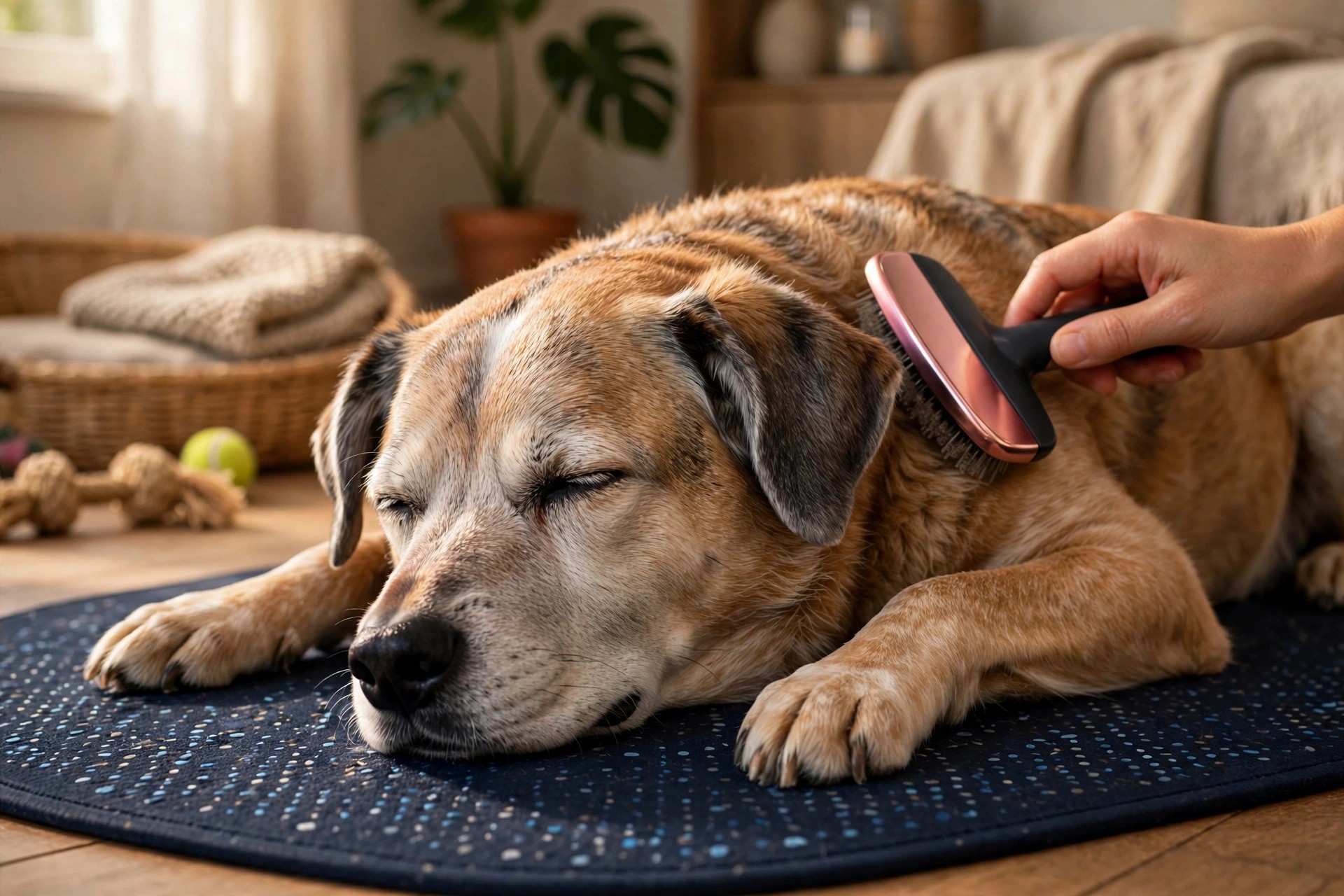
When you are grooming older dogs with thin or sensitive skin, go lighter than you think you need to. The brushing that worked for years can now scratch, pull or nick, especially over lumps, warts and skin tags, which are common in older dogs and easy to catch with a brush.
- Use gentle tools and light strokes. A soft-bristle brush, a gentle pin brush or a grooming glove works well, brushing in the direction of hair growth with slow strokes. Hold the skin gently taut with your other hand so you are not pulling the skin itself. The AKC advises brushing all the way down to the skin with gentle strokes while checking for mats, cuts and abnormalities. Do it slowly, in sections.
- Work mats from the ends inward. Hold the base of a tangle so you are not pulling on skin, and loosen the ends a little at a time with your fingers or a wide-tooth comb. If it is tight against the skin or the dog flinches, stop and book a professional.
- Use the brush-through as a health check. As you brush, run your hands over the ribs, belly, armpits, groin, behind the ears and between the toes. Note anything new with its location, rough size and the date. That note makes a vet visit much more useful. Retire any brush with bent or broken teeth, which can scratch thin skin.
With an older dog’s sensitive areas, I check coat tension before brushing and use gentle, short passes rather than pulling through resistance. I pay extra attention around bony areas and stop if the dog flinches, withdraws or the skin appears sore. When the coat is matted or skin fragile, I seek professional or veterinary help rather than forcing the brush through.
Sarah Lauren
Nails May Need More Frequent Checks
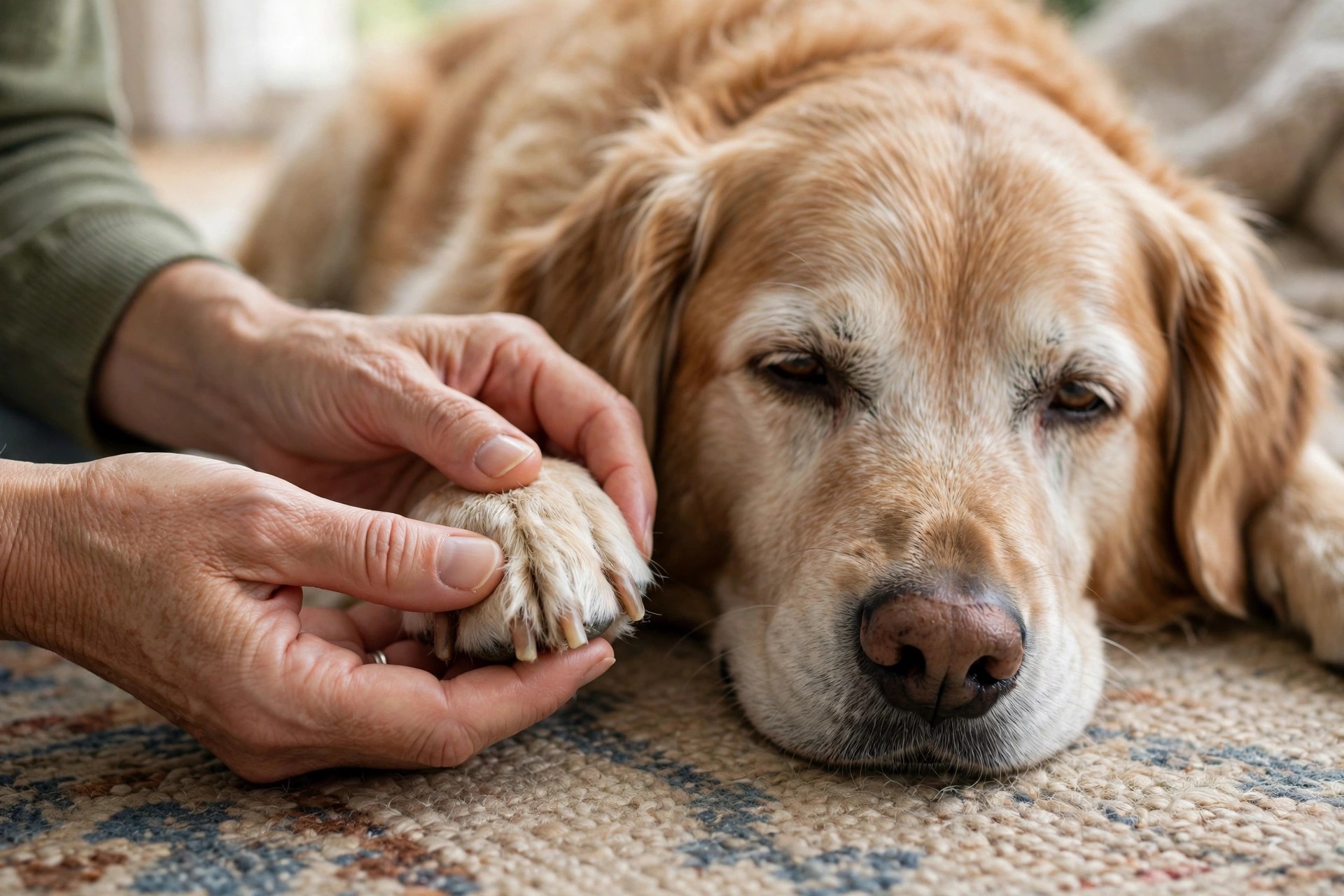
If one senior grooming task quietly does the most damage when skipped, it is nails. Less walking on hard ground means less natural wear, so nails grow longer, and long nails change how a dog stands and walks. That is the last thing a dog with stiff joints needs.
The AKC says that if you can hear your dog’s nails clicking on the floor, they are likely too long, and long nails can affect gait, cause discomfort and increase the risk of broken nails.
- Check every session, and trim little and often. Small cuts are less likely to hit the quick. Trim only the hook-like part beyond the quick, which you can see on a white nail but not on a dark one. On dark nails, take tiny slices and stop if you see a dark spot in the centre of the cut surface.
- Be patient with thick, brittle nails. Senior nails can split if a dull clipper crushes them, so use sharp clippers or a grinder if your dog tolerates it better. Keep styptic powder within reach, and if bleeding does not stop, call your vet. Do not forget the dewclaws, which do not wear down and can curl into the pad.
If trims have become a battle, split them (two nails today, two tomorrow) or hand nail care to a groomer or vet. For the full comparison of tools, see my dog nail grinder vs clipper guide.
Lumps, Bumps and Skin Changes During Grooming
This is where senior grooming stops being cosmetic and starts being genuinely important. Older dogs grow lumps. The AKC says they may be fat deposits, but they may also be cancer, so catching them early matters. Only a veterinarian can say what a lump is, and grooming is how most owners find them, because it is the one time your hands run slowly over the whole body.
Map, do not diagnose. Note exactly where a lump is, roughly how big it feels, whether it is soft or firm, whether it moves under the skin or feels fixed, and whether your dog reacts when you touch it. Brush gently around it, since lumps and skin tags are easy to catch and make bleed. Never squeeze, tie off or try to remove a lump at home.
Know the vet thresholds. Call your vet promptly for:
- any brand-new lump;
- a lump that grows quickly, changes shape or colour, or becomes hard or fixed;
- a lump that is painful, hot, bleeding or discharging;
- a sore that does not heal;
- a lump that restricts movement; or
- any skin change alongside weight loss, appetite change or lethargy.
Also flag sudden redness, flaking, a patch of hair loss, a yeasty smell, or a dog who keeps licking one spot. Keep bedding clean and soft, since pressure sores can form where a bony older dog lies.
Bathing and Drying Without Chilling
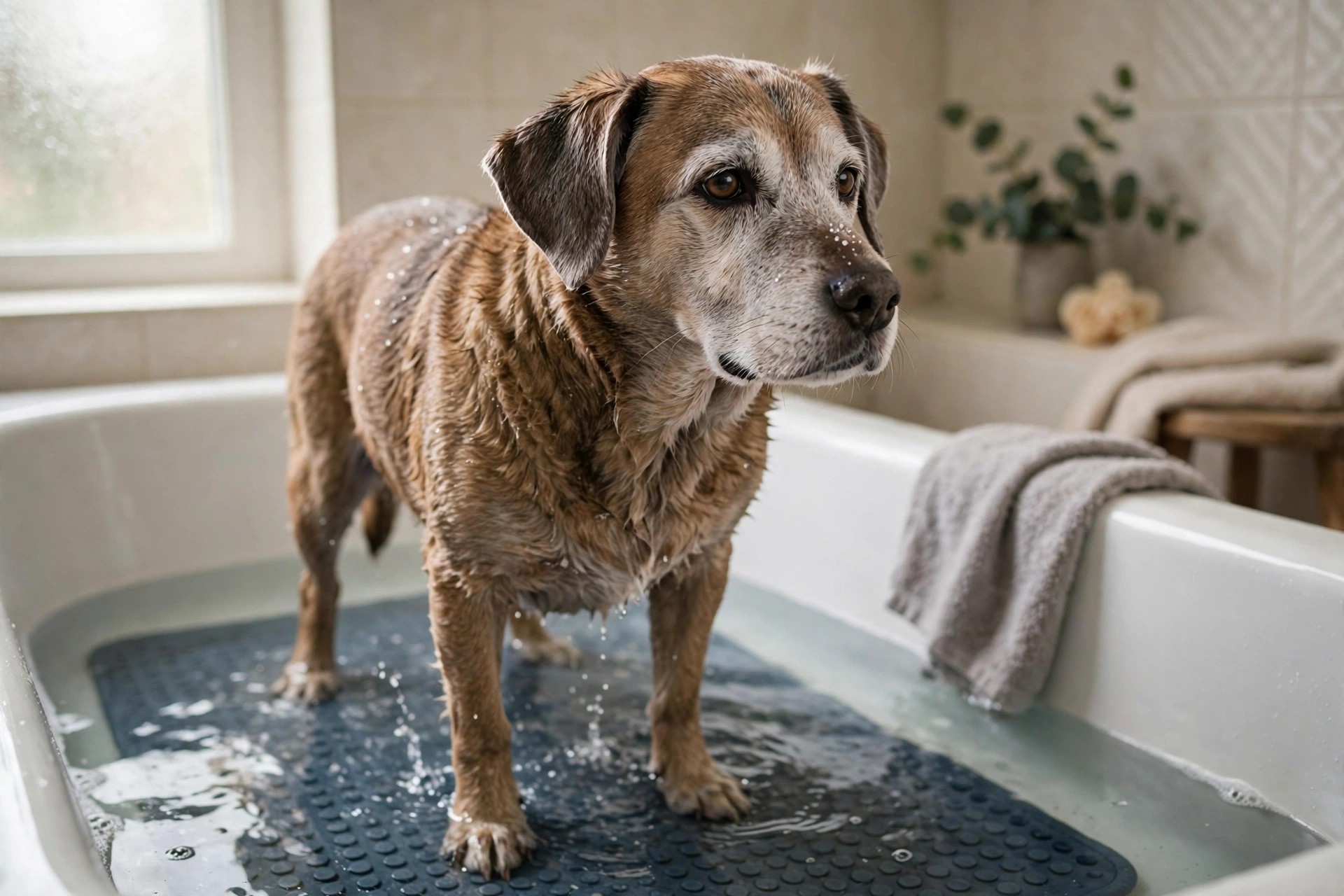
Baths are where senior dogs get cold, tired and stressed fastest. The goal of a senior bath is clean and dry, not showroom fresh.
- Keep it lukewarm, short and supported. Use warm (not hot) water, a non-slip mat in the tub and a handheld showerhead so you control the flow. Support the dog’s body while they stand, wash, rinse thoroughly and get out. Use a mild shampoo made for dogs and rinse completely, because leftover shampoo irritates the skin. Human shampoo is never a substitute. If your dog has a diagnosed skin condition, use whatever your vet has recommended.
- How often? There is no single schedule. The AKC advises bathing regularly but not too often, since over-bathing strips natural oils. Frequency depends on coat, skin, mobility and your vet’s advice, so spot-clean paws, face, rear end and skin folds with a damp cloth between baths.
- Dry thoroughly in a warm room. This is the step people rush, and it matters most for seniors, who are more sensitive to hot and cold according to the AKC. Towel-dry first, then finish with a low, warm dryer setting at a distance if your dog tolerates it, or a second towel in a warm, draught-free room if not. The AKC also warns against bathing a dog outdoors in cool or cold weather, because of the risk of a dangerous drop in body temperature. Never send a damp senior dog into a cold garden.
Mobility-Friendly Paw, Face and Rear-End Care
These are the areas a senior dog cannot reach themselves, which is exactly why they need you.
- Paws. Check pads for cracks, cuts and debris between the toes every groom, and trim fur between the pads if it mats or makes the dog slip. Dry, cracked pads can benefit from a vet-approved paw balm, especially in winter. If your dog drags their feet or slips on smooth floors, mention it to your vet. It may be a nail, pad or mobility problem, and grooming cannot tell you which.
- Face and eyes. Wipe eye corners with a soft cloth dampened in warm water. Avoid trimming near the eyes at home if your dog moves suddenly, has poor vision or has low tolerance. Use an experienced groomer or vet instead. Sudden cloudiness, squinting or a big increase in discharge is a vet matter.
- Ears. Clean only the visible outer ear with a damp cloth or cotton ball, and never push anything deep into the canal. Dry ears well after baths. Redness, swelling, discharge or a strong yeasty smell means the vet should look before you clean again.
- Teeth and mouth. The AKC says brushing your dog’s teeth daily is ideal, though a few times a week still helps, and that as dogs age, tartar buildup may need professional veterinary cleaning. Bad breath with drooling, bleeding gums or trouble eating needs a vet check.
- Rear end. Older dogs with reduced mobility, incontinence or long coats soil themselves more easily, and dried mess mats fur and irritates skin fast. A gentle wipe after toileting, keeping the hair around the area short, checking it daily and clean, dry bedding prevent most of the problem. If incontinence is new or worsening, that is a vet conversation, not just a hygiene one.
When New Grooming Resistance Means Pain
A dog who has groomed happily for years and suddenly will not be brushed, snaps when a leg is lifted or hides when the clippers come out is not being stubborn. Something has changed. New resistance can point to pain, fear, fading senses or illness, so stop and ask a vet to assess sudden changes.
Read the change, not the behaviour label. Flinching over the hips, elbows or spine, yelping when a leg is moved, reluctance to stand or climb stairs, and lying down mid-groom when they used to stand can all be pain talking. So can subtler signs like panting, trembling, freezing or going quiet and still. The fix is gentler handling in stages, not firmer handling.
Stop, note and call. If resistance is new, sudden or limited to one spot, stop grooming that area, note exactly what happened and where, and call your vet before the next session. Do not push through or restrain harder. If your dog takes pain medication, ask your vet whether timing it around grooming makes sense. Never give or change medication on your own.
Professional and Veterinary Support
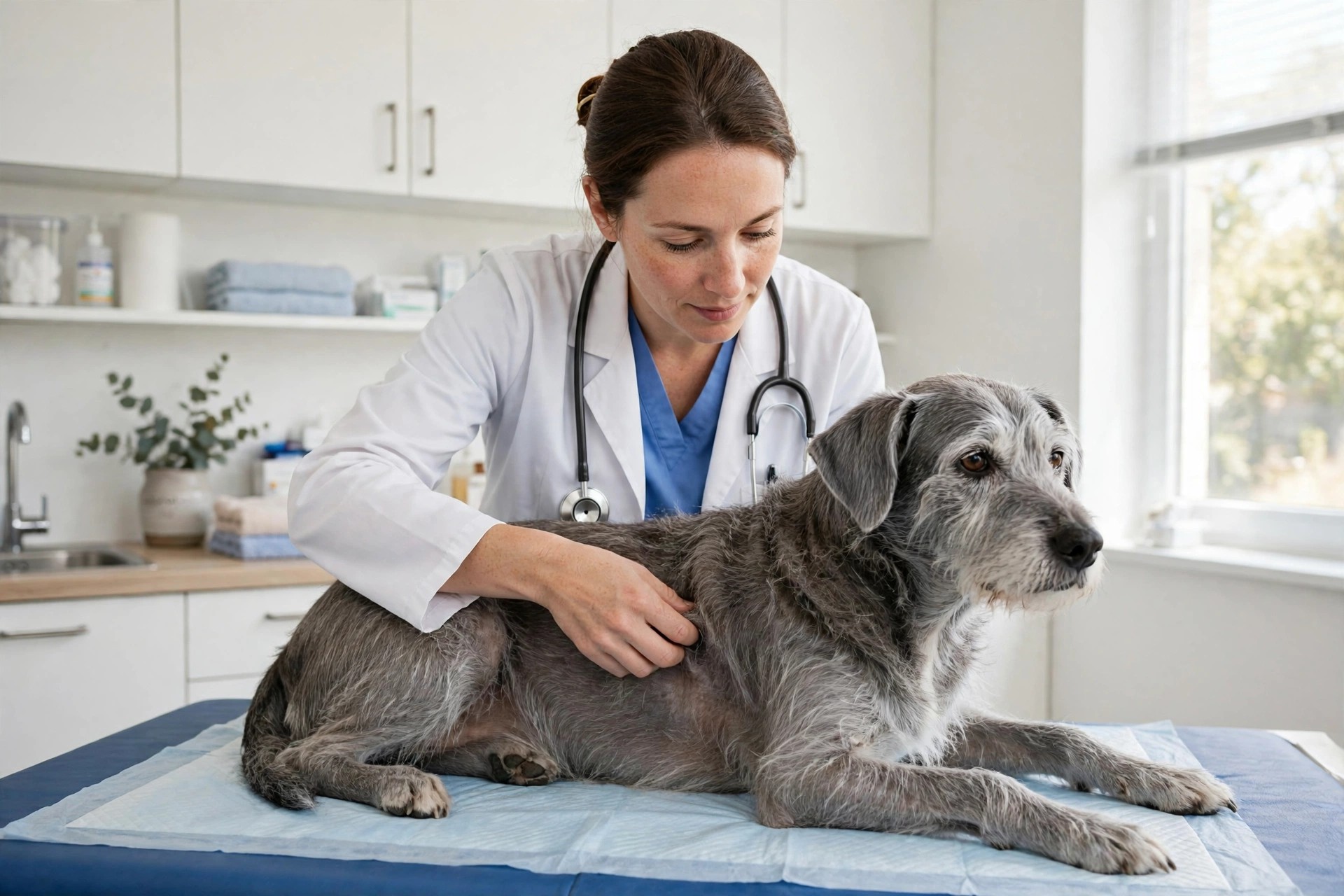
Grooming for senior dogs works best when home care and professional care share the load. Knowing which jobs belong to whom is part of senior care, not a concession.
- When a groomer is the right call. Tight mats, a coat that has got away from you, nail trims that are no longer safe at home, or a dog who needs lifting or two-person handling. Choose a groomer experienced with seniors, and tell them about arthritis, sore spots, medications, lumps and how long your dog can comfortably stand. Ask whether they will stop early if your dog tires. A mobile groomer who comes to your home may suit a dog who finds car trips and salon waiting stressful.
- When the vet comes first. New lumps, pain, skin changes, sudden grooming intolerance, a nail that will not stop bleeding, an ear that smells or discharges, or any change in walking, appetite or toileting after grooming. Grooming can reveal problems; it cannot diagnose them.
For how to tell a safe home routine from a risky one, see my guide on whether home dog grooming is safe, and for tools, see my complete home dog grooming kit guide. Hand both groomer and vet a short note covering conditions, medications, sore spots, your lump map and what your dog tolerates.
Gentler Senior Dog Grooming Routine Pros and Cons
- Comfort over finish. Shorter, supported sessions keep a stiff dog comfortable instead of exhausted — and a calm dog grooms better next time too.
- Early health detection. Every gentle brush-through is a lump, sore, and skin check, which is how many senior problems get caught early.
- Appropriate nail length can help avoid nail-related discomfort; grooming does not treat arthritis or restore mobility, which matters more the stiffer a dog gets.
- Bonding without stress. Slow, predictable grooming is genuinely pleasant time together for an old dog who mostly wants closeness and calm.
- Fewer crises. Little-and-often care prevents the matting, overgrown nails, and soiled coats that turn into painful, expensive fixes.
- It takes more calendar time. Splitting grooms across days is kinder, but it is also more sessions to remember and more notes to keep.
- It costs more if you outsource. Senior-friendly groomers, more frequent nail trims, and vet checks for every new lump all add up.
- It cannot fix pain or disease. Grooming supports comfort; it does not treat arthritis, diagnose lumps, or replace veterinary care, and pretending otherwise delays help.
- Some dogs still need a professional. Tight mats, severe anxiety, or a dog who cannot be handled safely at home are groomer or vet jobs, however good the home routine is.
Frequently Asked Questions
Conclusion
Senior dog grooming is not a new skill. It is the old routine, slowed down and softened to fit the dog in front of you. Shorter sessions, a non-slip floor, lighter brushing, more frequent nail checks and a proper skin and lump check each time make grooming for older dogs more comfortable for many dogs, but always adapt the routine to your dog’s pain, health and tolerance.
And when something changes, whether a new lump, new pain or new resistance, that is not a grooming problem to push through. It is a vet call. Start with the essentials today, and let comfort, not the checklist, decide when the session ends.
References
- American Kennel Club, “7 Easy Ways to Keep Your Senior Dog Happy” (updated 2026-03-27) — https://www.akc.org/expert-advice/health/keep-your-senior-dog-happy/
- American Kennel Club, “Dog Grooming at Home: Brushing, Bathing, and Nail Care” (updated 2026-09-02) — https://www.akc.org/expert-advice/health/how-to-groom-a-dog/
- Chronicle Forums, “Grooming senior dogs” (owner and groomer discussion, verified 2026-10-21) — https://forum.chronofhorse.com/t/grooming-senior-dogs/243302
- Dial A Vet, “Grooming Senior Dogs: Tips & Safety” — https://www.dialavet.com/blog/grooming-senior-dogs
- WagWalking, “How to Groom an Old Dog” — https://wagwalking.com/grooming/groom-an-old-dog
- Petco Vet Q&A, “My Senior Dog Has Skin Lumps: Common? Do They Need Removal?” — https://www.petco.com/pet-education/dog/vet-qa/senior-dog-skin-lumps-removal
- Petco Vet Q&A, “My Senior Dog Has Marble-Sized Lumps. When to See a Vet?” — https://www.petco.com/pet-education/dog/vet-qa/senior-dog-marble-skin-lumps-vet