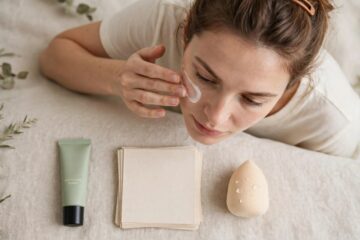
You finish your makeup, step back, and spot tiny rolls, flakes or little balls sitting on your skin. If you’ve been asking yourself “why is my makeup pilling?”, you’re not alone, and it can happen even with expensive products and a light hand. This guide explains what pilling is, the five most common causes, and a simple one-layer test to find the culprit. You usually don’t need a whole new routine. One small change is often enough.
Why Is My Makeup Pilling?
Makeup pilling happens when your skincare, sunscreen, or foundation rolls up into little gummy balls or flakes instead of melting smoothly into your skin. It usually means your product layers are sticking to each other rather than gripping your skin.
What Is Makeup Pilling? (And What It Is Not)
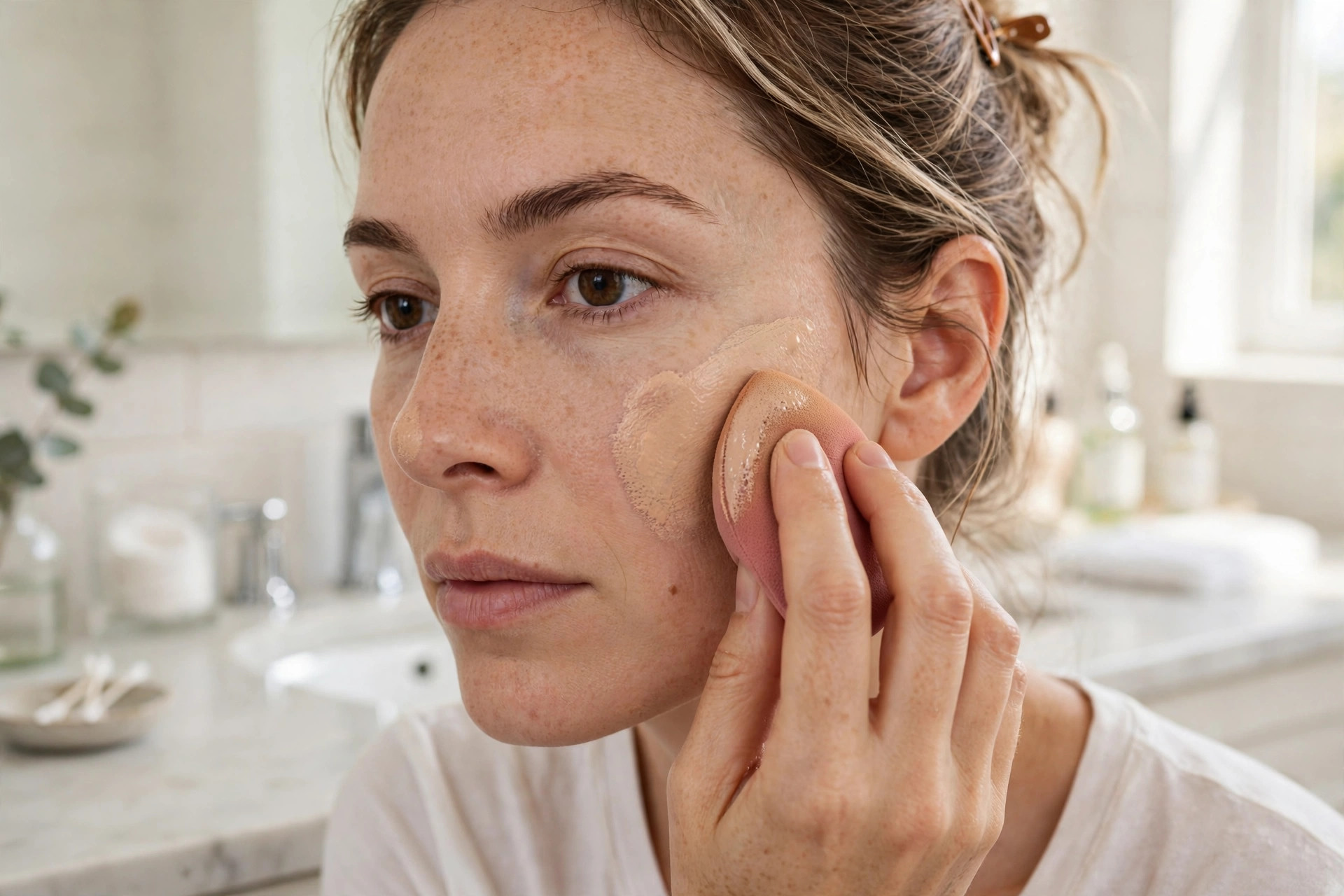
Pilling makeup usually looks like this:
- Tiny balls or rolls of product on the cheeks, nose, chin or forehead
- Flaky patches that appear as soon as foundation is blended
- Makeup that looks smooth at first, then breaks apart after a few minutes
- A rough texture when you touch the skin lightly
It is not the same as dry skin flaking, although the two can look alike. Pilling is product sitting on top of the skin and rolling up. Dry-skin flaking comes from the skin itself and is usually visible before you put anything on. The two can happen together, and they need different fixes. If you see flakes on bare skin, deal with that first, and see a dermatologist if the skin is also red, itchy or sore.
It is also not the same as foundation separating, which we cover in why foundation separates. Separating usually shows as patchiness, sliding or makeup gathering in lines. Pilling shows as small, distinct rolls or crumbs of product.
In short, pilling is a layering problem. One layer doesn’t sit well on the layer below it, or too much product is being moved around after it has started to set.
Why Is My Makeup Pilling? 5 Common Causes
Wondering “why does my makeup pill?” Start with these five causes. Often two work together, such as too much product and not enough settling time.
1. Too Much Product, Too Fast
This is the most common cause. When you layer serum, moisturiser, sunscreen, primer and foundation in quick succession, the extra product has nowhere to go. It stays on the surface and rolls when foundation is blended over it.
Signs this is the cause:
- Pilling happens mainly where you layered the most product
- Your skin feels tacky or heavy before foundation goes on
- Using less of the same products improves the result
The fix: use a thin layer of each optional step (serum, moisturiser, primer) and let each one settle before adding the next. More product doesn’t mean more coverage. It usually means more movement on the skin. The exception is sunscreen, which should never be thinned out to avoid pilling (see cause 5).
2. Not Enough Settling Time
If foundation goes on while moisturiser or sunscreen is still wet, the layers can mix, lift and roll. This is especially common in the morning, when you’re rushing.
Advice on timing varies. Some skin experts say long waits are unnecessary and that a little time for each layer is enough. One dermatologist quoted by Woman & Home suggests allowing around five minutes after your final skincare step, particularly sunscreen. A practical way to cover both views:
- Light serum or moisturiser: about 1 to 2 minutes
- Sunscreen: 2 to 5 minutes, longer if it still feels wet
- Anything that still feels wet, slippery or tacky: wait longer
You don’t need the skin to feel bone dry. The layer should feel settled, not wet, sticky or slick.
3. Rubbing Instead of Pressing
Rubbing foundation back and forth can lift the layers underneath it. Each pass moves product that has already started to set, and that movement creates rolls. Pressing places foundation on top without disturbing what’s below.
Try this instead:
- Press foundation in with a damp sponge
- Use short, gentle taps rather than long strokes
- Build coverage in thin layers instead of blending one thick layer
Pressing helps most when the layers beneath have already settled, so use it together with cause 2.
To illustrate application pressure, I use the same base on two small areas and compare gentle tapping against repeated sweeping motions. I watch whether the underlying layer shifts or rolls instead of assuming every skin type needs the same technique. If the comparison is unclear, I change the product pairing rather than keep rubbing.
4. Formula Clash: Water, Silicone, and Oil
Some products don’t layer well together. L’Oréal Paris notes that silicone-based products create a barrier that repels water, so a water-based product over a silicone one is more likely to pill, and it advises pairing like with like, such as a water-based primer with a water-based foundation. The same goes for mixing silicone with oil-based products.
This is a useful rule of thumb, but not a guarantee. Ulta Beauty’s advice is that water-based and silicone-based products aren’t automatically incompatible, because how the complete formulas interact matters more than any single ingredient. So treat it as a clue and test your own combination.
How to spot silicones: look for ingredients ending in “-cone”, “-siloxane” or “-methicone”. Water is usually the first ingredient in a water-based product.
Clues of a clash:
- Pilling only when two specific products are used together
- One product beads up on the skin before makeup goes on
- The same foundation works fine with a different moisturiser or primer
When you suspect a clash, change one product at a time so you know which pairing is the problem.
5. Sunscreen Under Makeup
Sunscreen is a frequent trigger because it forms a film on the skin. If foundation goes on before that film has settled, or if the sunscreen is very rich or silicone-heavy, the top layer can lift and roll.
To reduce the risk:
- Use the full amount. Sources commonly suggest about two finger-lengths, roughly half a teaspoon, for the face and neck, and your product label comes first. Don’t thin the layer to avoid pilling. Cut back on your optional steps instead.
- Apply it in the right order: moisturiser, then sunscreen, then primer and makeup.
- Let it set for a few minutes, or until it no longer feels wet.
- Press foundation on rather than rubbing it in.
- Keep the layers underneath light on days when pilling is a problem.
- Apply it first in your routine. Sunscreen labels typically say to apply it about 15 minutes before sun exposure, so doing it early gives it time to set while you do other things.
Don’t skip sunscreen to avoid pilling, and don’t rely on the SPF in foundation alone, because most people apply far less makeup than would be needed to reach the stated SPF. Adjust the amount of other products, the wait time and your application method first. If you’re outdoors, reapply about every two hours, as sunscreen labels advise. Some brands make setting-spray sunscreens for reapplying over makeup.
Primer Pilling: Why It Happens and How to Fix It
Primer pilling is one of the most searched versions of this problem, and it usually comes from one of four things:
- It went on over damp skincare. Unabsorbed moisturiser or sunscreen underneath gets pushed around and clumps.
- Too much, or too much rubbing. A thick or rubbed-in layer rolls under foundation.
- A silicone and water mismatch. A silicone primer under a water-based foundation, or the reverse, can separate.
- Silicone sitting on the skin. Curology notes that some people find silicone-based products lead to pilling because they sit on top of the skin.
How to fix it:
- Apply sunscreen first, then primer, and let the sunscreen set.
- Use a thin layer and press it in rather than rubbing.
- Wait a minute or two before foundation, and longer if it still feels slick.
- Match your primer and foundation bases where you can, then test.
- Try one day without primer. If the pilling stops, the primer was part of the problem, and you may not need it.
A silicone primer doesn’t have to go in the bin. It may simply not suit your current routine.
Skin Prep Mistakes That Make Pilling Worse
A base that is too rich, too dry or still wet will make even a good foundation look uneven.
- Skipping moisturiser on very dry skin, which can leave a rough surface for foundation to catch on
- Using a heavy cream under a light foundation, which adds slip
- Applying primer over wet skincare, which pushes product around instead of sitting on top of it
- Exfoliating too hard on makeup days, which may leave loose surface skin that rolls with product
Aim for a smooth, settled base: hydrated but not wet, moisturised but not overloaded. For the full routine, see our skin prep guide for a smooth base.
How to Test Which Layer Is the Problem
Instead of changing everything, test one layer at a time. It keeps the result clear and saves you money on unnecessary replacements. Work through this table from the top, since the most likely causes come first.
| Layer | What to change | How to test |
|---|---|---|
| Amount | Halve your optional products (serum, moisturiser, primer) | Use less for one full day |
| Settling time | Add 1 to 2 minutes between layers | Keep the products the same |
| Application method | Press with a damp sponge instead of rubbing | Compare one side of the face with the other |
| Sunscreen | Keep the full amount. Change the wait time or try a different formula | Compare on different days, never by applying less on one side |
| Formula pairing | Swap one product only | Compare on different days or on two sides of the face |
The finger-rub check: after you apply a product and let it settle, gently rub a finger over it. If it balls up straight away, you’ve likely found the culprit.
The one-layer test:
- Apply your usual routine on one side of the face.
- Apply the changed routine on the other side (change one optional layer, never the sunscreen amount).
- Use the same foundation and the same application method on both sides.
- Check after 10 minutes and again after 2 hours.
What the result tells you:
- If only the changed side improves, that layer was the problem.
- If both sides pill, the cause is more likely amount, settling time or application method.
- If neither side pills, the earlier day may have had too many layers or too little settling time.
Practical tip: write down your exact skincare and makeup order and change only one optional layer per trial. Notes help you narrow down combinations without guessing.
Easy Fixes That Work in Most Cases
Use these in order and stop as soon as the pilling clears, so you don’t change more than you need to.
- Step 1: Reduce optional products. Use less serum, moisturiser or primer if you tend to overdo them. Never reduce sunscreen below the labelled amount. If a product feels thick, use less. You can add a second thin layer later, but you can’t easily remove excess once foundation is on top.
- Step 2: Add settling time. Wait until each layer feels settled before the next. Use the wait to brush your teeth, choose an outfit or do your hair.
- Step 3: Press, don’t rub. Use a damp sponge, and add a second pressed layer if you need more coverage.
- Step 4: Simplify the base. On pilling-prone days, keep it to a light moisturiser, sunscreen and foundation. Leave out extra serums, oils or primers until you know which layer is causing it, then reintroduce one at a time.
- Step 5: Check the primer. If you use one, apply a thin layer and let it settle before foundation. If pilling improves without it, skip it. The right primer helps only if the layers underneath have settled. For the correct order, see our skincare layering order guide.
Note: If you stop at the pressing step, the note about the next section should still be read in full, because pressing helps most when the layers below it have already settled.
What to Do When Pilling Happens Mid-Application
If pilling makeup appears while you’re applying, stop rubbing. It will usually make it worse.
- Gently remove the pilled area with a damp sponge or clean, damp cloth.
- Let the skin settle for a minute.
- Reapply a thin layer of foundation by pressing.
- If it pills again in the same spot, remove that layer and simplify the base underneath.
Adding more foundation over pilled product rarely fixes it. It usually adds more material to roll.
Common Mistakes to Avoid
- Applying foundation over wet sunscreen or moisturiser
- Using several rich products at once on a pilling-prone day
- Rubbing or buffing the same area repeatedly
- Adding powder over pilled makeup, which often makes the rolls more visible
- Changing every product at once, which makes the cause impossible to find
- Skipping or thinning sunscreen to avoid pilling instead of adjusting everything else
Prevention Checklist
- Use thin layers of optional products, and the full labelled amount of sunscreen
- Let each layer settle before adding the next
- Wait a few minutes after sunscreen before makeup, and longer if it still feels wet
- Check for primer pilling by applying primer thinly and pressing it in
- Press foundation in with a damp sponge
- Build coverage in thin layers
- Keep the base simple on pilling-prone days
- Change one product at a time when testing a new pairing
For the bigger picture, see our complete guide to makeup order.
Frequently Asked Questions
The Bottom Line
If you’re still asking “why is my makeup pilling?” after reading this, start with the basics: less product, a short wait between layers, and pressing instead of rubbing. Pilling makeup is rarely a sign you need a brand-new routine. If it continues, use the one-layer test to find the exact step causing it, and remember that sunscreen stays in the routine. One small, targeted change is often all it takes for a smooth base.
Sources
- L’Oréal Paris: How to stop makeup pilling
- Woman & Home: Why is my makeup pilling? Here are the 7 potential culprits
- Woman & Home: How long to wait between skincare and makeup
- Ulta Beauty: Why does makeup pill and separate?
- Curology: Reasons your cosmetics are pilling and Sunscreen guide
- Eucerin: How to apply sunscreen on the face