Brush your dog’s teeth daily (or at least 3x a week) using an enzymatic dog toothpaste and a soft dog toothbrush or finger brush, working in small circles at a 45-degree angle along the gumline. Start with just letting your dog lick the paste for a few days before the brush ever touches their teeth — rushing this step is the #1 reason brushing fails.
For the complete grooming foundation that applies across every breed, the complete home dog grooming guide covers tools, technique, and troubleshooting in one place.
I went through three different toothbrushes before I found one my dog would actually tolerate — one of them she treated like a chew toy and destroyed in under a minute.
If you’re trying to figure out how to brush your dog’s teeth without it turning into a wrestling match, you’re not doing it wrong. Most dogs need weeks of practice, the right toothpaste flavor, and a technique that fits their personality, not a Pinterest-perfect routine.
Why I Actually Stuck With This
My “aha” moment wasn’t a vet lecture — it was a $600 dental cleaning bill for my senior dog that could’ve been smaller if I’d started brushing years earlier. Plaque turns into tartar in about 24-48 hours, and once it’s tartar, no amount of brushing at home removes it. That’s the entire game: you’re racing the clock between meals and hardened buildup, not trying to achieve a spotless mouth.
What You Actually Need for brushing dog’s teeth
Skip anything from your own bathroom cabinet — human toothpaste has fluoride and foaming agents that are unsafe for dogs to swallow, and they will swallow it. Here’s what’s actually worked, based on my own trial and error and what other dog owners consistently recommend:
- Enzymatic dog toothpaste — poultry, beef, or peanut butter flavored (brands like CET/Virbac and Vetoquinol Enzadent are common go-tos)
- A finger brush for beginners or small mouths — much less intimidating than a full brush at first
- A double-headed dog toothbrush once your dog tolerates a brush
- Brushless enzymatic gel (like Zymox) for dogs who never accept a brush — you just swipe it on
- Dental wipes as a backup for stubborn dogs or travel days
How to Brush Your Dog’s Teeth: Step by Step
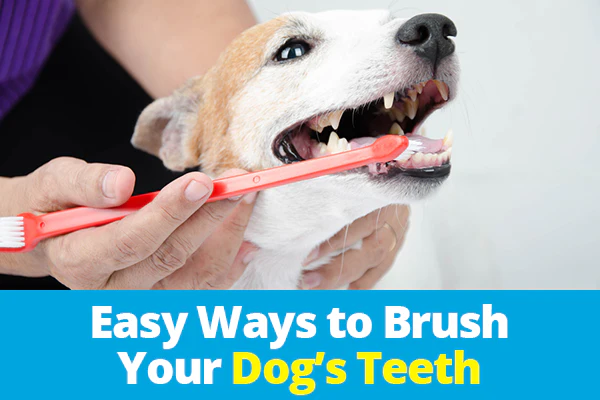
Don’t skip phases. If you go straight to brushing on day one, your dog learns to run the second they see the toothbrush, and you’ll be rebuilding trust for weeks.
Phase 1: Taste test (days 1-3)
- Let your dog lick a small dab of toothpaste off your finger
- Treat this like a mini reward, not a chore
- Repeat once daily until they get excited when they see the tube
Phase 2: Hands in the mouth (days 4-7)
- Gently lift the upper lip to expose teeth and gums
- Rub a finger with toothpaste along the gumline for a few seconds
- Immediately follow with praise and a treat
Phase 3: Introducing the brush
- Hold the brush at a 45-degree angle against the gumline
- Use small circular motions, focusing on the outer surfaces of the teeth — a dog’s tongue naturally cleans the inside
- Aim for about 30 seconds total, not two full minutes like a human routine
- Work up gradually from a few teeth to the whole mouth over several sessions
What to Do When Your Dog Won’t Let You Brush
This is the part most articles skip, and it’s the part everyone’s actually googling. A few things that have worked — for me and for other dog owners I’ve compared notes with:
- Brush after a walk. A tired dog is a cooperative dog. Trying this cold, with a bored dog full of energy, is setting yourself up to lose.
- Use the “chin rest” trick. Teach your dog to rest their chin in your open palm for a treat. Once that’s solid, you can hold their mouth steady without a fight while you brush.
- Try the tennis ball swap. Instead of forcing the mouth open, give your dog a tennis ball to hold — dogs will often keep their mouth open around it, giving you a few extra seconds to brush.
- Switch to a washcloth or gauze. If your dog hates the sensation of bristles, wrap a bit of gauze or a microfiber cloth around your finger with toothpaste on it. Less effective than a brush, but far better than nothing.
- Let them chew the brush first. Some dogs need to “meet” the toothbrush as a toy before it becomes a tool. A few chewed-up brushes is a fair trade for a dog who eventually accepts it.
- Create a consistent cue. A simple sound or word repeated every session (even something as small as a tap on the counter) helps your dog anticipate what’s coming instead of being startled by it.
If your dog growls, snaps, or genuinely panics, stop. Go back a phase for another week rather than pushing through — forcing it teaches your dog that mouth-handling means a fight, which makes every future session harder.
If Brushing Truly Isn’t Happening: Backup Options
Some dogs never accept a brush, and that’s okay — it doesn’t mean you’ve failed at dental care. Look for anything carrying the Veterinary Oral Health Council (VOHC) seal, which confirms a product actually reduces plaque and tartar by a meaningful margin:
- Water additives (odorless, mixed into the bowl daily)
- Dental chews with the VOHC seal
- Dental powders sprinkled on food
- Non-anesthetic dental cleanings at your vet’s office for dogs who tolerate handling but not home brushing
None of these fully replace brushing, but combined, they meaningfully slow plaque buildup while you keep working on tolerance at home.