To bathe a dog that hates water, take it slow and focus on positive reinforcement. Prep all your supplies beforehand, lay down a non-slip bath mat for traction, and use a lick mat smeared with peanut butter stuck to the tub wall to distract them. Gently wet their coat with a cup or handheld nozzle on low pressure, avoiding their face.
For the complete grooming foundation that applies across every breed, the complete home dog grooming guide covers tools, technique, and troubleshooting in one place.
My neighbor did everything by the book — treats in the bathroom, meals in the dry tub, weeks of gradual water exposure. Two months later, her dog still wouldn’t set a paw in half an inch of water. She wasn’t doing anything wrong. The advice was just incomplete.
That standoff is way more common than most grooming guides admit, and “just keep trying” isn’t an answer. If you’re wondering how to bathe a dog that hates water without months of failed patience, here’s what actually breaks the stalemate — and it’s simpler than you’d think.
Why Some Dogs Hate Water — And Why It Matters
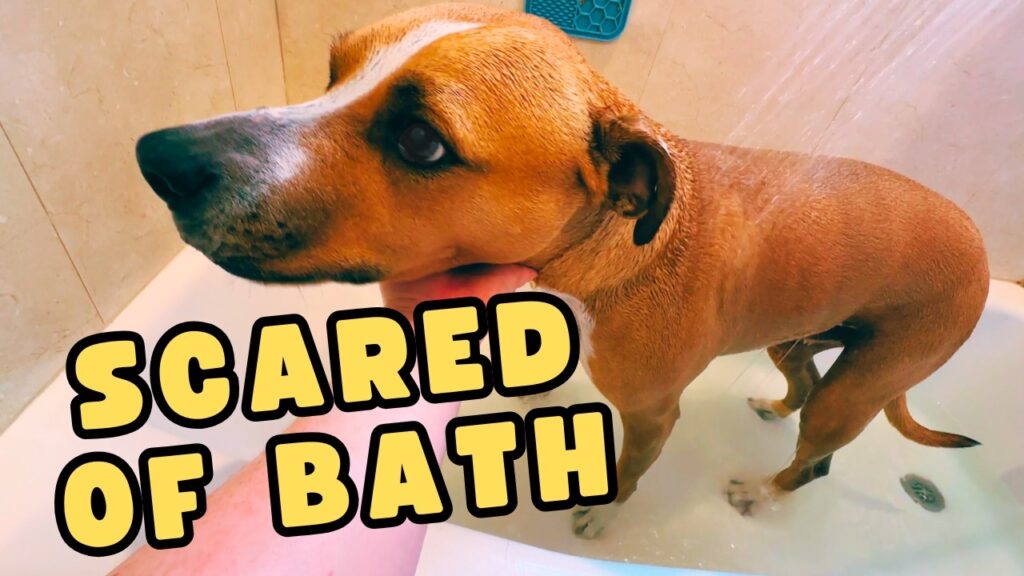
Most bath anxiety isn’t stubbornness. The root causes are sensory, and understanding them changes how you approach the problem.
- The floor is slippery. This is the most underrated cause of bath panic and the first thing worth fixing. A smooth tub offers zero grip — when a dog loses footing even slightly, the instinct to escape kicks in immediately. A rubber non-slip mat costs almost nothing and can reduce bath anxiety before any training has started.
- Running water sounds overwhelming. Dogs hear at roughly four times the frequency range of humans. What sounds like background noise to you can feel like a roar to a sensitive dog.
- Loss of control. Dogs interact with water on their own terms normally. The bathtub removes all choice, which triggers stress responses even in otherwise confident dogs.
- One bad experience. Water that was too cold, shampoo in the eyes, slipping on a wet floor — any single event can create a lasting negative association.
Fix the Environment Before You Try to Change the Dog
Three changes make everything that follows more effective — and cost almost nothing.
- Non-slip mat in the tub. Before any desensitization work. The difference for most dogs is immediate.
- Warm the room. A cold bathroom makes bath anxiety worse. A small space heater helps if your bathroom runs cold.
- Water at the right temperature before your dog enters. Lukewarm on the inside of your wrist — never cold, never hot. Running water to temperature after your dog is already in the tub guarantees a bad experience.
How to Bathe a Dog That Hates Water? Step-by-Step
This approach works for most dogs, but it takes weeks — not days. The key is to go at your dog’s actual pace, not the pace you’d prefer.
- Phase 1 — The bathroom isn’t so bad (Days 1–3) Leave the bathroom door open and toss a few treats just inside it several times a day. Your dog doesn’t need to see you do this — they just need to find good things there. The goal is simple: bathroom equals treats appearing.
- Phase 2 — Sound of water, no pressure (Days 3–6) Run the tub while tossing treats near the bathroom door. Your dog sees you doing this, so the sound of water becomes a cue that treats are coming rather than a threat.
- Phase 3 — Into the dry tub (Days 6–10) Toss treats into the empty, dry tub. If your dog doesn’t go in, create a trail of treats leading to it. If they just reach a paw in and grab a treat, that’s fine. Don’t rush this.
- Phase 4 — Wet tub, drain open (Days 10–14) Run water with the drain open — the tub isn’t filling up, just flowing through. Feet might get slightly damp. Treats go in while the water runs. Your dog is associating running water with treats rather than with what’s coming next.
- Phase 5 — Lick mat in the dry tub (Days 14–16) Stick a suction-cup lick mat loaded with peanut butter on the far end of the tub, farthest from the faucet. Encourage your dog in with the tub dry. This is a longer stay than a quick treat grab — build this tolerance without water first.
- Phase 6 — Lick mat, water running (Days 16–20) Same as above, but run the water gently while your dog works on the lick mat, drain still open. They’re focused on the peanut butter, not on the water.
- Phase 7 — First actual bath Fill the tub, attach the lick mat, and do the bath as efficiently as you can. When your dog stops engaging with the lick mat, that’s your signal to speed up and finish quickly. Don’t push through to the point of genuine panic — end the session before you reach that point.
One important note: It’s okay to lift a dog into the tub if they won’t go in voluntarily once they’ve been through all the earlier steps. For one real dog who went through this process, his owner had to physically place him in the tub for two full years before he finally started stepping in on his own. That’s not a failure — it’s just that particular dog’s pace.
When the Slow Approach Isn’t Working
Two months of patient work with zero progress is a sign you may need to adjust the approach rather than keep repeating the same steps. Here’s what actually helps.
- Check if pain is involved. A dog who is suddenly more resistant than before, or who seems in discomfort specifically when their ears or head are approached with water, may have an ear issue. This warrants a vet check before continuing any bath desensitization. For a full walkthrough, see my detailed guide on how to clean dog ears safely at home.
- Try the washcloth method in the tub. Instead of any running water, use warm water in a bucket and a washcloth, standing your dog in the dry tub. You’re keeping the benefit of the contained space without the water filling up or running. For apartments with no other options, this is a legitimate full cleaning approach — not a compromise.
- Rubbermaid bin or kiddie pool. For small dogs, a large Rubbermaid bin filled with warm water in a comfortable room removes the tub-specific trigger entirely. Some dogs who panic in a tub stand calmly in a bin of the same water because the container itself isn’t the same stressor.
- Self-service dog wash stations. Tractor Supply, PetSmart, and independent grooming supply stores commonly have raised tubs with tethers, built-in hoses, and appropriate drainage that handle the logistics better than a home tub does. Some dogs who are catastrophically bad at home behave completely differently in a new environment with new equipment. This is worth trying before assuming it’s an unsolvable problem.
The Waterless and Dry Bath Options
When a full bath genuinely isn’t happening, these actually work — they’re not just stopgaps.
- Waterless dog shampoo — applied to the coat, worked through with your hands, and wiped out with a towel. It doesn’t provide a deep clean, but it removes surface dirt, odor, and some oils effectively. Good for maintaining cleanliness between real baths when your dog’s bath tolerance is still in development.
- Baking soda dry bath — sprinkle a small amount into the coat, work through with your fingers, then brush thoroughly. It absorbs oil and neutralizes odor. Avoid getting it on the skin repeatedly or in large amounts — it can cause irritation — but as occasional maintenance between proper baths it’s genuinely useful and the keyword data confirms how many people are already searching for this.
- Dog grooming wipes or foam cleansers — specifically formulated pet cleaning products that need no water and no rinse. Useful for spot cleaning between baths and for dogs who are fine with being wiped down but panic in the tub.
- The “microfiber wipedown” method — microfiber cloths in warm soapy water, wiped over the dog and then rinsed with clean cloths. For NYC apartment owners or anyone without garden access, this method covers most cleaning needs without any running water or standing water at all.
For Dogs Who Attempt to Bite
If your dog has escalated to snapping or biting attempts during baths, this is beyond a standard grooming challenge and beyond what this guide covers safely.
A certified professional groomer trained in fear-free or low-stress handling techniques — and your vet, who may discuss situational medication options — are the appropriate next step. This isn’t a training failure; it’s a signal that the anxiety has reached a level that needs professional support.
The Real Takeaway
Most dogs who hate baths aren’t being dramatic. Something about the experience — usually the footing, the temperature, the sound, or a past bad experience — is genuinely unpleasant to them. Starting with the environment, not the behavior, is what actually moves things forward.
For dogs who’ve been patient and consistent for weeks with no progress, alternatives to the bath aren’t giving up — they’re a practical solution that keeps your dog clean while the longer desensitization work continues at whatever pace the dog needs.