“Natural” does not mean safe for a dog, and that one mix-up is behind most bad advice about itchy dog skin. A plant extract can still poison a dog, a “gentle” kitchen rinse can still sting raw skin, and a soothing bath can still hide an allergy that needs a vet.
Not every natural remedy is safe for dogs. Natural Home Remedies for Itchy Dogs can bring real comfort for mild itch, but some popular “fixes” do more harm than good. Here’s what soothes, what to skip, and the exact signs that mean it’s time to stop and call your vet.
Quick Answer
Natural Remedies for Itchy Dog Skin
Natural remedies can ease mild, occasional itch on intact skin, but they cannot diagnose or cure the cause. Use only vet-appropriate products, and stop at the first sign of worsening.
- Lukewarm oatmeal bath
- Plain-water paw rinse
- Gentle, fragrance-free grooming
Mild, occasional scratching
Skin is intact: try the three steps above.
Itch lasting days or spreading
The cause needs a proper diagnosis.
Sores, odor, hair loss, ear signs
Hot spots need same-day care.
Puppy, senior, pregnant, or medicated
Check with your vet before any new topical.
Stop at once if skin turns redder, itching increases, or sores, swelling, or discharge appear, and never layer another remedy over irritated skin. Trouble breathing, facial swelling, or collapse needs emergency veterinary care immediately.
Why an Itchy Dog Is Not Just an Annoying Dog
Scratching looks small. Underneath, it is often the visible end of something else: an allergy, a parasite, a skin infection, or skin dried out by too much bathing. The AKC notes that allergic disease is a common reason for vet visits, and that scratching can break the skin open and invite yeast and bacterial infections that then need treatment of their own.
That is why not every itch should be treated the same way. A bath that calms dry winter skin will not fix a flea allergy, and no rinse will fix an infection. Home care has a narrow, honest job: comfort for mild itch while you find out, with a vet when needed, what is actually driving it.
Types of Itch: Six Patterns Worth Telling Apart
You do not need to diagnose your dog. Just notice which pattern fits, because each points to a different next step.
- Flea allergy itch: Intense itching, often worst at the tail base, hind legs, and rear end. The AKC notes that a single flea bite can set off an allergic dog, and you may never see a flea. Check for flea dirt, tiny black specks in the fur.
- Environmental allergy itch: Pollen, dust mites, and mold, often seasonal. It shows up on the paws, belly, face, and ears, the parts that touch the ground and the air. These dogs often lick their paws and rub their faces.
- Food allergy or sensitivity itch: Itch around the paws, face, armpits, and belly, sometimes with stomach upset. True food allergy is diagnosed and managed with a vet, not by swapping foods every week on a guess.
- Contact itch: Itch where something touched the skin: a new shampoo, a household cleaner, a lawn treatment, a plant. The clue is location, because the patch matches the contact area.
- Infection-driven itch: Scratching that has broken the skin can turn into a bacterial or yeast infection, which then itches on its own. Odor, greasy or flaky patches, sores, and hair loss belong in this group, and at the vet.
- Dry-skin itch: Flaky skin, dull coat, and general scratching without sores or odor. It is worse in winter, after too-frequent baths, or with harsh, fragranced products. This is the pattern home grooming helps most.

When Itching Is an Urgent Vet Issue?
Read this before trying anything else. Book a vet visit, the same day for a hot spot, if you see any of these:
- A hot spot: a red, damp, rapidly growing patch the dog will not leave alone. It can go from small and red to raw and oozing within hours. Do not rub it, pour vinegar on it, or cover it with a human ointment.
- Open sores, bleeding, pus, or a bad smell from the skin or ears.
- Hair loss, bald patches, scabs, or crusts that are spreading.
- Ear signs: head shaking, pawing at the ears, dark discharge, or a yeasty smell.
- Face or throat swelling, hives, or trouble breathing. This is an emergency, not a bath situation.
- Itch that keeps the dog awake, stops them eating, or has lasted more than a few days despite gentle care.
- A puppy, senior, pregnant, or nursing dog with anything beyond the mildest, one-off scratch.
The ASPCA’s grooming guidance is blunt here: schedule an exam as soon as you notice any skin abnormality, or if scratching, licking, or biting becomes excessive. Home care is comfort while you wait for answers, never a reason to delay them.e: schedule an exam as soon as you notice any skin abnormality, or if scratching, licking, or biting becomes excessive. Home care is comfort while you wait for answers — never a reason to delay them.
Low-Risk Grooming Changes That May Reduce Irritation
Before reaching for any remedy, fix the basics. These carry the lowest risk and often remove the irritant driving the scratching.
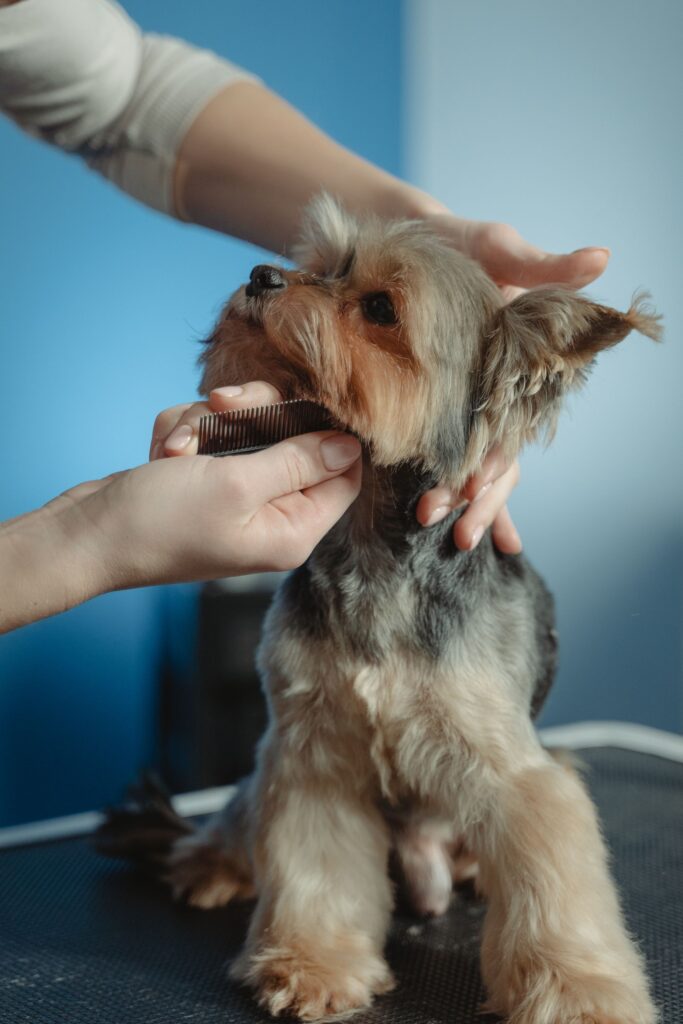
Brush before you bathe. Mats tighten when wet and trap moisture against the skin. Work through tangles dry, gently, in short sessions, and stop if the dog panics. Never force grooming on a frightened dog.
Rinse paws and belly after walks. Plain lukewarm water removes pollen, dust, and lawn residue. Dry thoroughly afterward, including between the toes, where dampness lingers.
Wash bedding and vacuum resting areas regularly. Dust mites and dust settle where the dog sleeps. Clean bedding lowers that load at no risk.
Switch to a fragrance-free, dog-formulated shampoo. Human shampoo is balanced for human skin and can irritate a dog’s, and the ASPCA advises choosing a product made for dogs. Our DIY natural dog shampoo recipes for sensitive skin guide covers homemade options, with the same patch-test and vet rules.
Keep baths lukewarm and short, and dry completely. Hot water dries skin and flares itch. Give extra attention to skin folds on wrinkly breeds, which the ASPCA flags for special care.
None of this treats an allergy or an infection. What it does is stop home grooming from adding to the problem, which is a bigger win than most remedy lists admit.
Oatmeal Baths: What They Can and Cannot Do
The oatmeal bath is the most recommended home remedy for a reason: it is gentle, inexpensive, and can be soothing for mild, surface-level itch. It is also the most oversold remedy in the category, so here are its limits up front.
What it can do: A lukewarm bath with a dog-formulated oatmeal product may offer temporary comfort for some dogs with mild irritation on intact skin, and rinsing washes allergens off the coat. Results vary from dog to dog.
What it cannot do: Diagnose an allergy, kill fleas, treat infection, or fix an itch that keeps coming back. If itch returns or persists, see a vet instead of repeating baths. The bath is masking a cause, not solving one.
Patch Test First
A patch test is a small trial before a full bath. It is a precaution, not proof that a product is safe, so ask your vet first if the skin is inflamed or broken, or if symptoms persist.
- Mix the product exactly as its label directs.
- Apply a small amount to one small area of healthy skin, such as the side of the chest or inner thigh, away from the face and any irritated skin.
- Leave it for the label’s contact time, then rinse the area completely with lukewarm water.
- Watch that spot for 24 hours for redness, bumps, flaking, or scratching.
- If the skin stays calm, go ahead with a full bath. If any sign appears, do not use the product, and call your vet if it persists.
How to Give an Oatmeal Bath
- Brush first. Work out tangles while the coat is dry.
- Choose the right product. Use a dog-formulated colloidal oatmeal shampoo or bath product. Colloidal oatmeal is milled so it mixes into water; plain kitchen oats are not the same thing, and there is no reliable home dose, so skip flavored instant packets and guesswork.
- Fill the tub with lukewarm water, enough to cover the legs and belly. Hot water worsens itching.
- Follow the label for amount and contact time, or your vet’s directions. Scoop the water over the coat, and keep it out of the eyes and ears. Stop if the dog becomes distressed or the skin looks worse.
- Rinse thoroughly with clean lukewarm water. Leftover oatmeal residue itches just like leftover shampoo.
- Pat dry with a towel. Do not rub hard, and do not blast a frightened dog with a hot dryer. Use a cool or low setting, or air-dry in a warm room.
How often: For mild itch, an oatmeal bath once in a while is enough. Bathing every few days strips the coat’s natural oils and can make dry skin worse. If you feel you need to bathe constantly, that is a vet conversation, not a bathing schedule.
Never put a dog with open sores, hot spots, or oozing skin into an oatmeal bath. Broken skin plus a soak is a vet visit. A plain colloidal oatmeal shampoo made for dogs follows the same rules: fragrance-free, dog-formulated, rinsed fully. Earthbath Oatmeal & Aloe Shampoo is one example of this type of product, mentioned only as an example of the category.
Rinse Residue, Fragrance and Over-Bathing
More dogs itch after a bath than their owners realize, and the bath itself is often the reason. Three culprits do most of the damage.
Leftover residue. Shampoo left in the coat dries into an irritant film. Rinse longer than feels necessary, until the water runs clear and the coat feels clean rather than slippery. VCA’s medicated-bath guidance makes the same point: proper rinsing takes several minutes, and residue left behind keeps irritating the skin.
Fragrance. Perfumed shampoos, sprays, and “dog colognes” are common contact irritants, and the ASPCA notes that dogs with skin allergies can react to fragranced products. If your dog itches more in the day or two after grooming, the scented product is the first suspect. For an itchy dog, fragrance-free is the baseline, not a luxury.
Over-bathing. Bathing schedules vary by coat, activity, and skin condition. Many healthy dogs need only occasional baths, and dogs with skin problems may need a schedule set by their vet, sometimes more frequent with a medicated shampoo. Frequent baths with an unsuitable shampoo dry the coat and create the flaky itch they were meant to fix. If odor keeps returning right after baths, look for a skin problem instead of adding another bath.
After any bath, a light, fragrance-free conditioner made for dogs can help the coat stay soft. Our homemade dog conditioner recipes guide covers gentle options. Rinse conditioner out just as thoroughly as shampoo.
Flea Control and Parasites
No home remedy out-scratches a flea problem. If fleas are even a possibility, they come first, before oatmeal, before rinses, before anything else.
Check before you assume. Part the fur at the tail base and belly and look for fleas or flea dirt. Flea dirt looks like black pepper and turns reddish on a damp paper towel. Not seeing fleas proves nothing, and one bite can keep an allergic dog scratching for days.
Use a vet-recommended preventive. “Natural” substitutes routinely fail here. Essential-oil flea treatments are unreliable and, for several oils, toxic (see the myths section below). A veterinary-recommended preventive, used on your vet’s schedule, is the reliable baseline, and for a flea-allergic dog it is the treatment, not an optional extra.
Mites are a vet diagnosis. Sarcoptic mange causes frantic, intense itching and spreads quickly; demodectic mange causes hair loss and sores. Neither is diagnosable at home, and neither responds to a bath. If itching is severe, spreading, or paired with hair loss and sores, the vet needs to do skin scrapings and decide treatment. Our natural flea prevention for dogs guide is a companion to veterinary prevention, not a replacement for it.
When Medicated Shampoo Is Appropriate
A medicated shampoo is appropriate only if a vet has diagnosed a condition that a medicated active treats. It is treatment for a diagnosed problem, not a stronger version of a nice-smelling dog shampoo, and a grooming shampoo, however “natural”, is not a substitute for one.
VCA Animal Hospitals lists the situations where a vet prescribes one: mild bacterial skin infection, yeast infection of the skin, and certain skin allergies where the shampoo’s ingredients calm inflammation and reduce allergens on the skin. The key word in every case is prescribed. The vet picks the active ingredient for the specific condition, because an antibacterial wash does nothing for a yeast problem and the reverse.
A vet-directed medicated bath usually works like this: the dog is washed clean first, since medicated shampoos often contain little soap; the shampoo goes on the problem areas, then the rest of the coat; it stays on for the contact time your vet sets; it is rinsed completely, which takes several minutes; and the schedule follows your vet’s plan. Always follow the vet’s instructions and the product label over any general guide.
Do not buy a medicated shampoo over the counter and guess. The wrong active ingredient wastes the treatment window while an infection spreads, and some medicated products irritate healthy skin. If no vet has diagnosed anything, the right product is a gentle, fragrance-free dog shampoo, with the patch test and rinse checks above. If the itch persists, the next step is a diagnosis, not a stronger bottle.
Stop-Scratching Myths and Unsafe Home Remedies
The internet’s itch advice is full of confident recipes. Some are harmless but useless; a few are dangerous. Here is the honest sort.
Common Itchy-Skin Myths vs Safer Moves
Natural does not always mean safe. Here is what to skip and what to do instead.
| Myth or remedy | Why it fails or harms | Safer move |
|---|---|---|
| “Natural means safe” | Tea tree, pennyroyal, wintergreen, and pine oils are natural and toxic to dogs (Pet Poison Helpline) | Check toxicity before any plant extract touches your dog |
| Essential oils for itch or fleas | Concentrated tea tree oil is among the essential oils most often involved in dog poisonings | Skip essential oils unless your vet approves a specific product |
| Apple cider vinegar | Stings broken or raw skin, and does not treat infection or allergy | Skip it, and ask your vet about persistent itch |
| Coconut oil or aloe for everything | Thin evidence, dogs lick topicals off, and swallowed aloe can upset the stomach | Skip as a treatment; ask your vet about dry patches |
| Human shampoo or dish soap | Wrong pH and harsh detergents strip oils and irritate skin | Dog-formulated, fragrance-free shampoo only |
| Medicines from the cabinet | Wrong drug, dose, or combination product can harm a dog | Dosing is a vet decision; never guess from a human label |
| Shaving an itchy dog | Shaving a double coat damages insulation and regrowth, and does not treat the cause | Brush and bathe; leave coat decisions to a groomer or vet |
| Bathing more and more often | Over-bathing dries skin and creates the itch it was meant to fix | Fewer, gentler baths; vet visit if itch persists |
Pet Poison Helpline notes that many essential-oil exposures happen when well-meaning owners try to treat a skin condition or fleas with a concentrated oil. If your dog has been exposed to one, contact your vet or a poison control service right away.
Track Triggers Before the Vet Visit
A vet can help you much faster if you arrive with a pattern instead of a complaint. Start jotting notes now, but do not delay a needed vet visit to finish a longer log.
- When the itching is worst: after walks, after baths, at night, in a particular season.
- Where on the body: paws, belly, ears, tail base, all over. Paws and belly suggest environmental triggers; the tail base suggests fleas.
- What changed recently: new food, shampoo, laundry detergent, lawn treatment, a move, a new pet.
- What you tried and what happened: which bath, which rinse, and whether the itch eased, stayed, or worsened, including any remedy that made things worse.
- What you can see: sores, odor, hair loss, ear discharge, flea dirt. Photos help, especially for patches that change fast.

Take the list, not just the dog: it turns a vague “he’s always itchy” into something a vet can work with. For paw care between walks, see the DIY dog paw balm guide, and the complete guide to grooming your dog at home for the full routine.
Pros and Cons of Natural Remedies for Itchy Dog Skin
- Gentle options like oatmeal baths and plain-water rinses are low-risk for mild, intact-skin itch.
- Home grooming changes cost little and remove real irritants: fragrance, residue, pollen on paws.
- A trigger log makes the eventual vet visit far more productive.
- Fragrance-free, dog-formulated products reduce the chance that grooming itself adds irritation.
- No home remedy diagnoses or cures allergy, infection, or parasites, and relying on one delays real treatment.
- “Natural” ingredients carry real risks: several essential oils are toxic to dogs, and vinegar stings broken skin.
- Results are slow and partial. An oatmeal bath calms itch for hours, not weeks.
Frequently Asked Questions
Conclusion
Natural care for itchy dog skin works best when it stays in its lane: gentle, patch-tested comfort for mild itch with intact skin, while the cause gets found rather than masked. Keep baths lukewarm and infrequent, rinse everything out, skip essential oils and human products entirely, and treat sores, odor, hair loss, ear signs, or itch that lasts more than a few days as a vet visit, not a reason for a stronger home recipe.
References
- AKC Why Is My Dog Itchy?
- AKC Dog Skin Allergies
- ASPCA Dog Grooming Tips
- VCA medicated shampoo bathing
- Pet Poison Helpline essential oils
This article is general grooming information, not veterinary advice. A veterinarian should assess any persistent, spreading, or severe skin problem.