A homemade dog deodorant spray can make a clean dog smell fresher between baths, but only if you build it the right way. Most online recipes do the opposite: they add scent, which can sit heavily on a dog’s coat and cover up a smell that needed attention. This guide shows a simple unscented version, how to use it without soaking the coat, and how to tell when a smell is a job for the vet instead.
Quick Answer
The safest homemade dog deodorant spray is just distilled water in a clean spray bottle, misted lightly over a clean, dry coat and brushed through straight away. Skip essential oils, perfume and alcohol, which can irritate dogs. Before you spray, check the ears, mouth, skin folds, paws and bedding to find where the smell is really coming from. If an odor persists after a bath or comes with redness or discharge, see your vet instead of covering it up.
For the complete grooming foundation that applies across every breed, the complete home dog grooming guide covers tools, technique, and troubleshooting in one place.
What is a Homemade Dog Deodorant Spray?
A homemade dog deodorant spray is a light freshener for a healthy, clean coat. It can make a clean coat smell neutral for a while, and it buys time until the next proper bath. That is the whole job.
It is not a cleaner for muddy, greasy or matted coats. It is not a treatment for yeast, bacterial skin infection, ear infection, dental disease or anal-gland problems, and it does not disinfect or heal sores. Used that way, it can do harm by delaying the vet visit that would have found the cause.
How to Make a Homemade Dog Deodorant Spray
You will need: a clean spray bottle that makes a fine mist (not a jet), and distilled water.
To make it: fill the bottle with distilled water and label it with the date. That is the whole recipe. Distilled water avoids mineral residue on the coat.
Rules for use:
- Use it on a healthy coat and skin only. No sores, rashes, hot spots, cracked pads or wounds.
- Patch test first. Mist one small area and wait 24 hours, watching for redness, flaking, swelling, itching or extra licking. A patch test only shows how your dog’s skin reacts. It does not prove the water in the bottle is clean.
- Make only what you will use in a day or two, and throw away leftovers. We give no longer shelf life because homemade water mixtures are not tested.
- Rinse the bottle and let it dry between batches. Never reuse a bottle that held cleaning products, garden chemicals or essential oils.
- Keep the mist away from the face, ears, eyes and genitals. If it gets in the eyes, rinse gently with plain water and call your vet if squinting or redness does not settle quickly.
- Ask your vet first if your dog has allergies, a skin condition, breathing problems or takes medication, or is a puppy, a senior or pregnant.
Be realistic about results: a plain water mist is mild. Most of the freshening comes from the brushing you do right after.
First Find the Source of the Odor
Spraying the whole coat before finding the source wastes the one clue that matters: where the smell is strongest.
| Strongest smell | Likely source | First check |
|---|---|---|
| All over, worse when wet | Coat oils, dirt, damp undercoat | When was the last bath, and did the coat dry fully? |
| Ears | Infection, wax, moisture | Redness, discharge, head shaking |
| Mouth | Dental disease, sores | Tartar, red gums, drooling |
| Skin folds, toes | Moisture, yeast, bacteria | Redness, dampness, soreness |
| Paws | Moisture, bacteria, yeast | Licking, redness between toes |
| Rear, fishy | Anal glands | Scooting, licking, pain when sitting |
| Bedding, collar | Absorbed oils, dirt | When were they last washed? |
The ASPCA advises the same: check ears and teeth first, and see a vet if grooming does not resolve a consistent smell. One clear location means that location is the problem, not the coat. Some “doggy” smell is also normal for a clean dog, so you are not aiming for zero scent.
What About Vinegar, Witch Hazel and Baking Soda?
You will see these in many recipes, so here is where we stand.
- Apple cider vinegar. Vet-reviewed sources say it should only be used on skin very diluted and only if your vet recommends it, and that even dilute vinegar can irritate some dogs, especially on broken skin. We give no vinegar ratio, because no safe ratio has been established for a leave-on spray. If you want to use it, ask your vet first.
- Witch hazel. We could not find veterinary guidance supporting it in a leave-on dog spray, so we leave it out. Alcohol-based versions can dry the skin.
- Baking soda. It is often suggested as a dry freshener, but we found no veterinary guidance for it. If you try it, keep the powder away from the face, never use it on wet or irritated skin, and brush it out completely. Never mix it with vinegar in the same bottle.
Why Skip Perfume and Essential Oils
Human perfume is made for human skin and a human nose. Dogs smell far more acutely, and a scent that seems pleasant to you can sit heavily on a coat, trigger sneezing or face-rubbing, and mask a smell that needed attention. Dog colognes are made for dogs, but any fragrance can still irritate a dog with allergies or sensitive skin.
Essential oils need a firmer line. Pet Poison Helpline states that concentrated essential oils should never be applied directly to dogs or cats, that oils are absorbed through the skin, stomach and lungs, and that signs can include drooling, vomiting, tremors, wobbliness, breathing difficulty, skin irritation and liver or kidney failure. It names wintergreen, sweet birch, pine, cinnamon, pennyroyal, eucalyptus and tea tree as oils known to cause poisoning in dogs. The ASPCA gives the same core advice: because concentration, formulation and quality vary so much, it is best to completely avoid applying essential oils directly to a pet.
That is why this guide uses no essential oil of any kind, including lavender. A “few drops” still puts a concentrated plant oil on an animal that grooms itself by licking. For the full picture, see our guide on whether essential oils are safe for dogs.
Also leave out rubbing alcohol, human shampoo, fabric fresheners, bleach, disinfectant and hydrogen peroxide, and anything you cannot identify on a label. If your dog is splashed with an essential oil or strong fragrance, move it to fresh air, stop it licking the area, and call your vet or a poison helpline promptly.
Other Low-Risk Ways to Freshen a Dog
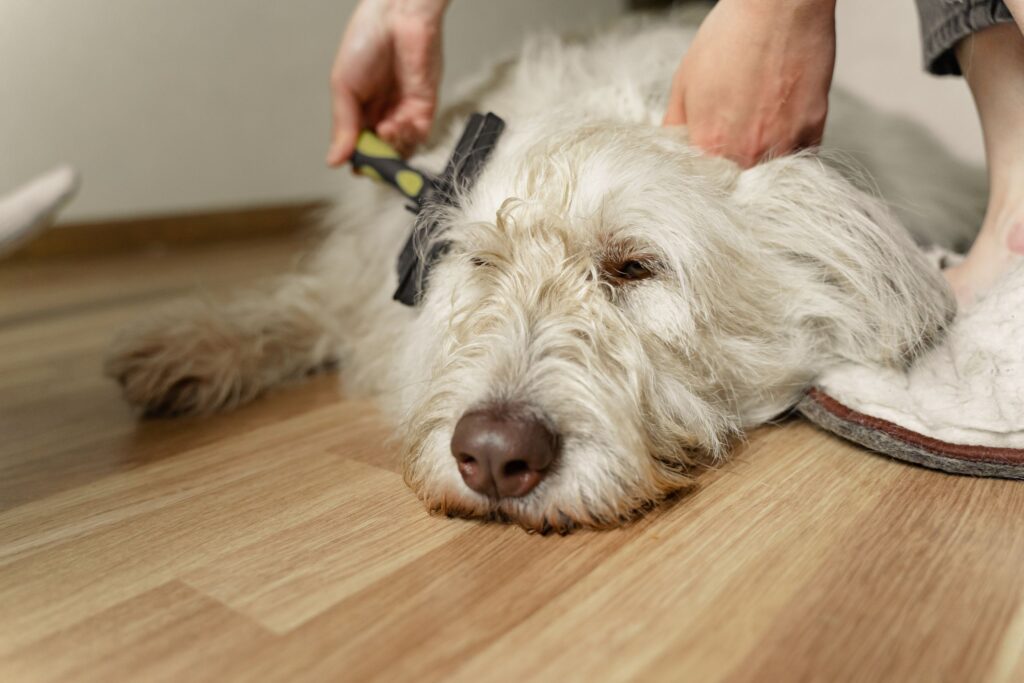
- Brush first, spray second, or not at all. Brushing removes loose hair, dirt and dander, spreads coat oils, and often removes most stale smell on its own.
- Damp wipe-down. A cloth dampened with plain warm water and wrung out well, wiped over the coat and followed by a brush, handles muddy paws, dusty coats and light smells without adding anything to the skin.
- Dry thoroughly after any wetness. A damp coat smells worse as it dries slowly. Towel dry, then finish in a warm, ventilated room.
- Consider a ready-made dog product. If you want more than water, a dog-formulated wipe or waterless shampoo is a better choice than a home mix. Read the full ingredient list, avoid products with essential oils or unlisted “fragrance” if your dog is sensitive, and ask your vet if your dog has skin problems.
How to Use a Spray Without Soaking the Coat
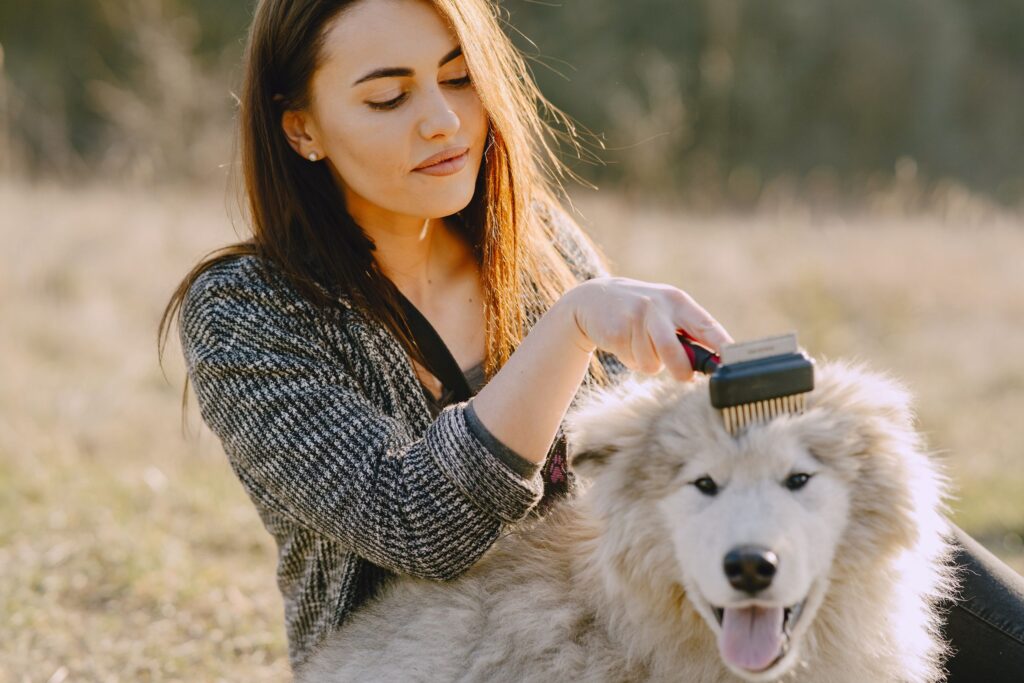
Soaking turns a freshener into a problem: a wet coat dries slowly, smells stronger while drying, and traps moisture against the skin. Aim for a barely-damp coat that dries within minutes.
- Brush first. Check for mats, burrs, sores or anything stuck in the fur. Spray over dirt just seals the dirt in.
- Test the mist. Shake the bottle and spray once into the air or onto your hand. A jet soaks one spot; a mist spreads evenly.
- Spray at arm’s length.. Avoid the head, ears, belly folds and genitals entirely.
- Brush through immediately. This distributes the mist evenly and does most of the freshening work.
- Let it dry before the dog lies down. A few minutes in a warm, ventilated room keeps dampness out of the bedding.
- Watch the reaction. Sneezing, face-rubbing, restlessness or sudden licking or scratching means stop, wipe the coat with a damp cloth, and do not reuse that batch.
- There is no established universal frequency for homemade freshening mixtures; persistent odor warrants investigation. Daily spraying to chase a returning smell means the smell has a source spray will not fix.
Never spray a panicking or struggling dog to force the routine through; stop and try a wipe-down instead.
Folds, Paws, Ears and Bedding as Odor Sources
Skin folds. Breeds with loose facial skin or wrinkles, such as Pugs and Shar-Peis, trap dirt and moisture in folds where bacteria thrive. The ASPCA advises cleaning folds with damp cotton and drying between the folds thoroughly. Never spray into a fold. Redness, soreness or a smell from a fold needs a vet check.
Paws. Paws pick up dirt, mud and moisture on every walk, and the warm space between the toes suits yeast and bacteria. After walks, wipe paws with a damp cloth, dry between the toes, and check for cuts, cracked pads or matted fur. A mild smell is common. A strong, sour or yeasty smell with licking or redness is a vet matter. For paw care, see our DIY dog paw balm guide.
Ears. Healthy ears should not smell strong. Redness, swelling, debris, discharge, head shaking or a strong yeasty odor can signal an ear infection and need a vet visit. Keep ears dry after baths, clean only the visible outer ear, and never spray deodorant into or around the ear canal.
Bedding and gear. Bedding is the most overlooked odor source in a house. A freshly bathed dog that sleeps on an unwashed bed will smell like the bed within a day. Wash bedding and blankets regularly, wipe collars, harnesses and leashes, and clean crates and car seats where the dog rests.
“When a dog smells soon after a bath, I check the bedding and visible coat first, then look for obvious dampness or unusual odor near the paws, folds and outer ears without probing or treating those areas. I refresh washable fabrics and use gentle grooming only where appropriate. If there is redness, discharge or a strong recurring smell, I treat that as a reason to call the vet rather than cover it with spray.”
A Reddit User
Storage and Stop Rules
- Unpreserved water-based mixtures may become contaminated. Keep it in a cool, dark place with the cap on. Discard sooner if it turns cloudy, develops bits, smells sour or “off,” or has been contaminated by dirty hands or a dropped nozzle.
- Keep it out of reach. Store where the dog cannot chew the bottle and children cannot spray it. A chewed nozzle contaminates the next batch.
- Stop rules. Stop immediately for redness, rash, swelling, itching, sneezing, face-rubbing or unusual licking, or a coat that looks greasy, flaky or dull after repeated use. Rinse with plain water, let it dry, and call the vet if irritation does not settle within a day or gets worse.
When Dog Odor Needs a Vet Check
Book a vet visit, and skip home freshening until you have advice, if you notice any of these:
- A smell that persists after a bath or returns within a day or two.
- A smell mainly from one ear, paw or patch of skin.
- Ear redness, swelling, dark or smelly discharge, head shaking or constant scratching.
- Red, sore, flaky or broken skin, sores, hot spots, lumps or hair loss.
- Bad breath with drooling, bleeding gums or trouble eating.
- A sudden fishy smell from the rear, or scooting.
- Constant licking, chewing or scratching.
- Any change alongside the smell in appetite, thirst, energy, weight, vomiting or diarrhea.
Odor plus any other symptom stops being a freshening job.
When a Bath Is Better Than a Spray
Choose a bath instead when:
- the coat is visibly dirty, muddy, greasy or matted;
- the dog has rolled in something foul, been sprayed by a skunk or swum in dirty water;
- the smell survives a light freshening and a brush-through;
- the skin is dirty, flaky or irritated; or
- it has simply been a long time since the last bath.
The ASPCA suggests bathing at least every three months, and more often for dogs that spend a lot of time outdoors or have skin problems. Avoid over-bathing, which can strip natural oils. Use a mild shampoo made for dogs, rinse completely and dry the coat thoroughly. For next steps, see our DIY natural dog shampoo and homemade dog conditioner guides.
Pros and Cons of a Homemade Dog Deodorant Spray
- You know exactly what is in the bottle, and what is not.
- It is cheap and takes a minute to make.
- Unscented means there is less to irritate skin, noses or allergies.
- It pairs with brushing, which is a real grooming step and a chance to spot skin problems early.
- It cannot fix the cause. Ear, dental, skin, gland or bedding odor returns no matter how often you spray.
- It adds moisture. Used too heavily, it keeps the coat damp.
- It has no preservative, so you must make small fresh batches.
Frequently Asked Questions
Conclusion
A good homemade dog deodorant spray is deliberately unexciting: unscented, light, patch tested, and used only on a healthy coat after the real source of the smell has been checked. That restraint is what makes it useful instead of misleading.
Start with brushing, a clean damp cloth, full drying and bedding care. Treat any smell that persists, returns fast or comes with other symptoms as a vet matter, not a freshening challenge.
References
- American Kennel Club — How to Groom a Dog at Home
- American Kennel Club — Dog Ear Infections: Symptoms, Causes, Treatment, and Prevention
- ASPCA — Dog Grooming Tips
- ASPCA — The Essentials of Essential Oils Around Pets
- Pet Poison Helpline — Updates on Essential Oils
- VCA Animal Hospitals — How to Bathe Dogs with Medicated Shampoo