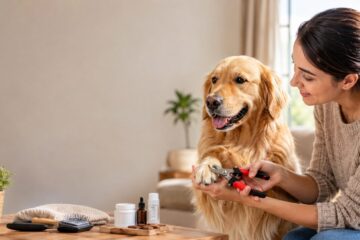
Many dog owners light a diffuser without a second thought. But the question “are essential oils safe for dogs” is not about one bottle. It depends on which oil it is, how concentrated it is, and how it reaches the dog. Below: the oils linked with poisoning risk, the three exposure routes, the warning signs, what to do after an exposure, and safer ways to freshen a home.
Quick Answer
Essential oils are not universally safe for dogs. While some oils can be used with extreme caution and high dilution, many common oils are toxic to dogs whether they are inhaled through a diffuser, absorbed through the skin, or ingested.
For the complete grooming foundation that applies across every breed, the complete home dog grooming guide covers tools, technique, and troubleshooting in one place.
Essential Oils and Dogs: Why There Is No Simple Yes
An essential oil is a highly concentrated plant extract, made by pressing or distilling plant material. That concentration is the whole story: a plant that is harmless in a garden becomes a hazard once its aromatic compounds are packed into a small bottle in far larger amounts than a dog would ever meet from the plant itself.
Dogs also meet that concentration with a nose far more sensitive than ours. Pet Poison Helpline explains that essential oils are readily and rapidly absorbed through the stomach, skin and lungs. This guide publishes no “safe oils” list on purpose: veterinary sources disagree about several oils, and safety depends on the oil, the dose, the route and the individual dog.
Types of Essential-Oil Products Dogs Meet at Home
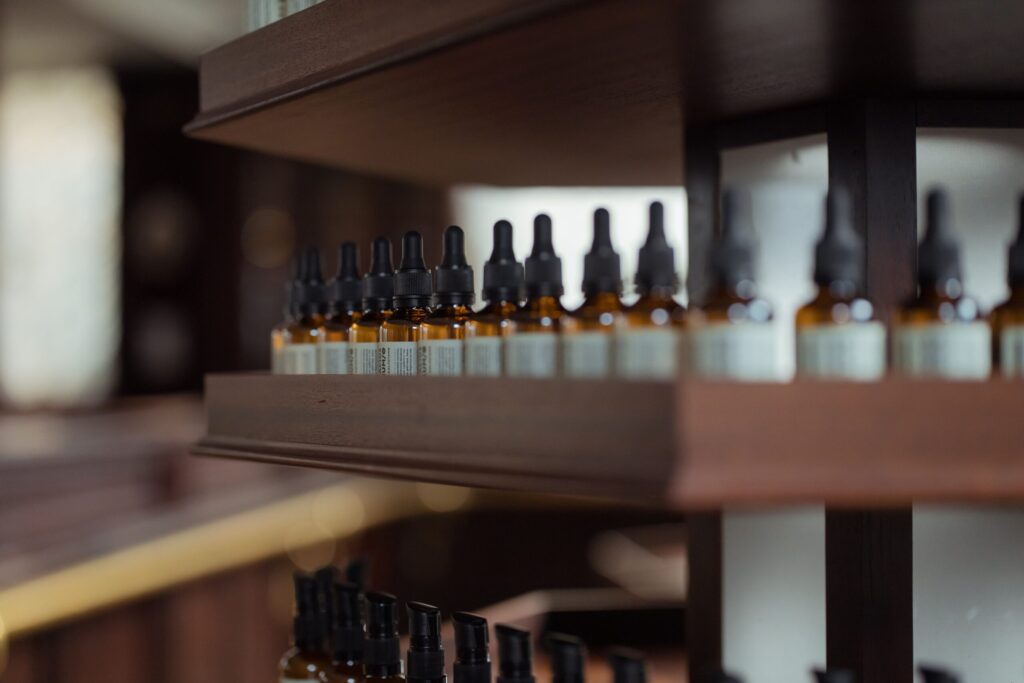
Most exposures come from everyday products that happen to contain essential oils.
- Pure single oils. Small aromatherapy bottles, often at full concentration. This is the highest-risk form in the house, because one spill or lick delivers a concentrated dose.
- Blends and “natural” room products. A pleasant name on the front may hide several oils in small print on the back. One toxic oil in a blend is still a toxic oil.
- Passive diffusers. Reed diffusers, candles and liquid potpourri release scent by evaporation. Pet Poison Helpline notes that no oil droplets leave a passive diffuser, so the main risk is respiratory irritation, unless the liquid spills onto the dog or is swallowed.
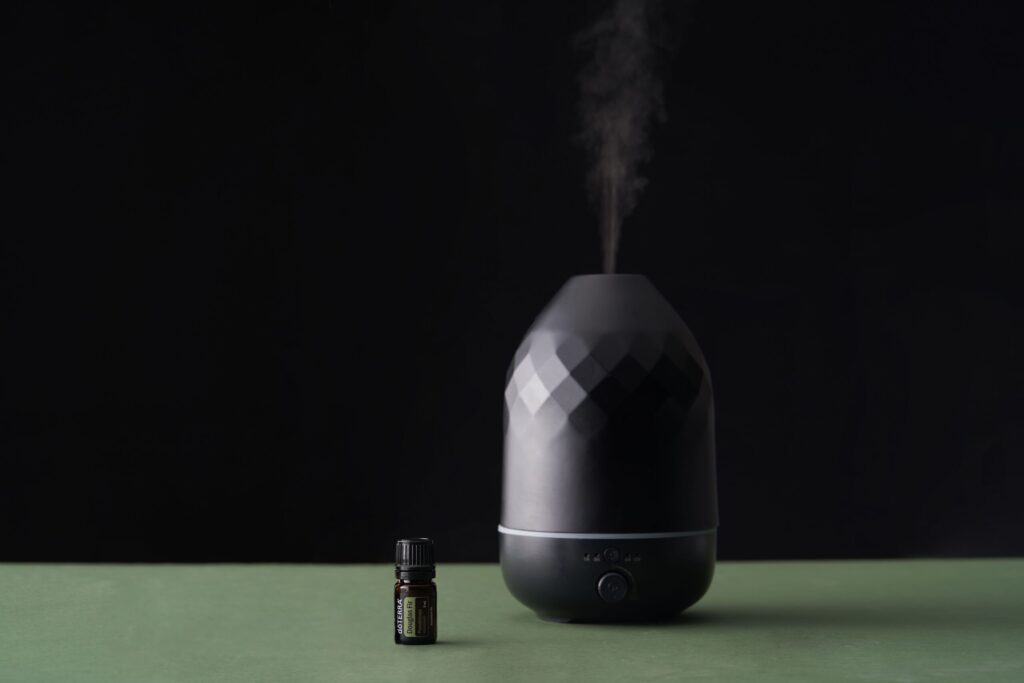
- Active diffusers. Ultrasonic and nebulizing diffusers release fine microdroplets that can settle on a dog’s coat, where they are absorbed through the skin or licked off.
- Cleaning products, sprays and pet products. Floor cleaners, room sprays, shampoos and some “natural” flea products can contain essential oils. A dog walks across a freshly cleaned floor, licks its paws, and the route is complete.
Are Essential Oils Safe for Dogs? Start With Concentration and Route
Ask two questions first: how concentrated is the product, and how does it reach the dog? The answers help you judge risk, but they cannot predict toxicity on their own. Dose, the individual dog and the exact formulation matter too.
The ASPCA Animal Poison Control Center warns that in concentrated form (100%), essential oils can absolutely be a danger for pets, and notes that concentrated tea tree oil may cause problems with only seven or eight drops.
Oils sold for human aromatherapy are not made or labelled for dogs, and the American Kennel Club notes there is little regulatory oversight of their concentration, efficacy and safety in the US. You cannot assume the bottle contains what the front label implies.
Each route harms differently. Skin contact irritates and is then absorbed or licked off. Ingestion exposes the dog through the stomach and gut, and some oils then affect the liver or nervous system. Inhalation irritates the airways, and with active diffusers it adds the skin and licking routes on top.
Size and health change the maths too: a small dog gets a larger dose relative to body weight, and puppies, seniors and dogs with breathing, liver or skin problems are at higher risk.
Why “Natural” Does Not Mean Non-Toxic
“Natural” describes where something came from, not what it does in a body. Pet Poison Helpline puts it plainly: though essential oils are derived from natural sources, they are not always safe for dogs and cats, and their presence in homes can pose a toxic hazard. Many medicines come from plants too, and natural origin is not evidence of safety.
Three misunderstandings drive most risky use:
- That a plant-safe ingredient stays safe at any strength. Distillation concentrates it.
- That a product marketed for pets must have been tested on pets. It may not have been, and “natural”, “pure” or “therapeutic grade” are not safety certifications.
- That a pleasant smell means a safe smell. A dog’s nose detects far more than ours.
Oils Commonly Linked With Poisoning Risk
This table draws on Pet Poison Helpline’s list of oils known to poison dogs, the VCA/Pet Poison Helpline dog-poisoning guide, GoodRx’s veterinary-reviewed list, and PetMD. It is an avoid list, not a complete list: an oil’s absence is not a safety claim.
| Oil to avoid around dogs | Why it is flagged |
|---|---|
| Tea tree (melaleuca) | The most documented essential-oil hazard for dogs; small concentrated amounts have caused vomiting, trembling, and weakness. |
| Pennyroyal | Linked with severe liver damage; historically sold as a flea remedy, which makes it especially dangerous. |
| Wintergreen and sweet birch | Rich in methyl salicylate, related to aspirin; can affect gut, kidneys, breathing, and nerves. |
| Pine | Flagged for liver and kidney effects and gut upset; also common in cleaners, so exposure is easy to miss. |
| Cinnamon | Irritates skin and mouth tissues; ingestion can cause vomiting, diarrhoea, and low blood sugar. |
| Clove | Contains eugenol, linked with liver toxicity and nervous-system depression. |
| Eucalyptus | Can cause drooling, vomiting, confusion, seizures, and breathing difficulty. |
| Peppermint | A veterinarian answering a Petco owner question states plainly that peppermint essential oil is toxic to dogs. |
| Citrus oils (lemon, orange, grapefruit, bergamot) | Contain limonene; linked with gut upset, drooling, and skin irritation. |
| Ylang ylang | Flagged across veterinary guidance for vomiting, breathing difficulty, and weakness. |
Three cautions.
- First, blends count: a “calming blend” containing any oil above carries that oil’s risk.
- Second, the list is not complete. PetMD also names citronella (common in outdoor candles and bug sprays) and hyssop among oils toxic to dogs.
- Third, lists disagree on some oils. Lavender is described as lower-risk by some owner-facing pages, yet a veterinarian quoted by the American Kennel Club names it among oils toxic to pets. When sources disagree, the vet who knows your dog decides.
Skin Application, Ingestion and Diffuser Exposure
Skin application. Never apply concentrated essential oils directly to a dog’s skin or coat. Pet Poison Helpline states that concentrated essential oils should never be directly applied to cats or dogs, and the ASPCA advises avoiding direct application entirely because concentration and formulation vary so much. Skin is not a barrier, and a dog will lick whatever it can reach, so skin exposure can become ingestion. Risk depends on the amount, the concentration and how easily the dog can lick the spot.
Ingestion. Dogs ingest oils by licking their coat, a spill, a freshly cleaned floor, or a product that contains oils. Ingested concentrated oils can cause vomiting, diarrhoea, drooling, unusual dullness or sleepiness and, with some oils, nervous-system or organ effects. Never add essential oils to a dog’s food, water or treats, and keep bottles in a closed cabinet away from food and toys.
Diffuser exposure. The ASPCA’s position is that using a diffuser for a short time in a secured area the dog cannot access is not likely to be an issue, but dogs with breathing problems should avoid diffusers altogether. In practice:
- Never diffuse a known toxic oil.
- Never run a diffuser in a closed room with the dog inside.
- Keep it where the dog cannot knock it over.
- Always let the dog leave the room.
- Stop at once if the dog sneezes, coughs, paws at its face or drools.
If your dog keeps leaving the room when a scent is on, switch it off and ventilate. It may only be scent aversion, but it is a reason to stop, not to push through.
Other pets in the house. The ASPCA says the same concerns apply to rabbits, guinea pigs and hamsters, and that it is best to avoid diffusers altogether if you have birds, whose respiratory tracts are very sensitive. Pet Poison Helpline adds that cats are especially at risk because they lack a liver enzyme needed to break oils down. If a dog shares a home with a cat or bird, the safest default is no diffuser.
“When planning the room, I prefer not to run essential-oil diffusers where a dog spends time. I check that fragrance liquids are stored out of reach and pay attention to fresh air rather than trying to cover pet odors with scent. I do not use a dog’s apparent calmness as evidence that an oil exposure is safe.”
Why Flea/Itch DIY Recipes Are Especially Risky
Flea and itch recipes are where the most dangerous advice concentrates, because they combine the riskiest oils with the riskiest routes: direct skin application, repeated use, and application to already damaged skin.
A recipe that promises to kill fleas or soothe itching with tea tree, pennyroyal, peppermint or citrus oil asks a concentrated oil to do a veterinary job. The American Kennel Club notes there is limited research supporting essential oils against fleas and ticks, and that a veterinarian can recommend proven prevention based on your dog’s health profile. Meanwhile the fleas keep biting, and the underlying problem (allergy, infection or parasites) goes untreated.
Itchy or broken skin makes everything riskier: oil on scratched or inflamed skin is absorbed more readily and hurts more, and a dog in discomfort licks more. If your dog is itching, losing fur or has sores, that is a veterinary question, not a recipe question.
For the same reason, this guide gives no dilution ratios and no application recipes for essential oils on dogs. A ratio that looks cautious in one article can be copied onto a different oil, dog or skin condition where it is not cautious at all.
Signs of Essential-Oil Exposure
Signs depend on the oil, concentration, route and dog. They often appear within about 6 to 8 hours according to VCA, but can come sooner or later, so keep watching even if the dog seems fine at first. Watch closely after any spill, new diffuser oil, new cleaning product or product applied to the coat.
| Route | Signs to watch for |
|---|---|
| Skin contact | Redness, itching, swelling, rash, burns, extra licking or chewing at one spot, pawing at the face. |
| Ingestion | Drooling, vomiting, diarrhoea, loss of appetite, unusual sleepiness, wobbliness or weakness in the legs. |
| Inhalation | Sneezing, coughing, wheezing, watery nose or eyes, nausea, difficulty breathing. |
| Severe or worsening signs | Tremors, seizures, collapse, rear-leg paralysis, very low body temperature, trouble breathing, or any sign getting worse. |
You may also smell the oil on the dog’s coat or breath, which is useful information for the vet. “He seemed fine afterwards” is never a reason to skip the call after a known toxic-oil exposure.
What to Do After a Suspected Exposure
1. Move the dog to fresh air. Switch off any diffuser, open windows and move the dog to a well-ventilated area. Breathing trouble that does not settle quickly in fresh air is an emergency.
2. Do not induce vomiting. Oil can enter the lungs and worsen breathing problems. Do not give milk, home remedies or “detox” mixtures either. Only give what your veterinarian or a poison helpline tells you to give.
3. Ask about washing the oil off. If oil is on the coat or skin, ask the helpline or your vet right away whether to wash it off. The usual veterinary advice is to wash with liquid dishwashing detergent and lukewarm water so the oil stops absorbing and cannot be licked off.
4. Call immediately, with the label in hand. Call your veterinarian, the ASPCA Animal Poison Control Center at (888) 426-4435, or Pet Poison Helpline at (855) 764-7661 (both are US/Canada numbers). Tell them the exact oil or product name, every oil in a blend if listed, how the dog was exposed, roughly how much was involved, when it happened and what signs you have seen.
5. Call even if the dog looks fine after exposure to tea tree, pennyroyal, wintergreen or sweet birch oil. Afterwards, keep the dog calm and ventilated, watch for vomiting, trembling, wobbliness, breathing changes or unusual sleepiness, and follow the vet’s advice about examination. If any sign appears or worsens, go to the emergency clinic straight away.
Safer Ways to Freshen a Home or Groom a Dog
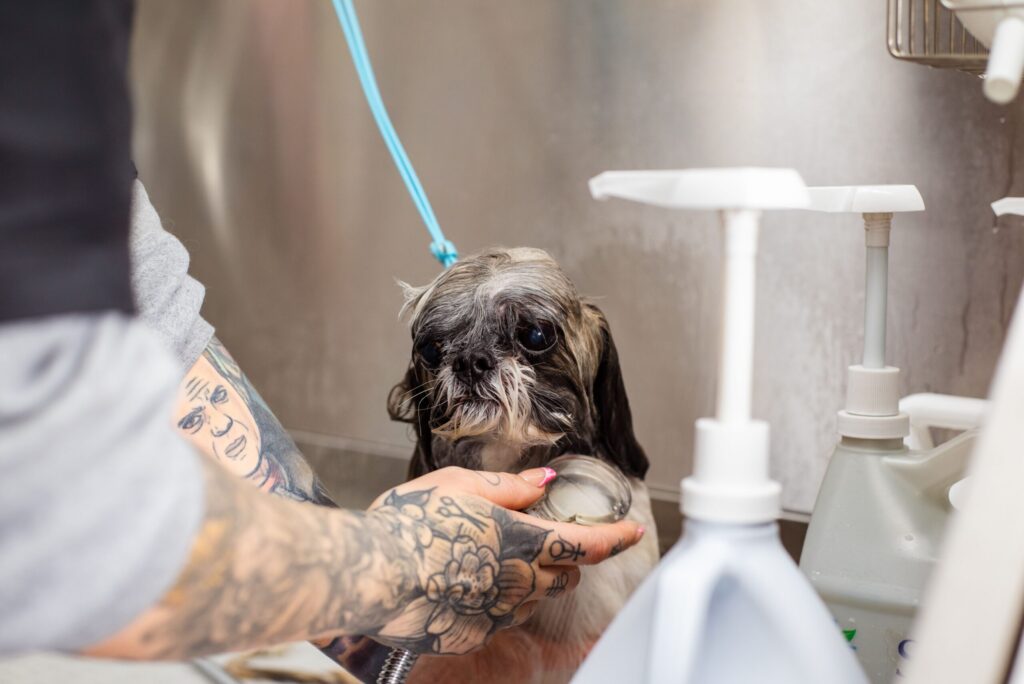
You do not need essential oils to have a fresh-smelling home or a clean dog, and the alternatives below avoid essential-oil poisoning exposure; other alternatives can still have their own hazards.
- Freshen the air without oil. Open windows, wash dog bedding regularly, vacuum with a clean filter, and take out rubbish promptly. Most lingering dog smell lives in bedding and rugs, not in the air.
- Groom with unscented products. Use a plain, dog-formulated shampoo, brush regularly, and wipe paws after walks. For dry pads, an unscented DIY dog paw balm recipe keeps scent out of paw care. The DIY natural dog shampoo recipes for sensitive skin guide and the homemade dog conditioner recipes guide both stay unscented where essential oils would add risk.
- Ask your vet about proven flea prevention. The safer route is veterinary prevention matched to your dog’s health, weight, and lifestyle, not an oil blend. The natural flea prevention for dogs guide explains the non-chemical measures that support prevention — combing, washing bedding, and vacuuming.
- For anxiety, look beyond scent. The American Kennel Club notes that dog-appeasing pheromone diffusers are not essential oils: they release nursing-related pheromones, a different category from aromatherapy oils.
- If you still diffuse for yourself, separate the dog from it. Diffuse only in a room the dog does not use, briefly, with the door closed and the dog elsewhere, then ventilate before the dog returns. Never diffuse a toxic oil in a shared home, and stop at the first sign the dog is bothered.
“For routine freshness I focus first on washing bedding, brushing loose coat, and keeping the room aired out when conditions allow. I check whether the smell is coming from fabrics or the dog instead of adding scented oils to the air. If the odor seems persistent or abnormal, I would seek veterinary advice rather than treating fragrance as a solution.”
How to Read Pet-Product Labels?

Most accidental exposures happen through products, not pure oils, so label reading is a safety skill in itself.
- Read every ingredient, not the front label. Words like “natural” or “aromatherapy” on the front tell you nothing about which oils are inside. Read the full ingredient list, including small-print blend contents. If a blend does not list its oils, treat it as unknown.
- Treat “fragrance” and “parfum” as unknowns. One word can cover many scent chemicals, and you cannot tell from it whether an essential oil is present. If a product lists only “fragrance” and you cannot confirm its contents, do not use it on the dog or its bedding.
- Do not trust “pet-safe” on its own. The American Kennel Club notes that essential-oil products lack US regulation of concentration, efficacy, and safety, so a “pet-safe” claim is marketing until a veterinarian backs it for that product and dog. Be extra sceptical of absolute claims like “safe for all dogs.”
- Check concentration and warnings, and keep the label. Note any stated percentage and follow warnings about pets or ventilation. Keep the bottle and label after any incident — the exact oil names are what your veterinarian or poison helpline needs. When the label cannot answer your question, ask your vet.
Pros and Cons of Essential Oils Around Dogs
- A pleasant scent for humans, when diffused briefly in a room the dog does not use.
- Brief diffusion in a secured, dog-free area is described by the ASPCA as not likely to be an issue for a healthy dog not in the room.
- Learning which oils to avoid builds a safer home, since the same oils appear in cleaners and pet products.
- Concentrated oils can poison dogs through skin, ingestion, or inhalation.
- Puppies, seniors, small dogs and dogs with breathing, liver or skin problems face higher risk.
- Oils are not proven flea or itch treatments, so DIY recipes risk harm without solving the problem.
The balance is blunt: the benefits belong to the human, the risks to the dog. The cautious default is to leave essential oils out of the dog’s environment, and to treat any exception as a question for your veterinarian first.
Frequently Asked Questions
Conclusion
The honest answer to “essential oils safe for dogs” is that the risk is real, the “safe” lists disagree, and the dog pays for any mistake. Skip the oils in the dog’s environment, never apply them to skin or use them for fleas or itching, keep every bottle out of reach, and call your veterinarian or a poison helpline at once after any exposure. For a fresh home and a clean dog without that risk, start with the natural flea prevention for dogs guide, which covers the non-chemical measures that actually support prevention.
References
- ASPCA — The Essentials of Essential Oils Around Pets: https://www.aspca.org/news/essentials-essential-oils-around-pets
- Pet Poison Helpline — Updates on Essential Oils: https://www.petpoisonhelpline.com/uncategorized/updates-on-essential-oils/
- American Kennel Club — Are Essential Oils Safe for Dogs?: https://www.akc.org/expert-advice/health/essential-oils-safe-for-dogs/
- GoodRx — What Essential Oils Are Bad for Dogs?: https://www.goodrx.com/pet-health/pets/are-essential-oils-pet-safe
- Petco Vet Q&A — Is diffusing peppermint & lavender essential oils safe for my dog?: https://www.petco.com/pet-education/dog/vet-qa/diffusing-peppermint-lavender-essential-oils-dog