Your terrier’s wiry coat has gone soft and dull, and no amount of brushing brings the harsh texture back. Clipping cuts dead guard hairs at the surface, which is why wire coats soften over time. Hand stripping dog coats works differently: dead outer hairs are pulled from the root, so the coat stays harsh, richly coloured and weather-resistant. This guide covers which dogs qualify, a quick readiness test, the technique step by step, and when to leave it to a pro.
Quick Answer
Hand stripping is the process of manually plucking dead, mature topcoat hairs from the root in the direction of hair growth—typically on harsh, wire-coated breeds—rather than cutting them with clippers.
Stop and call a professional or vet if: the skin stays red or breaks, the dog panics or won’t settle after several calm tries, or you find lumps, sores, or unusual hair loss mid-groom. Never strip irritated or broken skin.
For the complete grooming foundation that applies across every breed, the complete home dog grooming guide covers tools, technique, and troubleshooting in one place.
Hand Stripping Dog Grooming: What It Is and Why Wire Coats Need It
Hand stripping is the traditional technique of pulling dead outer guard hairs from the root, by finger or with a tool, instead of cutting them. Wire-coated breeds grow two kinds of hair: a soft undercoat and harsh outer guard hairs. When a guard hair dies, it stays in the follicle until something pulls it out. The AKC explains that in the stage most relevant to stripping, the hair has already detached from the root, so pulling it simulates how a wire-haired dog would shed in rough terrain.
Why it matters: the AKC describes the wire coat as the insulation that repels burs and protects the dog from the elements. It also notes that clipping eventually softens the coat, with a risk of skin conditions and effects on temperature regulation. Dog stripping done on a ready coat is described as a pain-free process.
Here is the honest context. A groomer quoted by the AKC says hand stripping is generally reserved for show dogs, and that most pet dogs do well on a “pet strip,” which is a clipper trim with carding to remove the soft undercoat. Hand stripping dog grooming is a specialised skill, and many owners choose clipping, which is a perfectly valid choice for a pet. If you want to learn it, start with this guide and an easy coat.
Which Dogs Can Be Hand Stripped?
The AKC says your dog’s coat should dictate whether hand stripping suits them, not necessarily their breed. Wirehaired Dachshunds benefit, for example, while smooth and long-haired Dachshunds don’t.
Breeds that commonly benefit:
- Most terriers, including Wire Fox, Border, Cairn, West Highland White, Scottish and Airedale
- Schnauzers
- Wirehaired Dachshunds
- German Wirehaired Pointers and Wirehaired Vizslas
- Wirehaired Pointing Griffons and Brussels Griffons
- Irish Wolfhounds
Not suitable: the AKC lists Bull Terriers, American Hairless Terriers and Boston Terriers as terrier exceptions. Double coats (Huskies, Golden Retrievers), curly or single coats (Poodles, Bichons, doodles) and short smooth coats have no wire guard coat to release, and stripping them would only hurt the dog. For double-coated breeds, see our de-shedding guide for double-coated dogs.
Dog Hand Stripping Tools: Fingers, Knives, Stones and Thimbles
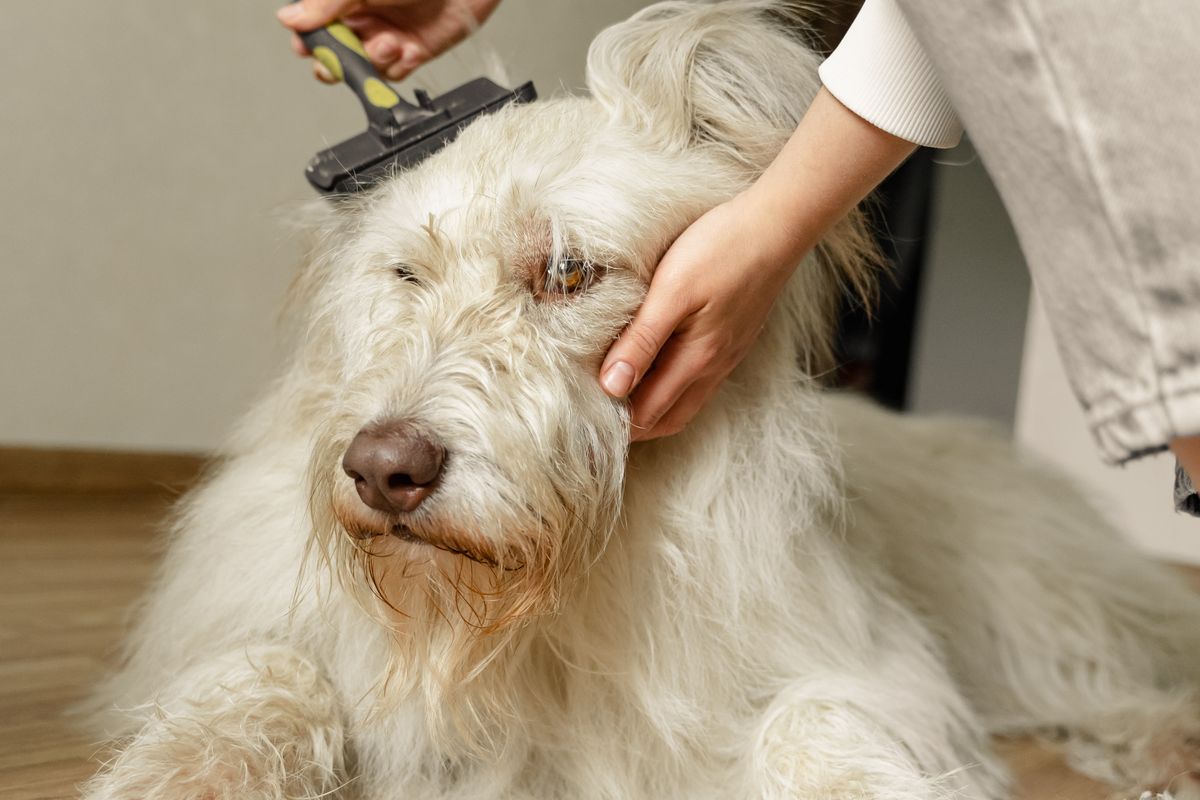
A basic set of dog hand stripping tools is small. Hand stripping tools for dogs range from your own fingers to knives and stones, and the best choice depends on the coat and the area you’re working on.
Your Fingers
Thumb and forefinger, trapping a small section of dead hair close to the skin and pulling with the grain. This gives the most control and the best feel for which hairs are ready to release. The AKC describes it as the usual method for show dogs. It suits small areas, touch-ups and sensitive zones.
Rubber Thimbles
The AKC notes groomers use rubber or silicone grips on the thumb and forefinger to hold loose hairs firmly. They’re an inexpensive way to improve grip.
Stripping Knives
A stripping knife is a serrated blade you trap hair against with your thumb. It grips dead hair so you can pull more per stroke on body work. If you buy just one dog hand stripping tool, make it a medium stripping knife. The Mars Coat King Medium Slant Tooth (model 99M-328) is one popular example, though owner reviews are mixed on handle comfort.
Choose a serrated knife meant for pulling. Blades with sharp cutting edges cut hair instead of gripping it, which defeats the purpose.
Stripping Stones and Pumice
The AKC says a pumice stone can loosen dead hairs so they come out more easily with a comb or brush. Stripping stones grip the hair without cutting.
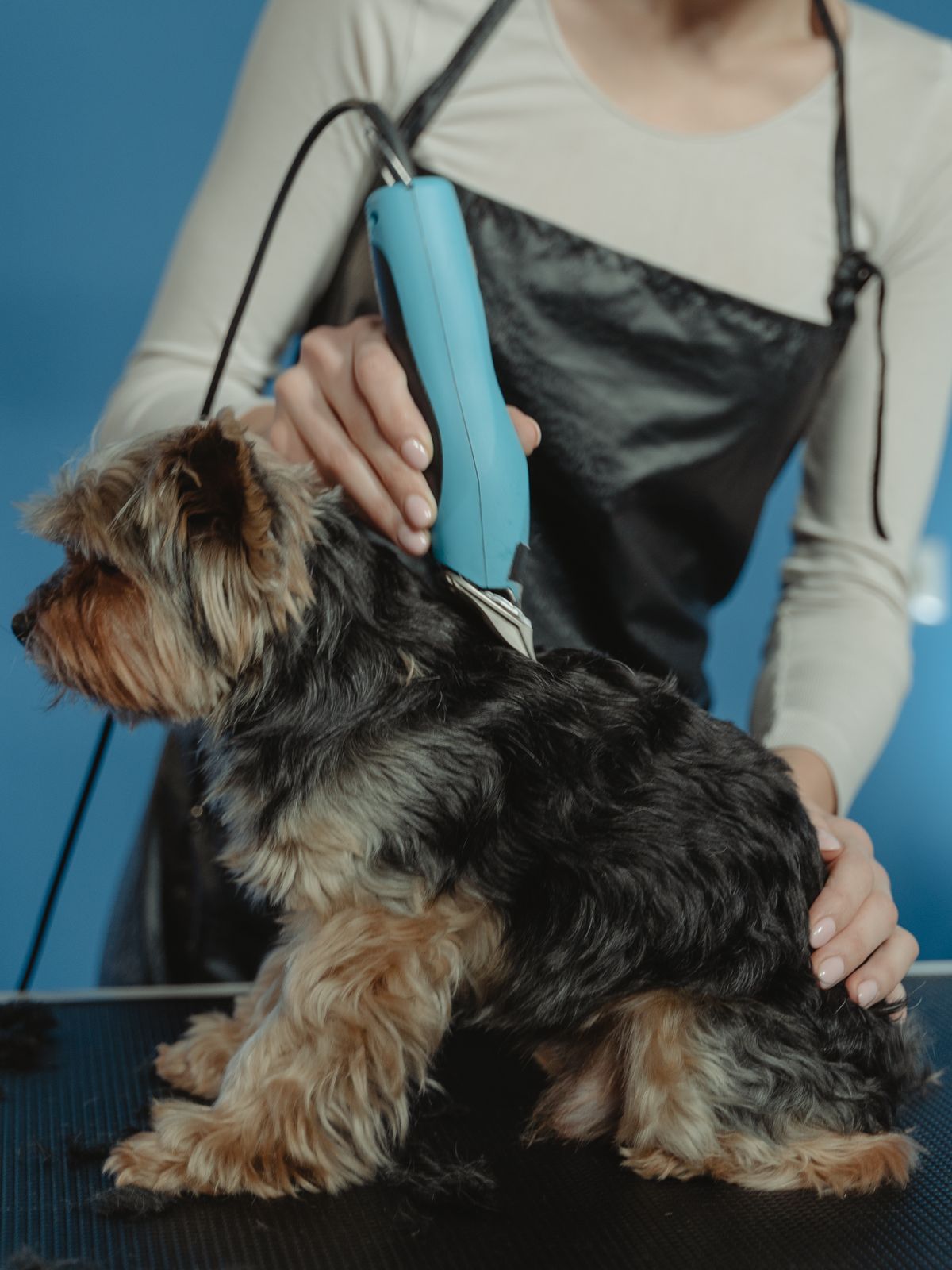
Clippers, Used Sparingly
The AKC reports that groomers sometimes use clippers or thinners on sensitive areas such as the face, throat and sanitary area. If you’re not confident on those zones, leave them to a groomer.
Carding vs Stripping
Terminology overlaps, so check what a tool is for. The AKC describes a carding knife as a tool that resembles a comb joined to a butter knife and removes dead undercoat. Stripping and rolling aim at the dead outer guard hairs. Carding alone won’t preserve a wire coat’s texture, which is why groomers often combine it with other techniques.
What You’ll Need
| Tool | Purpose |
|---|---|
| Medium stripping knife | Body work once you’ve practised with fingers |
| Your fingers (or rubber thimbles) | Small areas, touch-ups, sensitive zones |
| Slicker brush and steel comb | Prep before stripping and cleanup afterwards |
| Blunt-tipped scissors | Tidying feet and other small areas |
| Grooming chalk (optional) | Extra grip on slippery coats, only if needed |
Clipping vs Hand Stripping: An Honest Comparison
| Hand stripping | Clipping | |
|---|---|---|
| Coat | Keeps harsh texture, rich colour and weather resistance | Softens and fades over time (AKC) |
| Time | Much longer, and more skill needed | Faster |
| Cost at a salon | Higher, because it takes longer and fewer groomers offer it | Lower |
| Best for | Show dogs, and owners who want the correct wire coat | Most pet dogs where show texture isn’t the goal |
Groomer sites quote roughly 1.5 to 3 hours for a strip against 45 to 90 minutes for a clip, though times and prices vary by breed and region. Hand stripping preserves a wire coat. Clipping is faster, cheaper and widely used. Choose the method that fits your dog’s coat, schedule and hands.
How to Hand Strip a Dog at Home, Step by Step
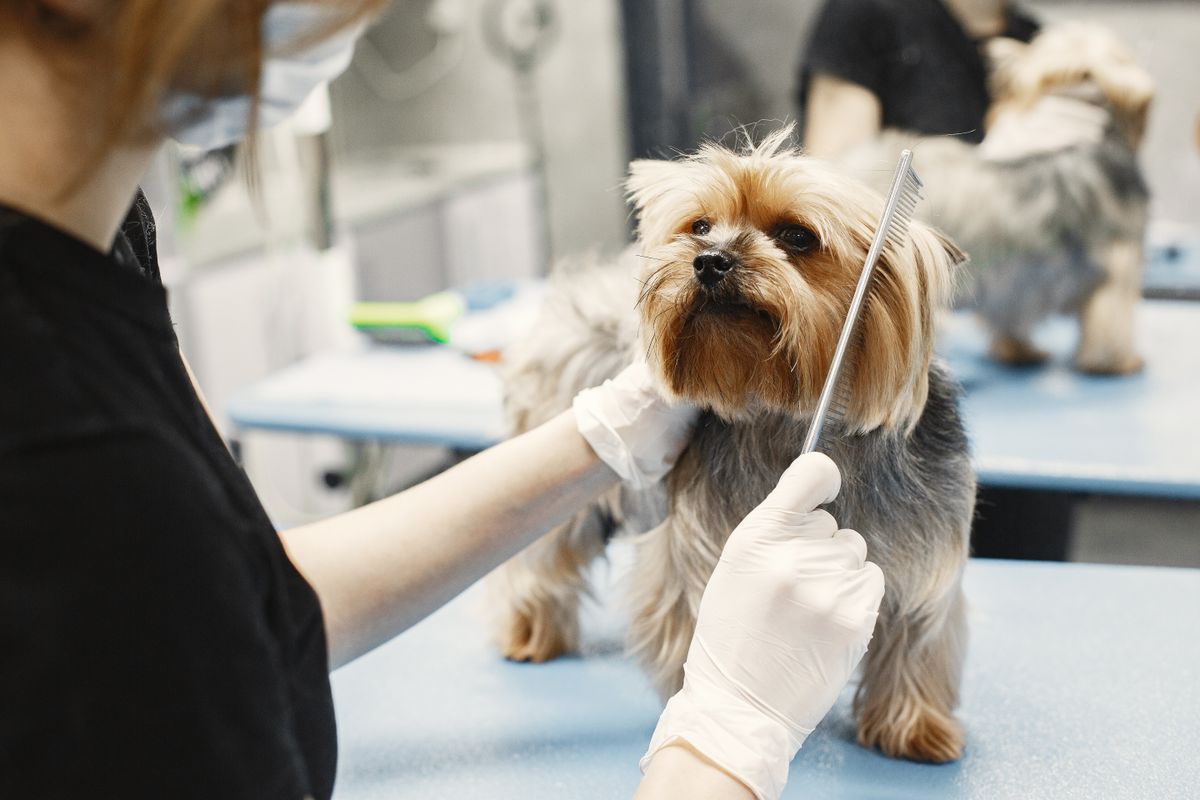
If you’ve never done it, start with an easy dog: ideally a coat that is blown and almost falling out, which needs only your fingers. Learn on that coat before you tackle a harder one.
Step 1: Test the Coat (the 30-Second Readiness Check)
Don’t skip this. Grip a small tuft on the shoulder, close to the skin, and tug gently with the grain. If the longest hairs come out with barely any resistance, the coat is blown and ready. If they hold fast, wait a couple of weeks and retest. Groomer guides describe the same check: the dead hair comes out easily, while a living coat won’t. Resistance doesn’t mean you’re doing it wrong. You’re doing it early.
Step 2: Prep a Dry, Tangle-Free Coat
A dry coat gives you a much better grip. Comb out every tangle first, because stripping through a mat pulls the skin. Set up a calm space, ideally after a walk, with treats close by. Pet-line dogs of wire breeds often have softer coats than show lines, so let the tug test tell you the truth about your dog.
Step 3: Set the Grip and Pull With the Grain
Trap a small section close to the skin and hold the skin taut with your other hand. Use one smooth motion in the direction of hair growth, taking a few hairs per pull and never handfuls. The AKC’s groomer describes proper stripping as a gentle rhythm that is never forceful. Don’t yank, twist or pull against the grain. It breaks hair and hurts.
Step 4: Work in Sections and Go Easy on the Soft Zones
Start with the neck and back, then work down the sides. The AKC notes the bulk of the coat on the back, hips and neck is the easiest to strip. Ears, belly, armpits, paws, face and the sanitary area are sensitive, so use light fingers or leave them to a groomer. If you hit a mat, work it out first. Tight mats against the skin are a groomer’s job. See removing matted dog hair without cutting.
Step 5: Watch the Dog and Know the Stop Signs
If the dog flinches, cries or mouths your hand, or the skin pinks up and stays pink, that area is done for today. Treat, praise and stop. Ten calm minutes beats thirty tense ones, so keep early sessions short. If hair breaks instead of pulling out, that’s a technique signal, not a dog problem: the coat isn’t ready, the tool isn’t right, or you’re pulling against the growth.
Step 6: Aftercare
Brush out the loose hair. Slight pinkness may appear afterwards, but red or broken skin is not normal, so talk to your vet if it doesn’t settle. The AKC notes that stripping before the bath makes the process easier, so strip first and bathe afterwards with a mild shampoo. Pat the coat dry rather than rubbing, and check the skin over the next day or two.
Rolling the Coat: The Pet-Owner Routine
Rolling is hand stripping spread across time. While petting your dog, you grasp strands close to the root and pull in the direction of growth, taking a little of the longest, deadest hair each week or two. The AKC mentions that thimbles or chalk can help with grip. Done regularly, it keeps the coat looking freshly groomed without a marathon session.
Between strips, try the AKC’s “double brush, double comb” weekly routine:
- Brush with a pin brush to stimulate the skin and remove dead hair
- Use a medium-toothed comb to remove tangles
- Use a fine-toothed comb through to the skin to smooth the coat
- Finish with a slicker brush
The AKC says this isn’t a substitute for stripping, but it can improve the results.
How often? The AKC says it depends on the breed and how quickly the coat grows. Many groomers strip pet terriers a few times a year, and rolling fills the gaps. Ask your groomer for a schedule that fits your dog. If you want a dog who accepts it, the AKC’s groomer advises starting grooming young, with short, rewarded sessions.
Dog Groomer Hand Stripping: When to Book a Pro
Dog groomer hand stripping is a specialised service. The AKC’s groomer says it requires training, practice and an understanding of breed standards, and that it is a premium service that should cost more than a standard groom. She also warns that an untrained pet strip can be painful for the dog and may not deliver the results you want.
Before you book:
- Ask whether the groomer has experience hand stripping wire-coated dogs
- Ask what they’d do for your dog’s coat and how often
- Ask whether they’d suggest a full strip, rolling, or a hybrid with clipping between
- Ask how to maintain the coat at home between visits
Go to a groomer instead of DIY if:
- The coat is matted solid
- The skin is irritated, broken or swollen
- The dog is genuinely fearful
- You’ve tried the tug test and the coat won’t release
There’s no shame in using a pro. Many owners combine professional strips with rolling at home.
Advantages and Disadvantages of Hand Stripping
- Preserves the true wire coat: harsh texture, rich colour and weather resistance
- Painless on a ready coat when done correctly
- No clipper noise, heat or clipper burn, which noise-sensitive dogs may prefer
- Rolling keeps the coat tidy with a few minutes of work
- Cheap once learned, since one knife and your fingers do most of the work
- Time-consuming and skilled, and many groomers don't offer it
- Not for every coat. Never strip double, curly or smooth coats.
- Pet-line coats may strip poorly, and clipping is the kinder answer if the hair won't release
- Neutering or spaying can change coat texture in some dogs, so let the tug test decide
- Stripping an unready coat can be painful
Hand stripping is better at preserving a wire coat. Clipping is faster, cheaper and a valid choice for a pet dog. Choose what fits your dog, your schedule and your hands.
Frequently Asked Questions
Conclusion
Hand stripping dog at home is a rhythm, not a talent. Test the coat, take small sections with the grain, quit while the dog is still happy, and let rolling do the heavy lifting between sessions. Respect the readiness test and the technique stays gentle, and respect the stop signs and the coat stays healthy. If the coat is matted solid, the skin is irritated or the dog is truly fearful, a groomer with real stripping experience is the right call.
This guide is general information, not veterinary or professional grooming advice. If your dog’s skin is red, sore or broken, see your vet.
Sources
- AKC: Everything You Need to Know About Hand Stripping Dog Coats
- AKC: Wired coat care and stripping
- Groomer to Groomer: Pet Stripping the Border Terrier
- iGroomHub: Hand stripping basics
- Learn2GroomDogs: Hand stripping tag