How to get dewy makeup look without looking oily comes down to one decision: where the shine goes. Buying more glow products will not fix a greasy T-zone by lunch, but placement and texture will. Glow belongs on the high points, the rest of the face stays satin, and the T-zone stays controlled. This guide shows where each finish goes, so radiance reads as healthy skin.
Quick Answer
To get a dewy makeup look, prep your skin with hydrating skincare and a luminous primer, apply a lightweight or radiant base in thin layers, use cream or liquid cheek and highlight products, and lock everything in with a hydrating setting spray while keeping powder to a minimum..
How to Get Dewy Makeup Look: Placement Beats Products

Most dewy makeup looks fail for the same reason: glow is spread everywhere instead of placed. People who search “how to dewy makeup” usually want skin that catches light softly, not a wet-looking face.
Dewy vs Greasy: Know the Difference
The difference is not how much shine there is, but where it sits and how even it looks. Dewy skin reflects light softly and evenly from the raised areas of the face. Greasy skin looks wet and uneven, pooling in the centre of the face where oil breaks through first.
Check your shine in daylight after a couple of hours. Even, soft light on the cheekbones is dew. A slick film in the T-zone is oil, and that is the only area that needs controlling. Lighting changes how shine appears, so judge both the placement and how your skin feels after wear.
| Sign | Dewy | Greasy |
|---|---|---|
| Shine location | High points: cheekbones, brow bones | All over, mainly the T-zone |
| Look and feel | Soft, even, comfortable | Wet, patchy, slippery |
| Makeup | Stays in place | Slides or separates |
How to Get a Dewy Look With Makeup in 7 Steps
If you want to know how to get a dewy look with makeup, follow this order. Each step is explained in more detail below.
- Prep with a light, settled base. Gentle cleanse if needed, a light moisturiser, and sunscreen at the full amount.
- Control the T-zone with primer. Mattifying primer through the T-zone only, and a luminous or hydrating primer on the outer cheeks if you use one.
- Apply a sheer satin base. A skin tint or light-coverage foundation, applied thinly.
- Add cream blush and bronzer. Keep colour in cream or liquid formulas.
- Place highlighter on the high points. A tiny amount, checked in daylight.
- Set only the zones that move. Press translucent powder into the T-zone and under the eyes.
- Blot, do not cover. At touch-up time, blot before you add any powder.
Prep Without a Slippery Base
Learning how to get dewy skin with makeup starts with prep, because dewy makeup fails before foundation, when the skin underneath is still wet or overloaded. Layers slide, and by midday the whole face looks like it is melting. The first answer to how to get dewy look with makeup is not a product but a calm base.
Cleanse gently, then stop adding. Use a gentle cleanser only if there is sweat, leftover makeup or heavy product to remove, then pat dry. Follow with one light, familiar moisturiser, such as a gel or light lotion if you tend to shine.
Sunscreen still goes under makeup. The American Academy of Dermatology (AAD) says to use at least 1 teaspoon for the face and to apply it to dry skin about 15 minutes before going outdoors. Do not reduce the amount to improve how your foundation looks. If it pills or looks greasy, change the formula instead.
Then wait until the surface no longer feels wet and a clean fingertip does not move a visible layer. If you are working through prepping skin before makeup for a smooth base, that settling check is the same test.
Control the T-Zone With Primer
Controlling the T-zone is not the same as mattifying the whole face. The goal is a quiet centre, so the glow on the edges can be seen. When the centre is quiet, the cheeks look radiant by contrast.
- A mattifying or oil-control primer goes only through the T-zone: forehead centre, sides of the nose and chin. Nowhere else.
- A hydrating or luminous primer, if you use one, goes on the outer cheeks and high points. Check that it layers well with your sunscreen and foundation. A second primer is optional.
For the order of these steps, see our guide on whether moisturizer or primer goes first.
Keep the T-zone base thin, since it moves most and breaks down first, and set it early with a light press of powder before shine appears. Keep the cheekbones luminous. If your outer cheeks also get oily, set them very lightly, but keep powder off the highlight points.
Choose a Satin or Dewy Base
The base sets the ceiling for the whole look. A sheer, satin base evens tone without hiding skin, leaving glow to be added deliberately.
Pick the finish, not just the coverage. Look for satin, natural or luminous on the label, not ultra-glowy or glass. A skin tint, tinted moisturiser or light-coverage foundation is usually enough, because dewy makeup works best when real skin texture still shows through. High-coverage luminous foundations can emphasise shine on some skin types, so test a thin layer first.
Apply the base thinly, from the centre out, with a damp sponge, leaving the edges of the face sheerer. If you mix a drop of liquid illuminator into foundation, mix it only into the portion for the cheeks, not the whole face.
Use Cream Products for Colour
Creams melt in and keep light soft. Powders sit on top of the skin and scatter light, which can flatten radiance. So keep colour in cream and liquid formulas, and save powder for the very end.
Blend one layer before adding the next, so you do not disturb the base. Tap cream blush onto the apples of the cheeks and blend upward toward the temples. Add cream bronzer only where sun would naturally hit: the top of the forehead, along the temples and lightly under the cheekbones. Let the edges overlap slightly so there is no hard line.
Place Glow on High Points
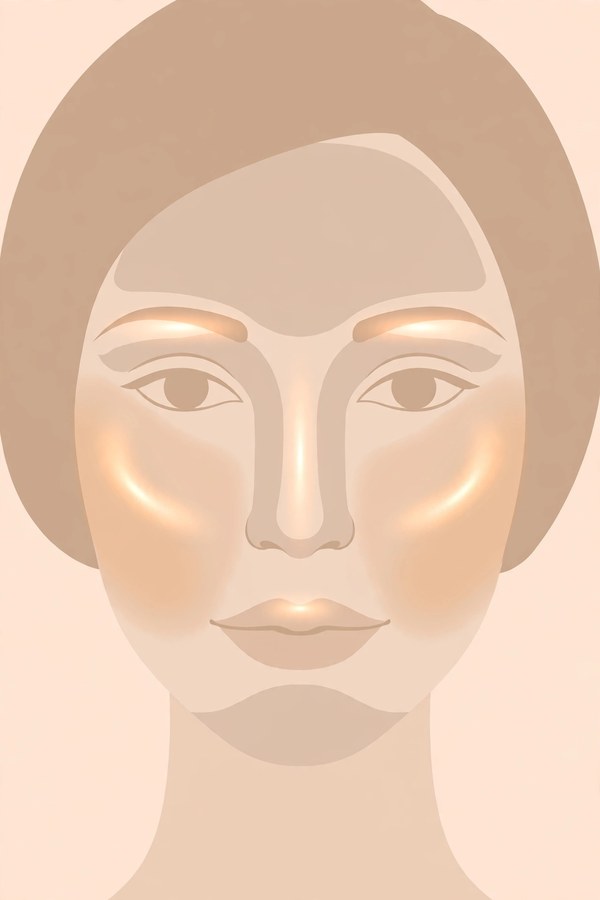
Glow on the high points looks like bone structure catching light. Glow everywhere looks like oil, because real faces do not shine evenly. Keep luminous product to the tops of the cheekbones, the brow bones, the cupid’s bow, and a light touch down the bridge of the nose. A little on the centre of the eyelid is fine. Skip the tip of your nose if it tends to shine.
The middle of the forehead, the sides of the nose and the chin crease stay out of it. Shine already appears there on its own, and highlighter doubles it. These are common starting points, so adjust them to your face shape and skin.
Tap a tiny amount of cream or liquid highlighter on with a fingertip, and check it in daylight before adding more. If you are wondering how to make makeup dewy without glitter, choose highlighters described as sheer, balm or glow rather than metallic or strobe.
Powder Without Killing Glow
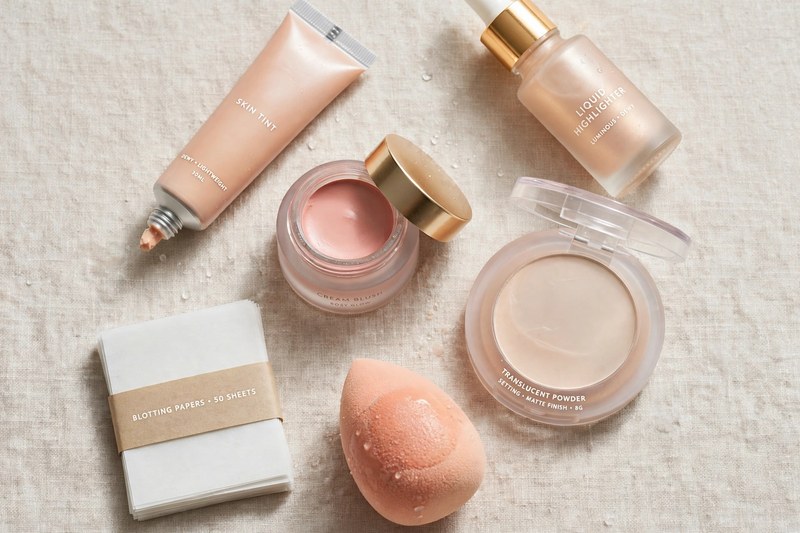
Powder is where most dewy looks die. Too much flattens the face, and too little lets the T-zone take over by lunch. Powder is a local tool, not a finishing step for the whole face.
Powder only the zones that move, and press, do not sweep. That means the sides of the nose, the centre of the forehead, the chin crease, and a tap under the eyes to stop creasing. Leave the cheekbones, outer cheeks and temples alone. Press a small amount of finely milled translucent powder into the target area, then mist lightly with a hydrating setting spray from arm’s length to melt the powder into the creams.
Dewy Makeup for Different Skin Types
Oily Skin
Oily skin does not disqualify you from dewy makeup. It just changes the order of operations: control comes first, glow comes second, and both stay in their own zones. This is how to get dewy skin makeup that does not slide on oily skin.
Start with a satin base, not a dewy one. A satin or natural-finish base gives the same fresh look with far less slip, and you add the dew back afterwards, only on the high points. By afternoon, oily cheeks often develop a soft sheen on their own, so start lighter there. For the full prep sequence, see our oily-skin prep guide. Keep a realistic touch-up kit: blotting papers, one small powder compact and a mini setting mist.
Dry or Normal Skin
For how to get dewy skin makeup on dry or normal skin, hydration comes first. Use a light, hydrating moisturiser, a luminous primer on the cheeks and a luminous or satin base. You will need much less powder, usually just under the eyes and on the sides of the nose, and a light mist of setting spray helps keep the skin looking fresh. Keep the same high-point placement, because even dry skin looks wet when glow is spread over the whole face.
Midday Touch-Ups
Midday is where a dewy look is won or lost. The mistake is treating shine as a problem to cover, when it is really a problem to remove. Covering oil with more product traps it underneath.
- Blot first. Press a blotting paper gently onto the shiny area, such as the forehead, nose or chin, without rubbing. Rubbing drags the base with it and leaves a patch.
- Look again. Some areas may be fine after blotting.
- Powder only what is still wet. If one spot still looks wet, press a tiny amount of translucent powder just there and stop.
- Do not add foundation over the blotted area. Fresh foundation over old, warm base is what pills and cakes.
If the cheeks have gone flat, tap a little cream highlighter back onto the cheekbones only, or mist lightly. For timing, see our guide on how long to wait between skincare and makeup.
Common Mistakes
Dewy makeup looks go wrong in the same few places. Check this table before buying anything new, because the fix is usually removing a step, not adding one.
| Mistake | Why it looks greasy | Do this instead |
|---|---|---|
| Glowy products in every layer | Shine stacks until the whole face reflects light | One glow layer for the cheeks, and a satin base |
| Skipping moisturiser on oily skin | Uneven surface, so the base grabs patchily | Light gel moisturiser, less in the T-zone |
| Base applied while skincare is wet | Layers slide and never dry down evenly | Wait until the surface no longer feels wet |
| Powdering the whole face | Kills the glow and looks flat and chalky | Press powder only into the T-zone |
| Powder over shine at touch-up time | Traps oil and looks heavy within an hour | Blot first, then powder where shine remains |
| Highlighter on the nose tip and forehead | Doubles shine where oil already appears | Cheekbones, brow bones and cupid’s bow only |
Frequently Asked Questions
Conclusion
How to get dewy makeup look is a placement decision, not a shopping list. Put glow where light naturally lands, keep the rest satin, control only the T-zone, and let every layer settle. If you remember one answer to “how to dewy makeup”, make it this: radiance on the high points, calm in the centre.
Dewy makeup looks work when the glow is targeted and the wear is comfortable, so adjust the balance of shine and powder to your skin. Start with the satin base and the high-point map, and check your shine in daylight. For the full prep routine underneath this look, read our guide on how to prep skin before makeup for a smooth base.
References
- American Academy of Dermatology, “Sunscreen FAQs”: https://www.aad.org/public/everyday-care/sun-protection/shade-clothing-sunscreen/sunscreen-faqs
- Ulta Beauty, “Dewy Makeup”: https://www.ulta.com/discover/makeup/dewy-makeup
- Benefit Cosmetics, “How to Achieve a Dewy Makeup Look”: https://www.benefitcosmetics.com/en-gb/articles/face/how-to-achieve-a-dewy-makeup-look.html