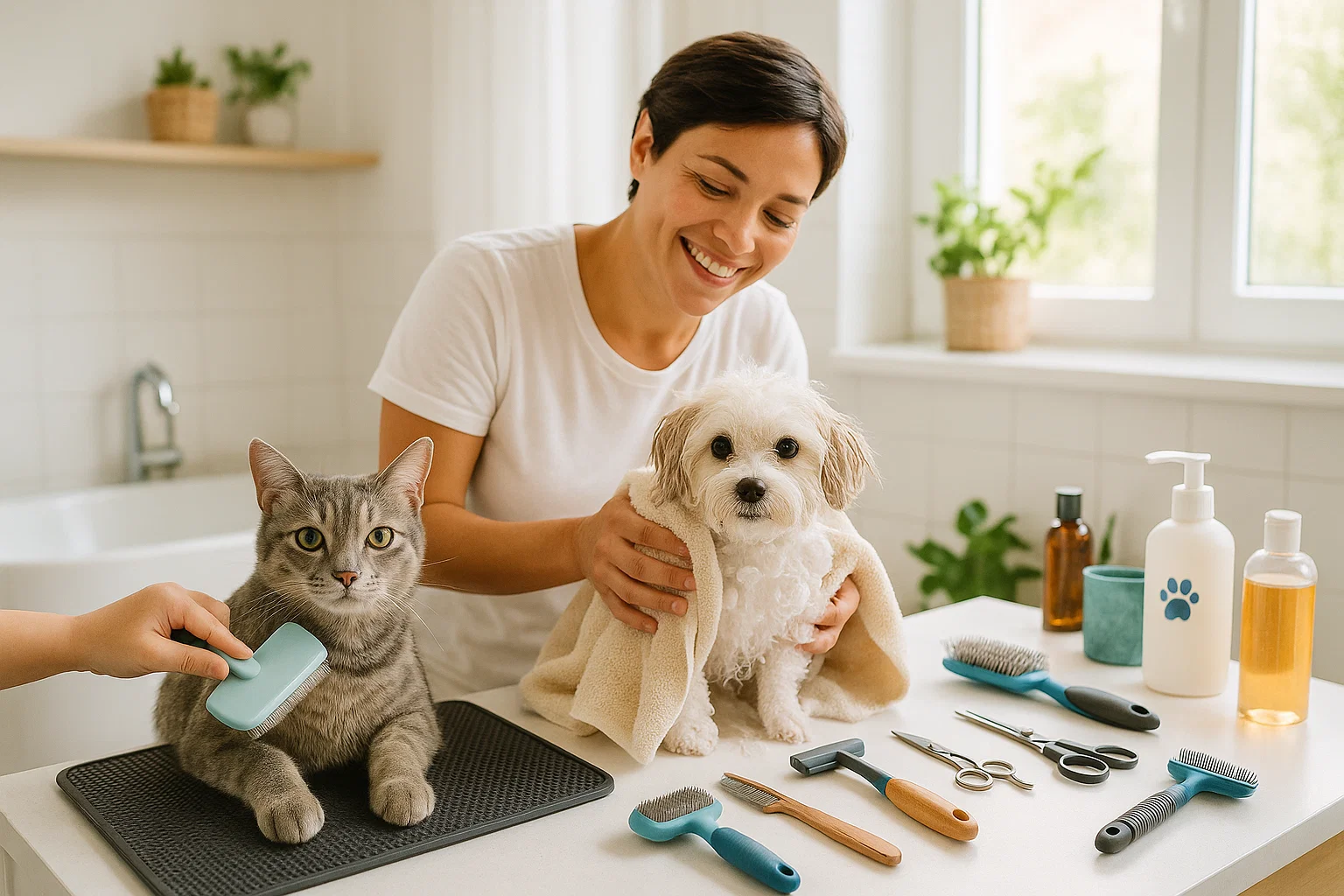
It is easy to spend hundreds on a dog grooming kit and a pile of “must-have” extras, then book a salon appointment weeks later because half of it scares the dog and the other half does not suit the coat. A complete home dog grooming kit is not a 20-piece bundle.
It is eight tools matched to your dog’s coat type, bought in the right order. This guide gives you that short list, honest budget tiers, and the tasks that should stay with a professional.
Quick Answer
A complete home dog grooming kit starts with eight tools: a brush matched to your dog’s coat type, a steel greyhound comb, nail clippers or a grinder with styptic powder, dog shampoo, ear cleaner with cotton pads, a dog toothbrush with enzymatic toothpaste, towels, and a non-slip mat. Curly and long coats add clippers with guard combs, and double coats add an undercoat rake. Start with the coat, not the kit. The AKC advises talking with your vet or groomer before you buy supplies.
Stop and call a groomer or vet for tight or severe mats, bleeding that will not stop, pain, or a dog that panics. Those are not home-kit jobs.
For the complete grooming foundation that applies across every breed, the complete home dog grooming guide covers tools, technique, and troubleshooting in one place.
What a Complete Home Dog Grooming Kit Actually Is
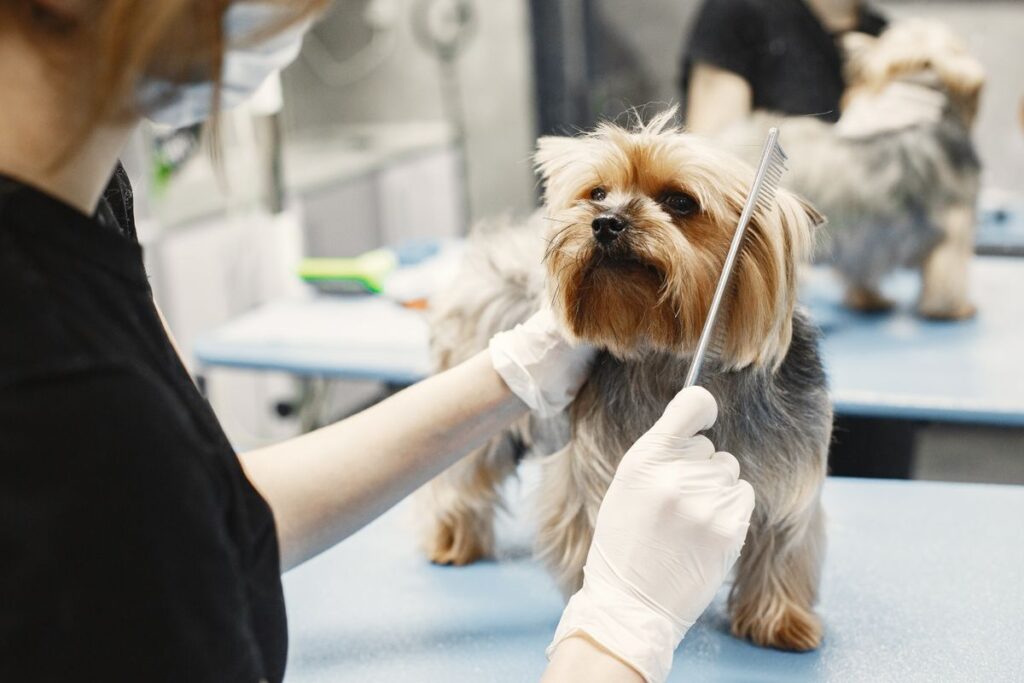
A dog grooming kit is not the giant plastic toolbox with twenty gadgets. It is the small set of tools that covers every task you can safely do at home: brushing, bathing, nail trims, ear cleaning and tooth brushing. That matters because regular grooming sessions let you check your dog’s coat, teeth, eyes, ears and nails for early signs of problems.
The model that works best is not “home instead of the salon”. The AKC says home grooming and professional grooming work best together. Your kit handles the between-visit maintenance, and the groomer handles the rest. The AKC also notes that a responsible breeder is one of the best sources of coat-care advice for your breed.
Before you buy a single tool, read our complete guide to grooming your dog at home. It is the pillar this series hangs off, and it shows where the kit fits into a full routine.
The Two Kit Types: Pre-Made Bundles vs Build-Your-Own
Almost every grooming kit for dogs falls into one of two camps. Knowing which one you are in saves you the most common beginner mistake: buying before you know your dog’s coat type.
Pre-made grooming kits. One box, one price, often $25 to $50 for 4-in-1 style kits that combine a clipper, a detail trimmer and a nail grinder. They suit beginners with small to medium dogs who want to try home grooming without committing. They tend to struggle on heavy double coats and mats, and the accessories (especially snap-on guard combs) are the usual weak link. Check reviews for noise before you buy, and choose a bundle only if most of its tools match your dog’s actual coat.
Build-your-own kit. Choosing each tool separately costs more up front but wins on every coat that is not average. If your dog has a double coat, a curly coat or a coat that mats easily, build your own.
Build Your Kit: The Coat and Task Decision Matrix
Coat type decides the rest. Find your dog’s coat, buy that row, and skip the “skip this” column. The AKC lists the main tool types by coat: pin brushes for many longhaired dogs, bristle brushes for short to medium coats, slicker brushes for mats and dead hair, rubber curry combs for smooth coats, and clippers, rakes, stripping knives and dryers for certain coats.
| Coat type | Example breeds | Brush tools | Nail tool | Bath and dry | Skip this |
|---|---|---|---|---|---|
| Short, smooth | Beagle, Boxer, Pug, Dalmatian | Rubber curry brush (e.g. KONG ZoomGroom) | Nail clippers or grinder | Dog shampoo + towels | Hair clippers; de-shedding rake (not made for short coats) |
| Double coat | Husky, GSD, Golden, Corgi | Undercoat rake + slicker brush | Nail clippers or grinder (introduce the noise slowly) | Shampoo + conditioner; high-velocity dryer for heavy coats | Routine shaving or very close clipping, which removes the coat’s insulation |
| Long, silky | Shih Tzu, Yorkie, Maltese | Pin brush + soft slicker + steel comb | Nail clippers or grinder | Shampoo + conditioner + cool dryer | Bladed de-shedding tools, which can damage silky coats |
| Curly | Poodle, Bichon, doodles | Firm slicker + steel comb | Nail clippers or grinder | Shampoo + conditioner + dryer (never cage-dry with heat) | Snap-on plastic combs that catch in curls; de-shedding blades |
| Wire | Schnauzer, Border Terrier | Firm slicker + steel comb | Nail clippers or grinder | Dog shampoo + towels | Rotary clippers on the wire jacket. Many wire coats are hand-stripped, so ask a groomer |
Small dogs: the list is the same but the sizes change. A smaller slicker head, a lower-speed clipper and a grinder with a smaller port suit toy breeds better than full-size tools.
The 8 Essentials: Dog Grooming Tools Every Home Kit Needs
These are the dog grooming tools every home kit needs, in the order you should buy them. The brush comes first because brushing is the task you will do most often, and the wrong brush is the most common wasted purchase.
1. A brush matched to your dog’s coat type
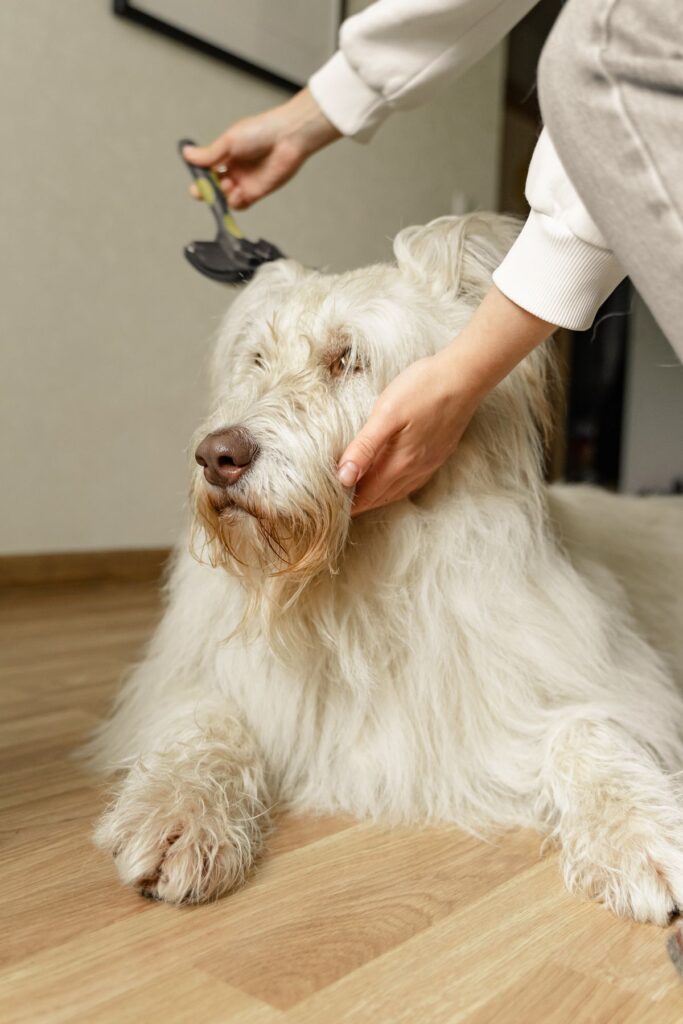
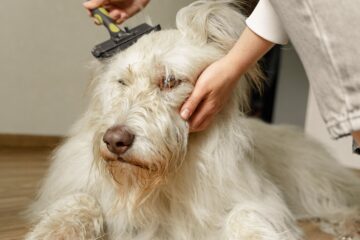
For short coats, a rubber brush such as the KONG ZoomGroom loosens dead hair while massaging the skin, and works wet or dry. For curly and long coats, a firm slicker with long pins reaches through the coat instead of skating over the top. Premium slickers such as the Chris Christensen Big G start around $55, so check current prices. For coat-by-coat comparisons, see our best dog grooming brushes for every coat type guide.
Safety limit: slickers scratch. Use light pressure, brush in the direction of hair growth, and stop if the skin reddens. Work all the way down to the skin with gentle strokes, as the AKC advises, and check for burrs, mats and cuts as you go.
2. A steel greyhound comb
The comb is your mat detector. After brushing, run a fine steel comb down to the skin. If it glides through, the section is done. If it snags, there is a tangle to work out before it tightens into a mat. Brushes alone cannot tell you what they missed.
3. Nail clippers or a grinder, plus styptic powder
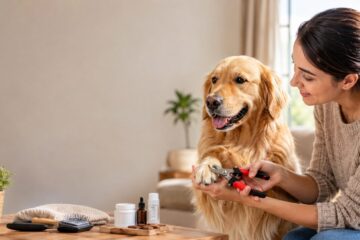
If you can hear your dog’s nails clicking on hard floors, they are likely too long. Long nails can affect gait, cause discomfort and increase the risk of broken nails. Guillotine-style clippers give clean cuts on many nails, and grinders suit nail-nervous dogs because they remove tiny amounts at a time. Either way, trim only the hook-like part beyond the quick, and keep styptic powder within reach. See our dog nail grinders vs clippers guide for the trade-offs.
Safety limits: grind in short bursts and pause, because the bit heats the nail, and trim long paw hair first so it does not tangle. On dark nails, take thin slivers. Replace dull blades instead of forcing them. Introduce a grinder’s sound gradually with treats.
4. Dog shampoo, plus conditioner for long coats
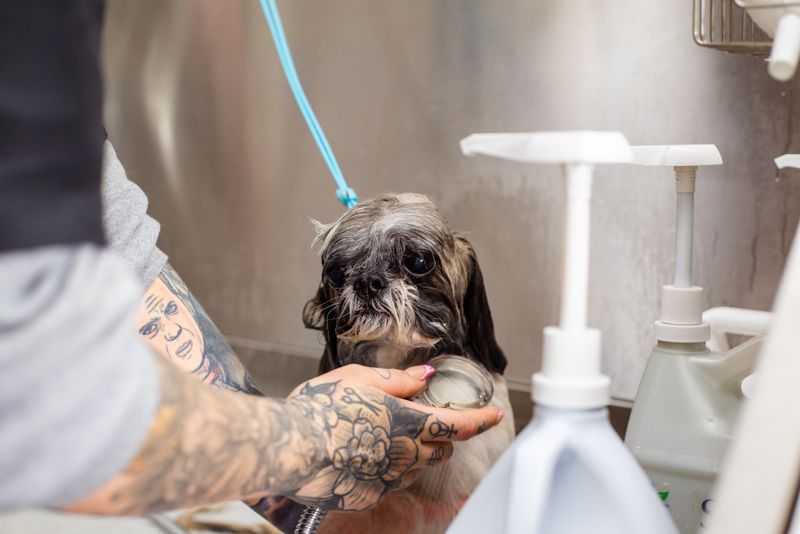
Use a mild shampoo made for dogs. The AKC explains that dog skin has a different pH from human skin, and a shampoo should be rinsed completely so residue does not irritate the skin. A soap-free, pH-balanced formula such as Earthbath Oatmeal & Aloe is one option (choose the fragrance-free version if your dog is scent-sensitive). Conditioner helps on long and curly coats, where it can reduce the tangles that turn into mats. Bathe regularly but not too often, since over-bathing strips natural oils.
5. Ear cleaner and cotton pads
The AKC says most dogs benefit from ear cleaning about once a month, though some need it more often. Clean only the visible outer ear with a damp cloth or cotton ball, or a vet-recommended ear cleaner, and never insert anything deep into the canal. Severe redness, swelling, discharge or a strong yeasty odour needs a vet, not harder cleaning.
6. Toothbrush and enzymatic toothpaste
The AKC says brushing your dog’s teeth daily is ideal, though a few times a week still helps, and plaque starts to build up within 48 hours. Use a dog toothbrush with dog toothpaste, and never human toothpaste, because the sweetener xylitol is toxic to dogs. Enzymatic options such as Virbac CET are widely available. As dogs age, tartar may need professional cleaning by your vet.
7. Towels
The least glamorous tool and the one you will reach for most. Keep several, because microfibre towels absorb well and dry quickly between uses. After a bath, dry your dog thoroughly, and avoid bathing outdoors in cool or cold weather.
8. A non-slip mat
The cheapest safety tool in the kit. Dogs brace their legs when they feel unsteady, which makes every task harder. A rubber mat in the tub and another under the grooming area keeps your dog planted. It is also a sensible alternative to a grooming table for most homes. If you are debating a table, read do you really need a dog grooming table first.
Not counted, but useful: treats, to build a positive association with brushing, bathing and nail care, and a detangling spray for long or curly coats. Wipe the corners of your dog’s eyes gently with a soft cloth dampened in warm water, and use only products made for dogs.
Optional Upgrades: When Each One Earns Its Place
Add these only when your dog’s coat justifies them. The fastest way to waste money is buying the optional items before the essentials are doing their job.
Hair clippers and guard combs. For curly and long coats, a proper clipper is a big upgrade. Two common professional-grade examples:
- Wahl Bravura: cordless, 5,500 strokes per minute, five-in-one adjustable blade, and about 90 minutes of run time on the manufacturer’s specs. Prices vary, with some retailers around $210.
- Andis AGC2 Super 2-Speed: corded with a 14-foot cord, 3,400 and 4,400 strokes per minute, usually about $175 to $220.
A budget option is a low-cost 4-in-1 kit, which can work for light touch-ups but may stall on matted or thick double coats. Learn the safety rules before you start. Never clip a wet or dirty coat, and touch the blade to your inner wrist every few minutes. If it is uncomfortably warm for you, it is too hot for the dog. Full comparison: best dog clippers for home grooming.
- Undercoat rake and de-shedding tool. For double coats only. An undercoat rake usually costs roughly $10 to $20. Use light pressure and short strokes. If you use a bladed de-shedding tool, follow the manufacturer’s directions: dry, mat-free coat, light pressure, and stop when little hair comes out. Do not use one on coats it is not designed for. See our best de-shedding tools for dogs guide.
- High-velocity dryer. A pet-rated high-velocity dryer (from roughly $150) dries dense double coats much faster than towels. Introduce the noise gradually, with treats and distance first, and never point it at your dog on day one.
- Grooming vacuum kits. Clippers with suction cut down on cleanup, but they are louder and pricier, and some dogs find the combined noise worse. Wait until your dog is comfortable with a normal clipper first.
- Thinning shears and ball-tip scissors. For careful face, paw and sanitary trims. Ball tips add a margin of safety. If you are unsure, leave face and between-the-toes trims to a groomer. Never use scissors to cut out a mat.
- Grooming table and arm. Useful for medium dogs and long sessions, but a non-slip mat on a stable surface handles most home needs. Never leave a dog unattended on a table.
Three Honest Kit Tiers by Budget
These are planning ranges based on the example prices in this guide. Prices vary by store and change often.
| Tier | What is in it | Who it is for | Range |
|---|---|---|---|
| Starter | The 8 essentials: coat brush, steel comb, nail tool + styptic, dog shampoo, ear cleaner, toothbrush kit, towels, non-slip mat | Short coats; new owners testing the waters | ~$90–$140 |
| Mid | Starter + undercoat rake or high-velocity dryer | Double coats and heavy shedders | ~$110–$300 |
| Full (curly/long) | Starter + hair clippers with guard combs + thinning shears + conditioner | Poodles, doodles, Shih Tzus, Yorkies, Maltese | ~$180–$450 |
Still figuring out what your routine even is? A basic low-cost starter set (a grooming glove, a de-shedding comb and a shampoo brush) can start under $20 and is enough to begin brushing regularly. For tool-by-tool budget picks, see our best dog grooming tools under $30 guide.
What Stays Professional: The Pro-Only List
A complete kit does not mean a complete salon. These stay with a professional groomer or vet:
- Tight or severe matting. Never cut mats out with household scissors. Small, loose tangles can be worked out at home, but tight, large, painful or sensitive-area mats should go to a professional groomer or vet.
- Anal gland expression. The AKC says do not attempt this unless your vet has trained you.
- Fearful or aggressive dogs. Forcing a panicked dog teaches nothing and risks bites. Groomers have the training and handling confidence for these cases.
- Show and breed-specific cuts. A pet trim is one thing, and a correct breed profile is another.
- Anything you find during grooming. Lumps, hot spots, wounds, ear infection signs and broken teeth are for a vet to assess.
Safety note: home grooming covers routine maintenance: brushing, bathing, nail trims, ear cleaning and tooth brushing. If your dog shows pain or panic, bleeding will not stop, or you find anything unusual under the coat, stop and call your groomer or vet.
Pros and Cons of Grooming at Home
- Cost. A starter kit can cost about as much as a few salon visits, depending on your area and dog. Savings vary with the tools you buy and the professional visits you still book.
- Bonding and handling. A dog that is calm about being handled at home is often calmer at the vet and the groomer.
- Between-visit maintenance. Mats, plaque and overgrown nails do not get weeks to build up.
- Early health detection. Hands on your dog regularly means you can spot lumps, ticks and sore ears early.
- Upfront cost and learning curve. The first sessions are slow while you both learn. Short sessions that end well beat long ones that end in frustration.
- Beginner injuries. Blade heat and clipper burn are classic mistakes, and redness after a session can be mistaken for a shampoo reaction. Blade-heat checks and guard combs exist for this reason.
- The wrong tool damages coats. A slicker on a short coat irritates, a de-shedding blade on a silky coat can cut it, and shaving a double coat as routine removes its insulation.
Frequently Asked Questions
Conclusion
A complete home dog grooming kit is a short, coat-matched list. Start with a brush, a steel comb, a nail tool and shampoo, then add only what your dog’s coat and budget justify: clippers for curly coats, a rake for double coats, a dryer for heavy ones. The best grooming kit for dogs is the one that fits the dog in front of you. Leave tight mats, anal glands and fearful dogs to the professionals. Start with the routine itself in our complete guide to grooming your dog at home, then pick the deep dive that matches your dog’s coat.
References
- AKC, “Dog Grooming at Home: Brushing, Bathing, and Nail Care”: https://www.akc.org/expert-advice/health/how-to-groom-a-dog/
- PetMD, “How To Handle Matting in Dogs and Cats”: https://www.petmd.com/dog/grooming/pet-grooming-how-handle-matting-dogs-and-cats
- Manufacturer product pages for Andis and Wahl clippers (specifications attributed in the text).